News
How to Receive Money from Abroad in Vietnam: A Detailed Guide for 2026
 02/10/2026
A guide on how to receive money from abroad in Vietnam through banks, express money transfer services, and fintech apps, along with important notes on taxes, procedures, and receiving money through SeABank.
If you have relatives living, studying, or working abroad, you may have wondered how to receive money from abroad in Vietnam quickly, safely, and at a low cost. There are currently several methods available, such as bank transfers, express money transfer services, and international fintech apps, each with its own advantages and disadvantages. This article will help you understand the common methods and how to receive money through SeABank.
1. 3 Common Ways to Receive Money from Abroad in Vietnam
The following table summarizes the common methods of receiving remittances or money transfers from abroad to Vietnam:
Note: This information depends on the sending country, payment method, receiving bank, transaction type, and the policies of each platform at different times.
1.1. Bank Transfers (SWIFT)
This is a commonly chosen method for receiving large amounts of money from abroad, such as tuition fees, living expenses, or inheritance.
How it works: The sender provides their overseas bank with the recipient's information in Vietnam, including their full name, account number, receiving bank's name and SWIFT/BIC code, and the address of the branch where the account was opened. The overseas bank sends a transfer instruction through the SWIFT network to the bank in Vietnam, which then credits the funds to the recipient's account.
- Advantages: High security and transparency; suitable for large transfers; funds are sent directly to the recipient's bank account without having to visit a transaction counter.
- Limitations: Processing time may be longer than other methods if the transaction goes through intermediary banks. Recipients must provide accurate account information to avoid delays.
1.2. Receiving Money Through Express Money Transfer Services (Western Union, MoneyGram,...)
These are companies specializing in international money transfer and payout services. They operate independently or partner with banks to pay recipients in Vietnam.
Implementation method: The sender visits an overseas transaction point of the money transfer provider, deposits cash or makes a payment, and provides the recipient's information. The recipient can bring valid identification and transaction details to an appropriate payout location, following the provider's instructions. In Vietnam, SeABank provides international money receiving services and partners with organizations in the money transfer and remittance sector.
- Advantages: Money can be received relatively quickly, usually within a few hours to one business day. A bank account is not necessarily required if the recipient chooses to collect cash.
- Limitations: The service depends on each provider's partner network. Service fees and foreign currency exchange rates may also vary significantly between providers.
Many commercial banks in Vietnam, including SeABank, currently partner with international money transfer organizations, allowing recipients to receive incoming transfers directly into their payment accounts.

1.3. Using International Fintech Apps (Wise, PayPal, Remitly, etc.)
In addition to banks and traditional money transfer services, many international fintech apps now allow users to transfer money directly to bank accounts in Vietnam through a smartphone or website.
How it works: The sender downloads the app, verifies their identity, enters the recipient's bank account details in Vietnam (account number and bank name), and then makes the transfer online.
- Advantages: Simple transactions that can be completed anytime, anywhere using a smartphone with an internet connection. Users can also track transaction statuses in real time.
- Limitations: Some platforms may offer less favorable exchange rates or charge additional fees. Certain apps may also restrict the countries or types of bank accounts eligible to receive transfers. Therefore, recipients should confirm with the sender in advance whether their bank in Vietnam supports the relevant transfer channel.
2. Important Considerations When Receiving Money from Abroad in Vietnam
- Understand the applicable tax obligations based on the source of funds:
- For remittances: Under Clause 7, Article 4 of the 2025 Personal Income Tax Law, remittances received by individuals from relatives who are Vietnamese citizens residing, working, or studying abroad are exempt from personal income tax.
- For other sources of funds: If the money received comes from investment, business activities, service provision, salaries, wages, inheritance, or gifts from foreign organizations or individuals, the recipient may still be required to declare and pay personal income tax in accordance with current regulations.
- Prepare relevant documents: Some banks may require documents proving family relationships or the purpose of the transfer to ensure a smooth receiving process.
- Check account information carefully: Confirm the bank's name, account number, and SWIFT/BIC code before providing them to the sender to avoid errors, delays, or lost transactions.
- Check exchange rates and transaction fees: Exchange rates and fees may vary depending on the bank, money transfer provider, and transaction time, so you should check them in advance.
- Choose a reputable institution with high transaction limits: Prioritize commercial banks licensed by the State Bank of Vietnam to conduct foreign currency transactions and payouts, such as SeABank, to ensure legal compliance and security. You should also choose a provider that supports various receiving methods (cash, bank account, and app) with flexible payout limits to facilitate large transactions.
3. Criteria for Choosing a Suitable Bank to Receive Money from Abroad
When choosing a bank to receive money from abroad, you can consider the following criteria:
- International Correspondent Banking Network: Banks with correspondent relationships with many banks and financial institutions in different countries can make receiving money more convenient.
- Transaction Processing Time: Find out the bank's average processing time for incoming international transfers so you can plan accordingly.
- Fees and Exchange Rates: Consider the fees and exchange rates applied by each bank at the time of the transaction to find an option that suits your needs.
- Digital Banking App: A bank with a mobile app that supports transaction tracking and real-time notifications can help you monitor incoming funds more easily.
- Security and Transaction Authentication Policies: Prioritize banks with strict transaction authentication procedures and information security measures.
- Customer Support Channels: Banks with hotlines and various support channels can provide timely assistance if any issues arise during the receiving process.
4. Fast and Secure International Money Receiving Solutions at SeABank
If you are looking for a reputable bank to receive money from relatives or business partners abroad, Southeast Asia Commercial Joint Stock Bank (SeABank) offers modern international payment infrastructure.
Reasons to Choose SeABank's International Money Receiving Service:
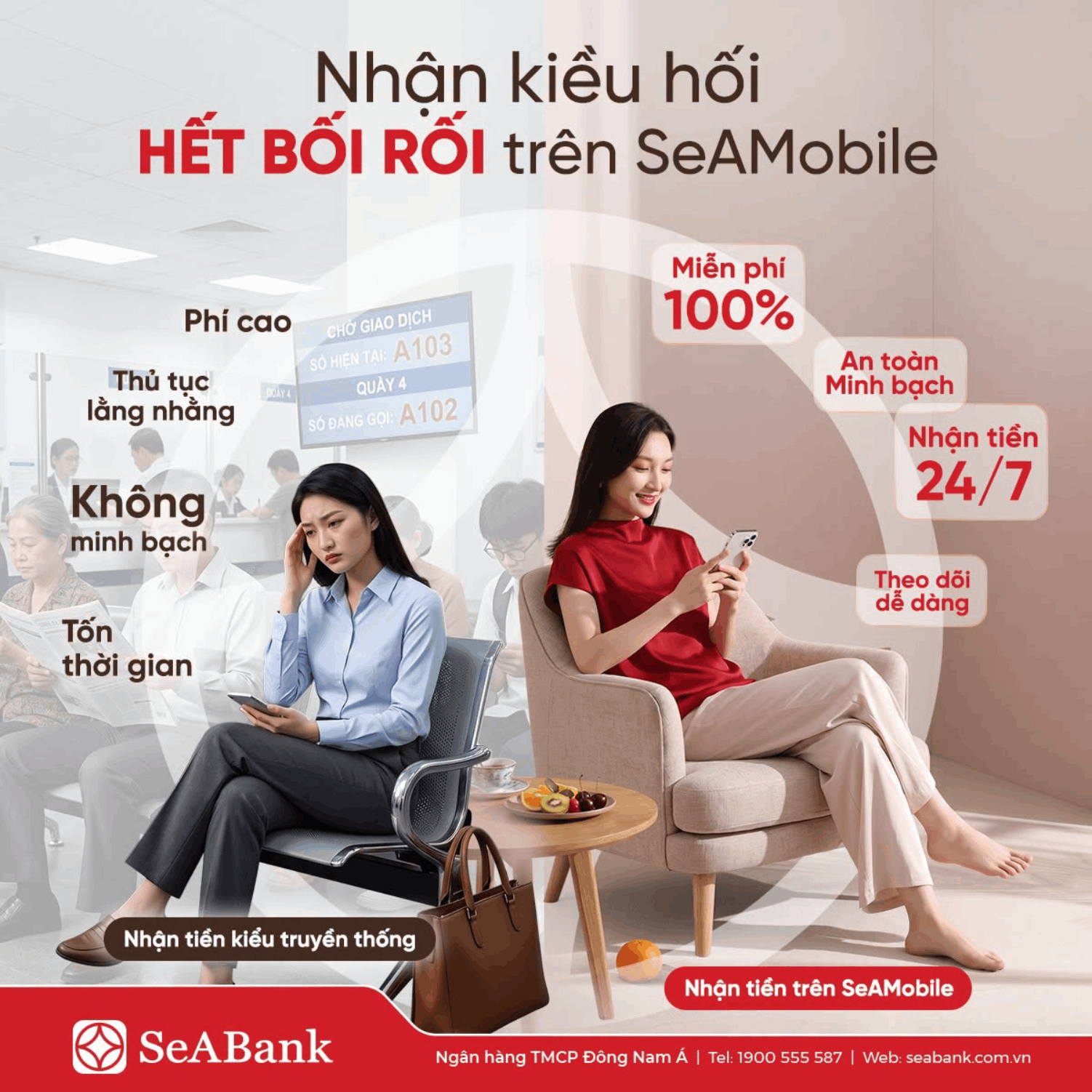
- Diverse and Flexible Receiving Methods: SeABank supports various channels for receiving money, from international bank transfers through the global SWIFT network and reputable express money transfer services (Western Union, MoneyGram, etc.) to 24/7 online remittance receiving through the SeAMobile app or cash collection at transaction counters.
- Global Partner Network: Extensive connections with numerous major banks and financial institutions help shorten the time it takes for funds to reach your account.
- Competitive Exchange Rates: SeABank lists competitive foreign currency buying rates (USD, EUR, GBP, JPY, etc.) in the market, helping maximize customer benefits.
- SeAMobile Digital Banking Experience: Incoming funds are notified instantly. You can sell foreign currency online through the SeAMobile app at preferential exchange rates without having to visit a transaction counter.
Need detailed advice on procedures, exchange rates, and how to receive money from abroad?
Visit Money Receiving Services in Vietnam for more information and to choose a safe, fast, and legally compliant money receiving solution. You can also contact the hotline at 1900 555 587 for detailed assistance.
Download the SeAMobile App today to open an online account and get ready to receive money from abroad anytime, anywhere!
5. Frequently Asked Questions (FAQ)
1. Is receiving money from abroad in Vietnam subject to tax?
If the money received is a remittance sent by relatives living abroad, it is exempt from personal income tax under Clause 7, Article 4 of the 2025 Personal Income Tax Law. However, if the funds come from other sources, such as salaries, business activities, service provision, or gifts from foreign organizations or individuals, the recipient may still be required to declare and pay taxes in accordance with regulations.
2. How long does it take to receive money from abroad in Vietnam?
Receiving money from abroad in Vietnam usually takes from a few hours to several days, depending on the transfer method and the parties involved in the transaction. SWIFT transfers usually take a few business days, while express money transfer services or some fintech apps may take only a few hours to one day.
3. What documents are needed to receive money transferred from abroad?
Recipients usually need valid personal identification documents (citizen identity card) and, in some cases, documents proving family relationships or the purpose of the transfer, as required by the bank.
4. Do I have to convert foreign currency into Vietnamese dong when receiving money?
Recipients can keep foreign currency in a personal foreign currency account, if the bank offers this service, or convert it into Vietnamese dong at the exchange rate applicable at the time of the transaction, depending on their needs.
5. What is a SWIFT/BIC code used for, and where can I find it?
A SWIFT/BIC code is a series of characters used to identify the receiving bank in the international payment system. You can look up this code on the bank's official website or contact the hotline of the bank where you opened your account.
Understanding how to receive money from abroad in Vietnam helps you choose a suitable method, save time and costs, and avoid errors during transactions. Whether you choose a bank, an express money transfer service, or a fintech app, you should carefully check fees, exchange rates, and relevant regulations before making a transaction. If you are looking for a bank to receive money, you can explore SeABank's services.
Related News
How Much Is 1 Tael Of Gold? Update Today's Gold Price And Notes 09/10/2026
Russian Currency: Denominations, Exchange Rates, and How to Exchange Russian Rubles 09/10/2026
What Is German Currency? Denominations, Exchange Rates, and How to Convert to Vietnamese Dong 09/10/2026
What Is a Dynamic QR Code? Comparison with Static QR Codes and How to Create One 09/10/2026
How to Create a Bank QR Code on SeAMobile in Just 3 Steps 09/10/2026
How Much Is 1 Tael Of Gold? Update Today's Gold Price And Notes
How much is 1 tael of gold? Update the latest price of 1 tael of 9999, 24K, 18K gold today and instructions on how to calculate and buy gold safely and reliably.
09/10/2026
Read more

Russian Currency: Denominations, Exchange Rates, and How to Exchange Russian Rubles
Learn about Russian currency (Ruble), including its denominations, the current RUB/VND exchange rate, where to exchange money, and tips for exchanging Rubles when traveling to Russia. Find out more with SeABank.
09/10/2026
Read more
What Is German Currency? Denominations, Exchange Rates, and How to Convert to Vietnamese Dong
Germany's currency is the euro (EUR). Learn about German currency denominations, the EUR/VND exchange rate, where to exchange money, and how to receive money from Germany in Vietnam via SeABank.
09/10/2026
Read more