Where to Exchange Thai Baht? 4 Baht Exchange Options and Latest Exchange Rate Notes
09/10/2026
Where can you exchange Thai Baht conveniently and in compliance with regulations? Find 5 options for exchanging Baht in Vietnam and Thailand, how to track exchange rates, and important legal considerations.
Thai Baht is a currency many Vietnamese travelers look to buy when traveling, going on business trips, or shopping in Bangkok. However, not everyone knows where to exchange Thai Baht conveniently and in compliance with foreign exchange regulations. This article provides an overview of common options for exchanging Baht in Vietnam and Thailand, how to track exchange rates, and important legal considerations before your trip.
Note: The figures and information in this article are compiled from general market sources and do not apply exclusively to SeABank's products.
1. Exchange Thai Baht at Banks
Commercial banks are an official channel for foreign currency exchange in Vietnam. Under current regulations, only credit institutions authorized to conduct foreign exchange activities may sell foreign currency cash to individuals for legitimate purposes. Therefore, banks are also a reliable option for buying Baht with clear transaction documents.
Procedures and documents to prepare
The process at a transaction counter generally involves the following steps:
Check the listed Thai Baht (THB) exchange rate for the day and contact the transaction office in advance to ask whether it can provide the amount of cash you need.
Prepare valid identification documents and supporting documents proving the purpose of using the foreign currency as required, such as a passport, visa (if applicable), airline ticket, or other travel documents.
Visit the counter, complete the foreign currency purchase application, and confirm the exchange rate applied to the transaction.
Receive and count the cash at the counter and keep the invoice and transaction documents.
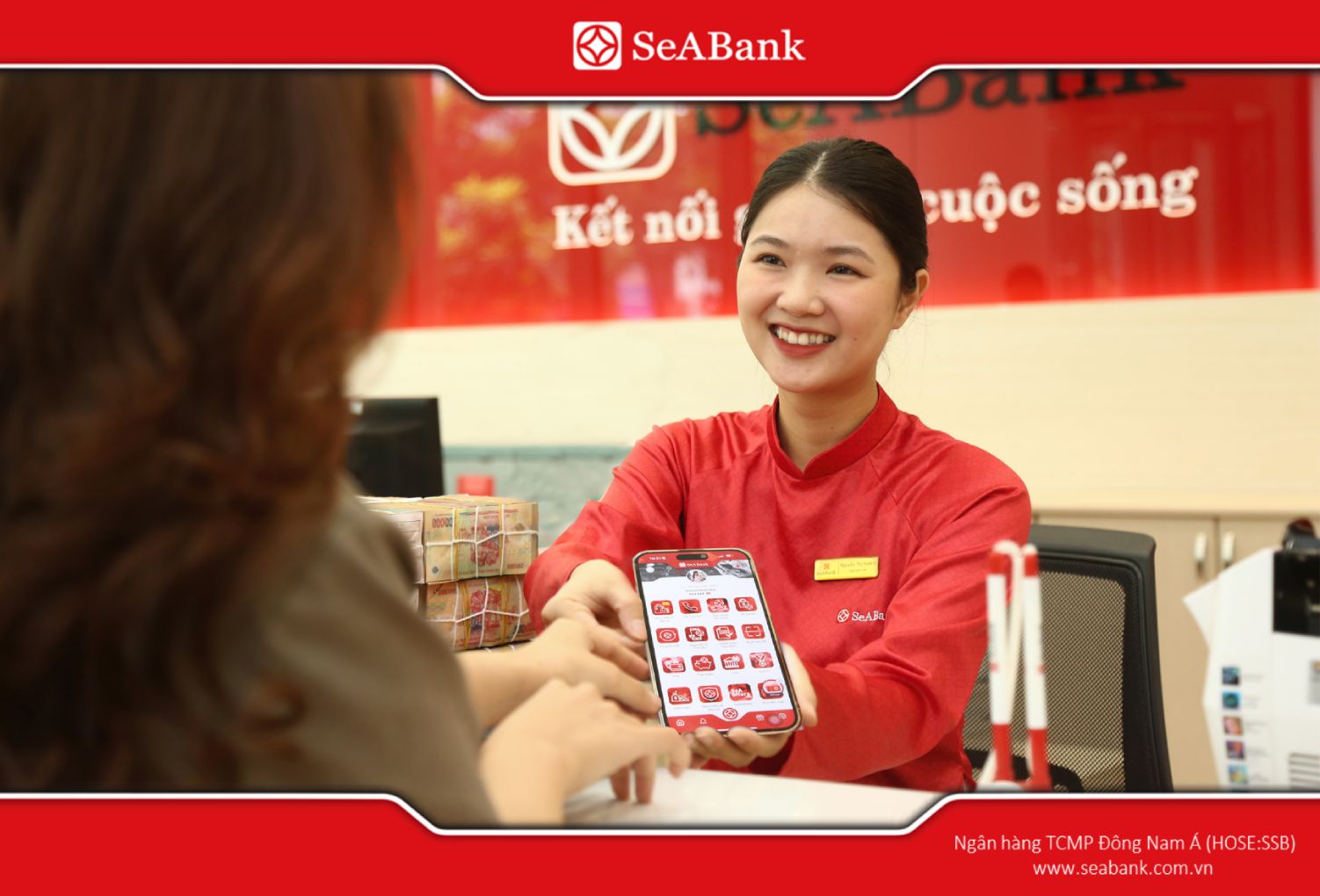
Are you preparing for a trip to Thailand? Contact your nearestSeABank transaction office or call the hotline at 1900 555 587 for advice on foreign currency buying and selling transactions and the documents you need to prepare.In addition, if you need to transfer money abroad for overseas study, settlement, financial support for relatives, business trips,... SeABank provides flexible connectivity to more than 200 countries and territories. Transactions can be conveniently completed directly on the SeAMobile digital banking app without requiring customers to visit a transaction counter in person.
Start your transaction today!
Experience it now: Download the SeAMobile app onGoogle Play/App Store, or visit SeABank transaction offices nationwide for detailed advice and assistance with creating a money transfer order quickly.
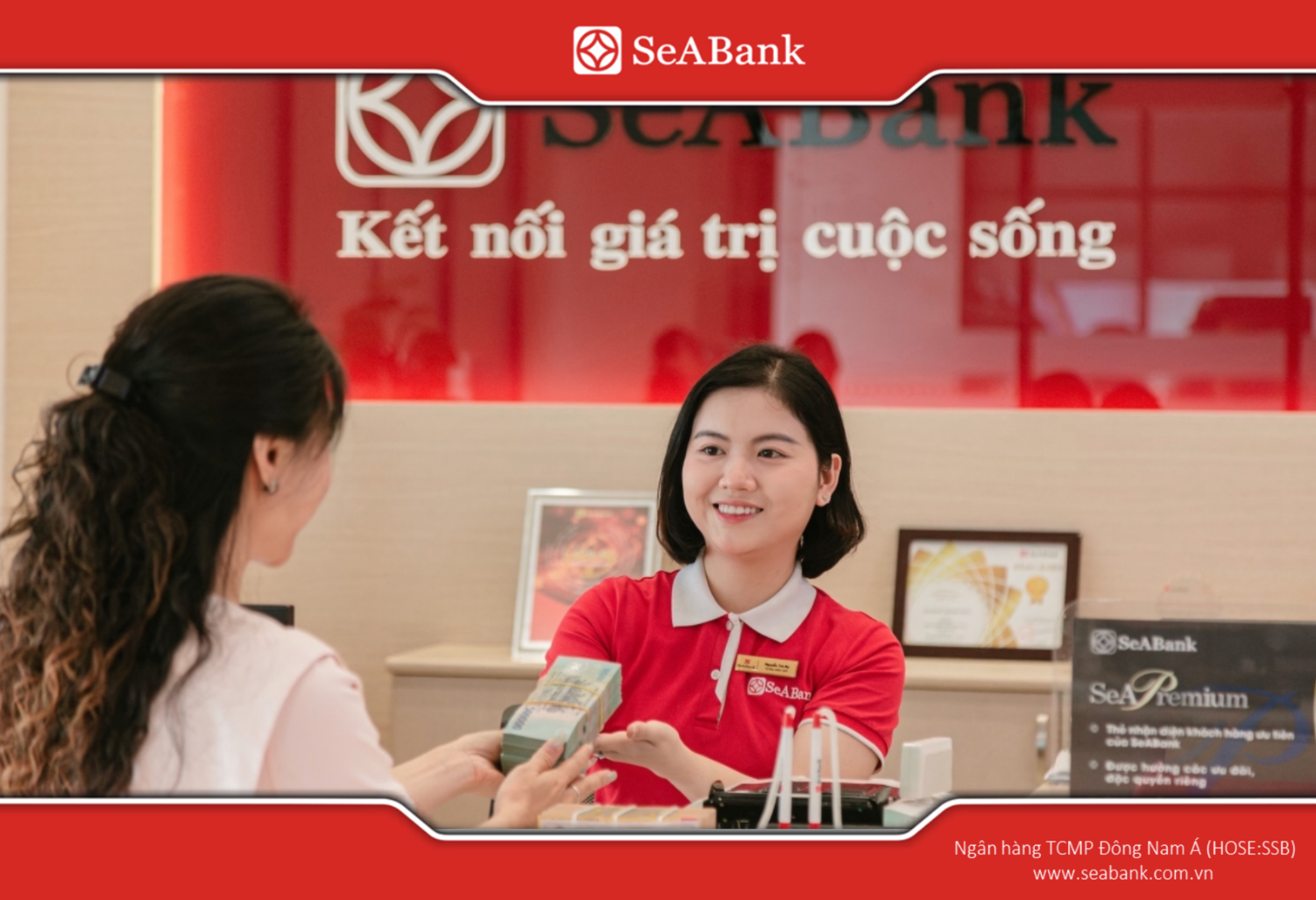
Where to exchange Thai Baht? Banks are an official channel for exchanging Baht, with clear invoices and transaction documents
2. Exchange Thai Baht at SuperRich, Happy Rich, and Counters in Shopping Malls
If you have not exchanged money in Vietnam or need additional Baht during your trip, licensed foreign currency exchange chains in Thailand are a common choice among travelers. When making a transaction, you are generally required to present your passport.
2.1. SuperRich
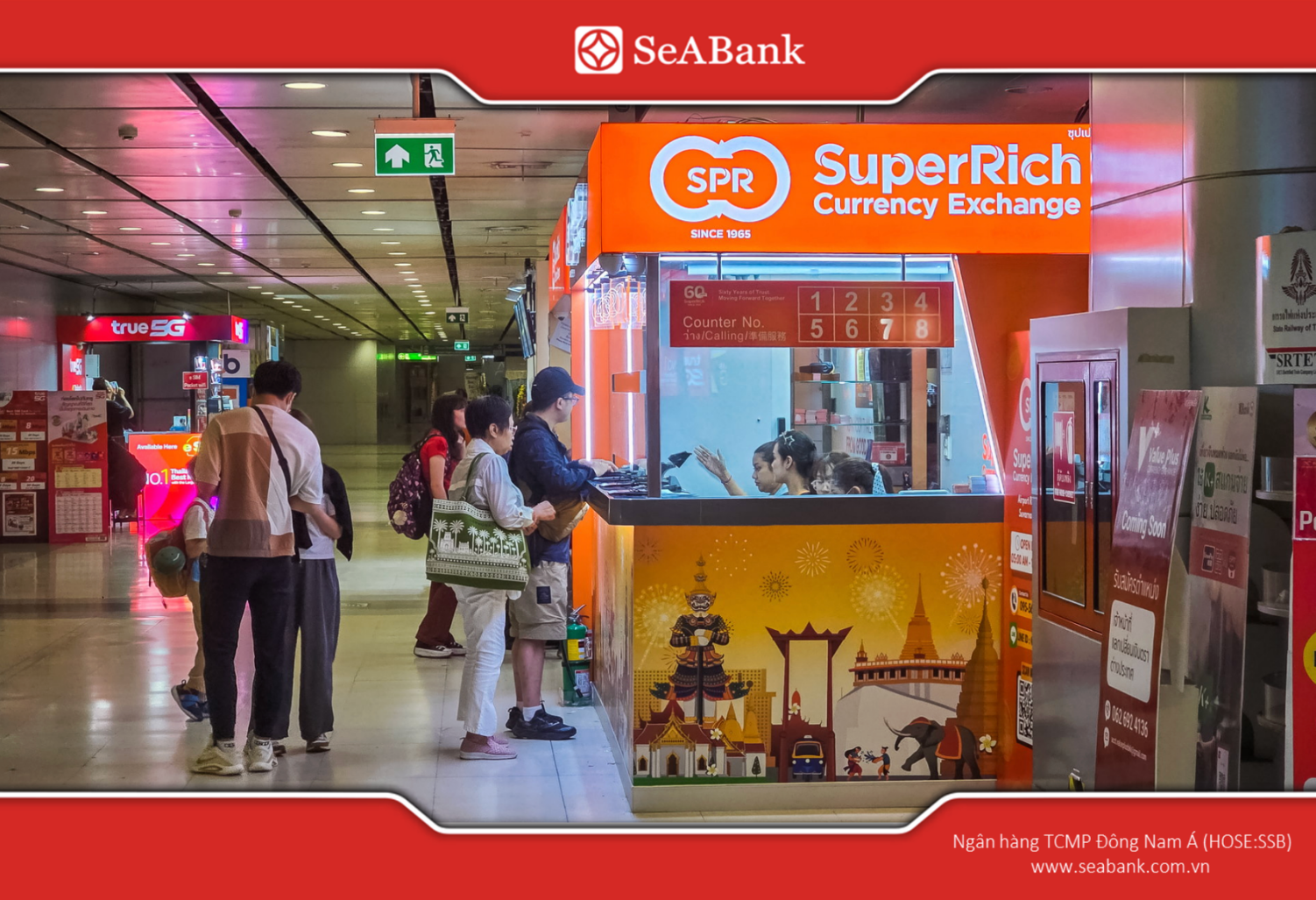
SuperRich is the name commonly associated with two different foreign currency exchange businesses in Bangkok: SuperRich Thailand (identified by green branding) and SuperRich 1965 (orange branding). These two brands have offices located near each other on Ratchadamri Road and also operate multiple counters at BTS and MRT stations and major shopping malls across the city. Exchange rates may vary between branches within the same chain, so you should check the official website of each provider before visiting.
Foreign currency exchange counters in Bangkok shopping malls often have flexible opening hours
2.2. Happy Rich and Exchange Counters in Shopping Malls
In addition to SuperRich, Happy Rich is another foreign currency exchange chain commonly used by travelers, with counters located at airports and in central areas. Major shopping malls such as Siam Paragon, CentralWorld, MBK Center, and Silom Complex also have currency exchange counters within their shopping areas, with flexible opening hours based on the malls' operating hours. As locations and operating costs vary, exchange rates may differ between counters, so you should compare several options before exchanging a large amount.
3. Exchange Thai Baht at Airports
Airport currency exchange counters are one of the most convenient options when you have just landed or are preparing to fly, but the exchange rate difference is an important factor to consider.
3.1. At Airports in Vietnam
The international terminals of major airports in Vietnam have transaction counters operated by banks and foreign currency exchange agents. However, the number of counters offering Thai Baht and the amount of cash available may not always be sufficient, especially at night. If you need a specific amount of Baht, you should exchange it at a bank counter in advance rather than waiting until you arrive at the airport.
3.2. At Airports in Thailand
At Suvarnabhumi and Don Mueang airports, currency exchange areas have multiple counters operated by foreign currency exchange chains and Thai banks, some of which operate almost throughout the day. A common approach among travelers is to exchange only a small amount sufficient for taxi fares, train tickets, and a SIM card on the first day, then exchange the remaining amount at counters in the city center.
4. Foreign Currency Exchange Shops
Foreign currency exchange counters operating under licenses issued by local regulatory authorities generally display electronic exchange rate boards and clear brand signage, making them another option you can consider. Some points to keep in mind when making a transaction include:
Bring your passport and check the listed exchange rate before handing over your money.
Count the money again at the counter and keep the transaction receipt.
Avoid exchanging money with individuals or at locations without clear signage in night markets or tourist areas.
Torn, worn, or ink-stained banknotes are often refused, so you should prepare banknotes in good condition.
5. Thai Baht Exchange Rate and How to Track It
The average Thai Baht exchange rate is approximately 800 VND/THB (*).
(*) The exchange rate was updated as of October 09, 2026 and may vary depending on the time and the policies of each bank. You should check the bank's official information for the latest and most accurate rate.
6. Use International Cards Instead of Carrying Large Amounts of Cash
In addition to cash, international credit and debit cards are a popular payment option when traveling in Thailand, particularly at shopping malls, hotels, restaurants, and major retail chains.
Advantages of paying by card
Reduce the amount of cash you need to carry and lower the risk of loss.
Make payments at millions of card acceptance points and withdraw cash from ATMs displaying the Visa/Mastercard logo worldwide.
Track transaction history and manage limits directly on the digital banking app.
Have the opportunity to receive cashback and other benefits for foreign currency transactions under the bank's programs applicable from time to time.
Notes when using cards abroad
Check the foreign currency transaction fee and overseas ATM cash withdrawal fee applicable to your card in advance.
When a POS terminal asks you to select a currency, choose to pay in Thai Baht rather than converting the transaction into VND at the point of sale.
Enable balance change notifications and check your transaction limits before your trip.
You should still keep some cash for markets, tuk-tuks, small restaurants, or locations that do not accept cards.
In addition to cash, you can use international credit or debit cards for shopping and payments in Thailand to avoid carrying too much cash and potentially receive cashback on certain transactions. SeABankcredit cards andinternational debit cards from Visa/Mastercard can be used at millions of card acceptance points and ATMs worldwide and regularly offer cashback programs for overseas payments.
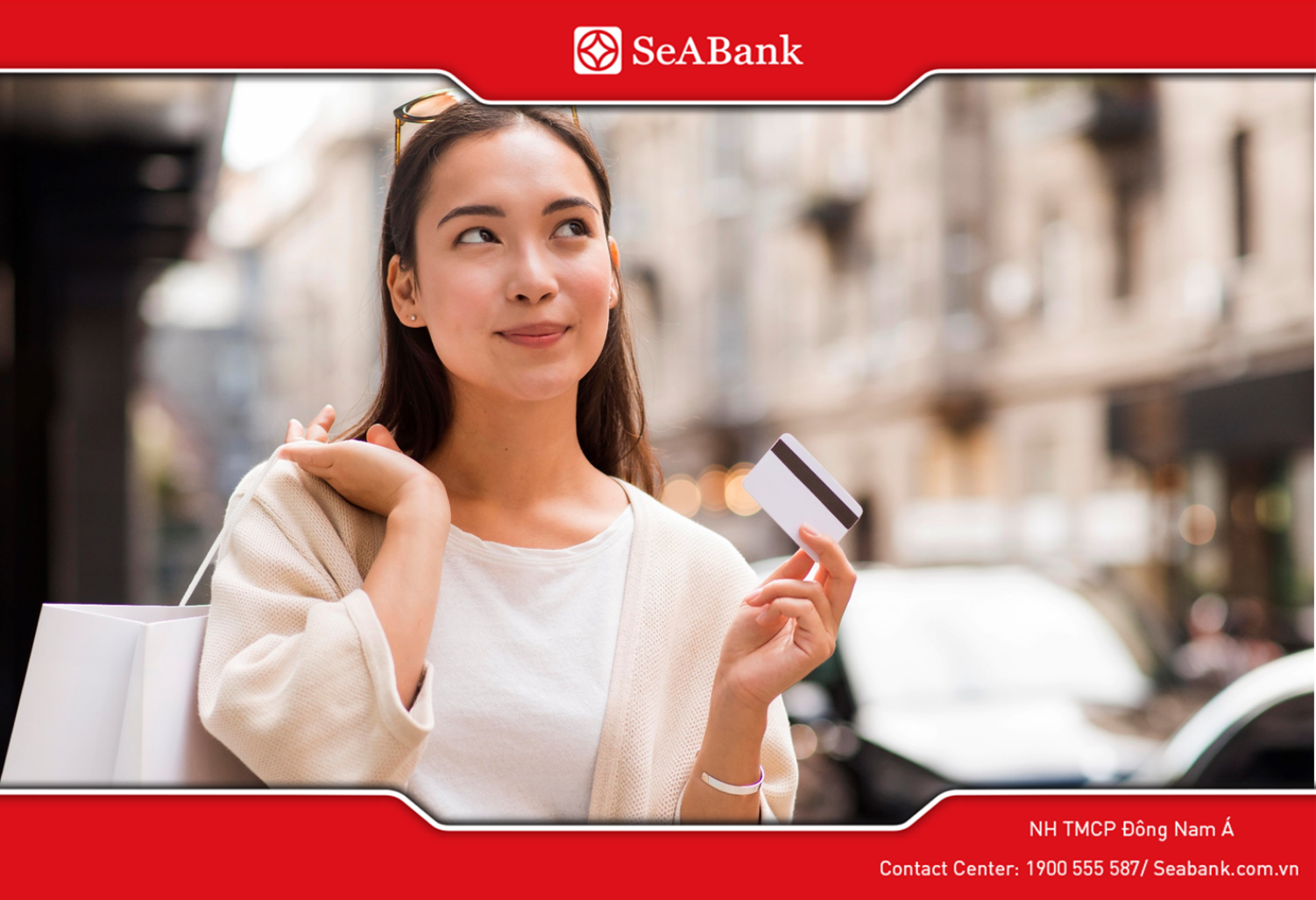
International cards help you manage your spending without carrying too much cash
7. Frequently Asked Questions
1. Should I exchange Thai Baht in Vietnam or wait until I arrive in Thailand?
You can exchange part of your money in Vietnam to cover expenses on the first day and exchange the remaining amount in Thailand. This allows you to have cash available immediately upon arrival while still giving you the flexibility to compare exchange rates at your destination.
2. Can I exchange Thai Baht at a gold shop?
Only foreign currency exchange agents that have been granted the required certificate are permitted to buy foreign currency cash from individuals, and under current regulations, these agents are not permitted to sell foreign currency cash to individuals. If you need to buy Baht, you should make the transaction at a bank to ensure compliance with regulations and obtain proper transaction documents.
3. Should I bring USD to Thailand and exchange it for Baht?
Some travelers use this method, but it requires two currency conversions (VND to USD, followed by USD to THB), meaning you may incur exchange rate differences on both transactions. You should compare the total cost of each option before making a decision.
4. What should I do with leftover Thai Baht after my trip?
You can sell it back to a bank or licensed foreign currency exchange agent in Vietnam or keep it for a future trip. Keep in mind that the cash buying rate for Baht is generally lower than the selling rate.
5. How much cash should I carry when traveling to Thailand?
This depends on your itinerary and spending habits. Many travelers carry enough cash for meals, transportation, and local markets while using international cards for larger expenses. In addition, Thai immigration authorities may require travelers to provide proof of sufficient financial means upon entry, so you should check the current requirements before your trip.
The answer to where to exchange Thai Baht depends on your timing and needs: banks are suitable when you need to buy Baht in Vietnam with clear transaction documents, foreign currency exchange chains and counters in shopping malls are convenient once you arrive in Thailand, while airport counters are suitable for your initial expenses. Monitor exchange rates, prepare the necessary documents, and consider combining cash with an international card for a more convenient trip.
Southeast Asia Commercial Joint Stock Bank (SeABank)