What Is Compound Interest Savings? How to Calculate It and Key Considerations
16/10/2026
Compound interest savings allows interest earned to be added to the principal and continue earning interest. Learn about compound interest, the calculation formula, how it compares with simple interest, and criteria for choosing a bank.
Many people deposit money in a bank but simply withdraw the interest they earn, unintentionally missing out on the power of time. With compound interest savings, the interest earned at the end of each term is added to the principal and continues earning interest in the next term. This article explains compound interest, compares it with simple interest, shows how to apply the calculation formula, and provides criteria for choosing a suitable bank.
Note: The figures and information in this article are compiled from general market sources and do not apply exclusively to SeABank's products.
1. What Is Compound Interest? Why Is It Called the "Eighth Wonder" of Finance?
Compound interest is a method of calculating interest on both the initial principal and the interest accumulated from previous periods. In other words, the interest earned after each period is added to the principal, and the interest rate for the next period is applied to this larger principal amount. This "interest earning interest" mechanism is why compound interest is often referred to as the "eighth wonder of the world."
Compound Interest in Bank Savings
When depositing savings, you can agree with the bank on how to receive interest: receive interest periodically for spending, or add the interest to the principal and continue the deposit (commonly referred to as renewing both principal and interest). Under Clause 3, Article 9 of Circular No. 48/2018/TT-NHNN issued by the State Bank of Vietnam, the method of paying interest on savings deposits is subject to an agreement between the credit institution and the depositor. Choosing to add the interest to the principal is the basis of compound interest savings.
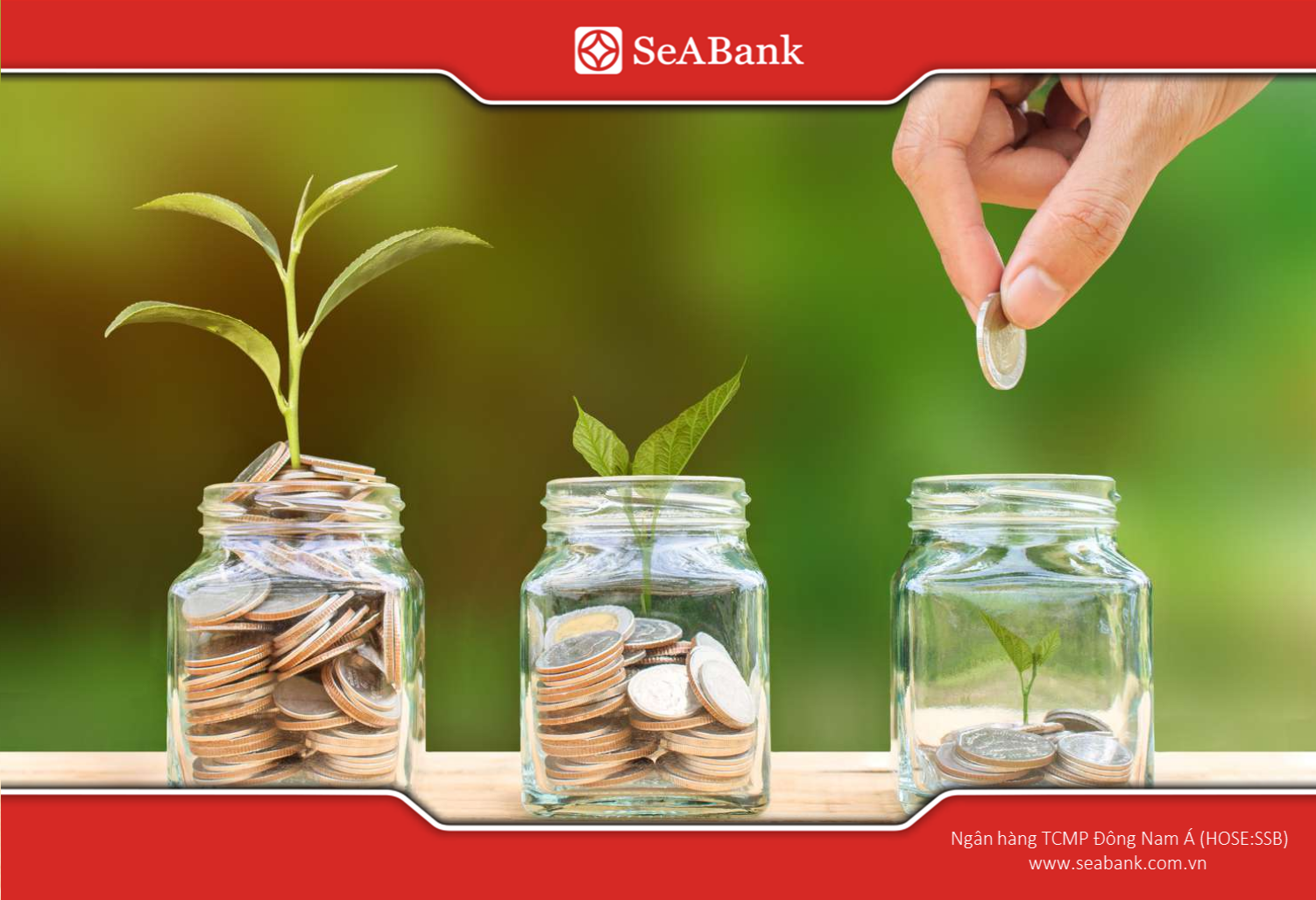
Compound interest allows the interest earned in each term to be added to the principal and continue earning returns
2. Compound Interest Formula with an Example
The basic formula for estimating the total amount received when making a one-time deposit and continuously renewing both principal and interest is:
A = P × (1 + r)ⁿ
Where:
A: total amount received after n periods.
P: initial principal.
r: interest rate corresponding to one deposit period (for example, for a 12-month term, r is the annual interest rate).
n: number of deposit periods.
For example: You deposit 100 million VND, with an assumed interest rate of 6%/year, and continuously renew the deposit for 10 years:
A = 100 × (1 + 0.06)¹⁰ ≈ 179.08 million VND.
Quick Estimation Using the Rule of 72
In addition to the exact calculation formula, you can use the Rule of 72 to quickly estimate how long it will take for an investment/savings amount to double.
Calculation:
Number of years for the money to double = 72 / Annual interest rate (%)
For example: With an initial deposit of 100 million VND and an interest rate of 6%/year:
Time for the amount to double to 200 million VND = 72 / 6 = approximately 12 years.
3. How Do Compound Interest Savings and Simple Interest Differ in Terms of Returns?
With simple interest, interest is calculated only on the initial principal, so you receive approximately the same amount of interest in each period. With compound interest, the interest is added to the principal, meaning the amount of interest earned in each period gradually increases over time.
Consider the general formulas for each method before looking at a specific example:
Simple Interest Formula (Calculated on the Initial Principal)
Compound Interest Formula (Renewing Both Principal and Interest)
A = P + (P × r) × n
A = P × (1 + r)^n
(Where: A is the total amount, P is the principal, r is the interest rate per period, and n is the number of periods).
For easier understanding, consider an example of depositing 100 million VND for a 12-month term with continuous renewal, assuming an interest rate of 6%/year that remains unchanged throughout the deposit period.
Simple interest savings: Each year, you receive and withdraw the interest, while the principal remains at 100 million VND. Annual interest = 100 million × 6% = 6 million VND. Total assets after n years = 100 million + (6 million × n).
Compound interest savings: At the end of each year, the interest is added to the principal and deposited again, so the following year's interest is calculated on a larger amount. Total assets after n years = 100 million × (1 + 6%)ⁿ.
Difference = Total assets with compound interest - Total assets with simple interest.
Comparison after 5, 10, and 20 years:
Deposit Period
Total Assets (Simple Interest)
Total Assets (Compound Interest)
Difference
5 years
100 + (6 × 5) = 130 million VND
100 × 1.06⁵ ≈ 133.82 million VND
Approximately 3.82 million VND
10 years
100 + (6 × 10) = 160 million VND
100 × 1.06¹⁰ ≈ 179.08 million VND
Approximately 19.08 million VND
20 years
100 + (6 × 20) = 220 million VND
100 × 1.06²⁰ ≈ 320.71 million VND
Approximately 100.71 million VND
Note: The figures in the table are illustrative examples, rounded, assume an unchanged interest rate, and do not include taxes or fees (if any).
4. Benefits of Compound Interest Savings
Make the most of the "power of time": The key to compound interest does not lie in whether the initial amount is large or small, but in the accumulation period. When you deposit savings, the interest earned from the previous term is added to the principal and continues earning interest in the next term. The longer the deposit period, the steeper the asset growth curve becomes in later stages.
Build financial discipline: Starting to save early helps you develop a "save first, spend later" mindset. This helps limit impulsive spending, improve personal cash flow management, and establish a solid foundation for long-term financial management.
Gain greater financial independence and prepare for risks: Accumulating savings helps you build an emergency fund more quickly. This allows you to proactively deal with unexpected situations (job changes, illness, economic fluctuations) without becoming financially vulnerable or having to borrow money.
Build a foundation for achieving major life goals: Having accumulated funds that grow steadily over time can make it easier to pursue important plans such as:
Buying a house or a car.
Investing in education, personal development, or starting a business.
Building a retirement fund for a more comfortable life after retirement.
Starting to save early helps you develop financial discipline
5. Important Considerations When Using Compound Interest Savings at a Bank
Choose Flexible Terms and Combine Them with Automatic Renewal
Consider registering for automatic renewal of both principal and interest with your bank. At maturity, the entire principal and interest will automatically be rolled over into a new term without requiring manual action, helping prevent your money from sitting idle without earning interest.
If you have short-term idle funds, you can choose flexible terms (such as 1 month or 3 months) while maintaining regular rollover of your funds.
Apply a "Rolling" Strategy (Savings Ladder)
Instead of depositing all your money into one long-term savings account (for example, 12 months) and being subject to the demand deposit interest rate if you need to make an urgent early withdrawal, divide the money into several portions (for example: 4 portions deposited into 4 savings accounts with staggered 3-month terms).
Each month, one savings account will mature, allowing you to benefit from term deposit interest rates while continuously having funds available for reinvestment (creating a monthly compounding effect) and keeping part of your cash accessible for emergencies.
Use a Regular Savings Contribution Strategy
Many banks currently offer flexible regular savings products (allowing you to add smaller amounts each month, such as 1 million VND or 2 million VND).
Adding funds regularly each month, combined with the interest already earned, can rapidly increase the principal balance used for interest calculations and maximize the return on your personal funds.
Automatically Renew Principal and Interest on Savings at SeABank
At SeABank, individual customers can make online savings deposits through the SeAMobile app and choose the automatic renewal of principal and interest so that the deposit continues to roll over for each term. The basic steps are as follows (menu names and procedures may vary depending on the app version):
Open the SeAMobile app and log in to your account.
Select Savings and choose a suitable savings product.
Enter the deposit amount and select the deposit term.
Select renew principal and interest as the maturity option.
Review the information and confirm the transaction using an OTP.
You can find more product information on the Savings page or contact the Individual Customer Call Center at 1900 555 587 for advice.
Choosing a bank with a variety of deposit terms and automatic renewal of principal and interest helps maintain the compound interest cycle
6. Frequently Asked Questions (FAQ)
1. Is compound interest savings a separate banking product?
No. Compound interest is not a separate product but an accumulation mechanism. When you make a savings deposit and choose to automatically add the interest to the principal so that it continues earning interest in the next term, this is compound interest savings.
2. Is compound interest calculated daily, monthly, or annually?
This depends on the deposit term and the regulations of each bank. Generally, interest is added to the principal at the end of each term. The interest calculation formulas in this article are for reference purposes; the actual amount received will be based on the deposit agreement and official information provided by the bank.
3. Should I choose a long-term deposit or a short-term deposit with continuous renewal?
This depends on your liquidity needs and financial plan:
Long-term deposits: Generally offer higher interest rates and require less effort to monitor renewals, but are less flexible if you unexpectedly need access to your funds.
Short-term deposits + renewal: Provide greater flexibility in managing your cash flow, although interest rates may fluctuate with the market at each renewal.
4. What happens if I need money urgently and withdraw the deposit before maturity?
When making an early withdrawal, the entire amount or the withdrawn portion will be subject to the demand deposit interest rate (which is generally very low) in accordance with State Bank of Vietnam regulations and the deposit agreement. Therefore, you should maintain a separate emergency fund instead of withdrawing money from a term savings deposit.
Compound interest savings is a way to let time work together with your idle funds: start early, save regularly, and minimize interruptions to the interest-earning cycle. Choose a suitable term and proactively renew both principal and interest. Start your journey toward financial freedom and optimize your accumulated funds by using SeABank's automatic renewal of principal and interest today!
Southeast Asia Commercial Joint Stock Bank (SeABank)