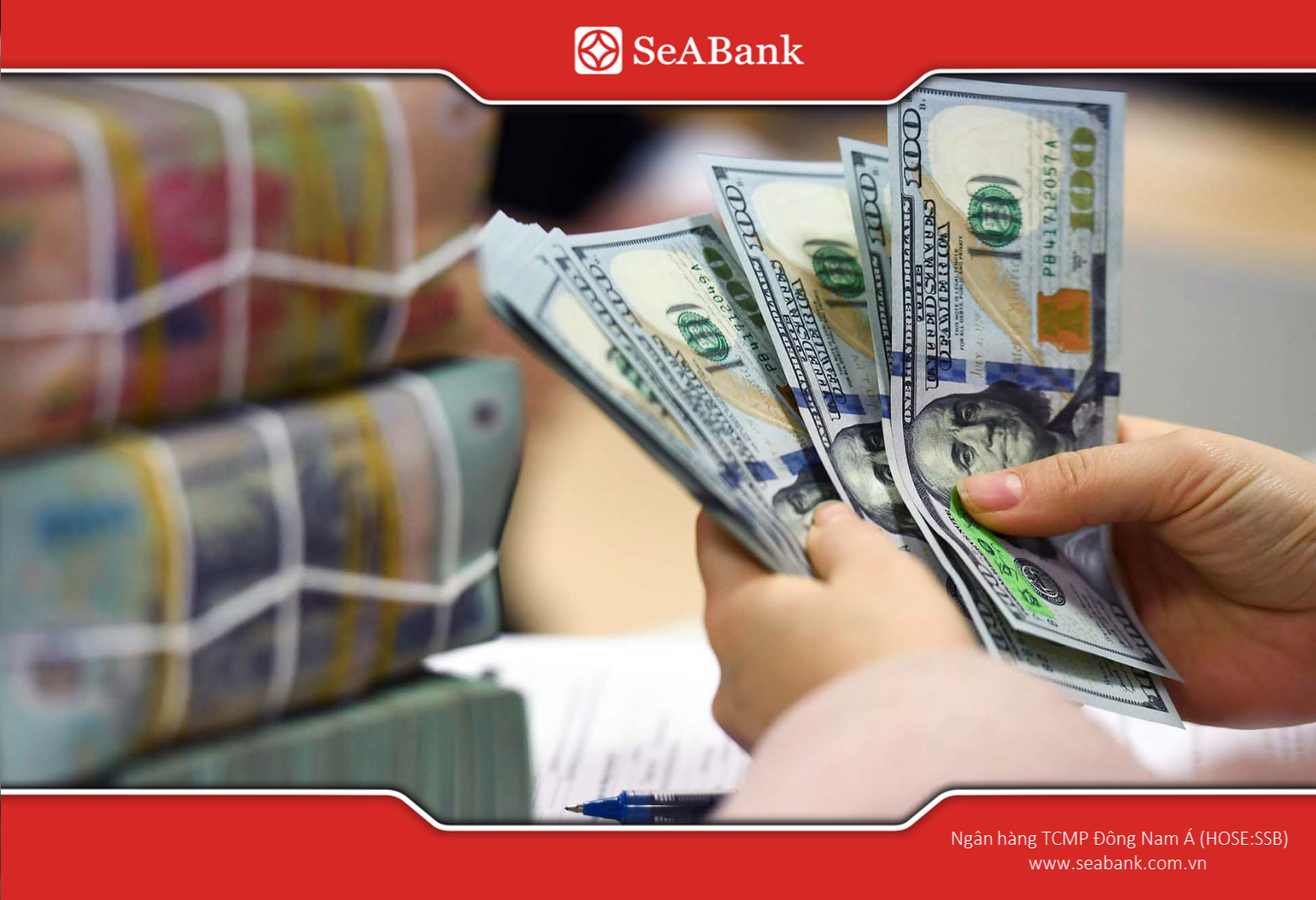
What Is Foreign Currency Savings? Interest Rates, Advantages, Disadvantages, and Procedures
16/10/2026
Learn what foreign currency savings is, the available forms, and current interest rates. Explore the advantages, disadvantages, eligibility requirements, and procedures for safely depositing foreign currency at a bank.
Holding and accumulating foreign currencies (such as USD, EUR, JPY,...) has become increasingly common. However, instead of keeping cash at home, which involves risks and may mean missing out on potential returns, many people choose foreign currency savings. So, how does this form of savings work, and what are its benefits and risks? Find out in detail in the article below.
Note: The figures and information in this article are compiled from general market sources and do not apply exclusively to SeABank's products.
1. What Is Foreign Currency Savings and What Forms Are Available?
Foreign currency savings is a form of deposit in which customers (individuals or organizations) deposit legally owned funds denominated in a foreign currency with a bank for accumulation and to earn interest according to the agreed terms.
Common foreign currencies: US Dollar (USD), Euro (EUR), British Pound Sterling (GBP), Japanese Yen (JPY), Australian Dollar (AUD),...
Forms: Foreign currency deposits may be made as demand deposits or term deposits (1 month, 3 months, 6 months, 12 months,...) similar to VND savings deposits.
Common Forms of Foreign Currency Savings
Each credit institution may specify its own savings options. You can refer to several common classifications:
By deposit term:
Demand savings: Funds can be withdrawn at any time, offering high liquidity, but the interest rate is generally very low or 0%.
Term savings: Funds are deposited for a fixed period (1 month, 3 months, 6 months...), generally offering a higher interest rate but with restrictions on the withdrawal period.
By interest payment method:
Interest paid at maturity: The full principal and interest are received in one payment on the maturity date; this is the most traditional and common method.
Periodic interest payments: Interest is paid regularly on a monthly or quarterly basis, suitable for customers who need a small but regular foreign currency cash flow.
Upfront interest payment: The full interest amount is received at the time of deposit, giving you a small amount of funds available for other purposes.
2. What Are Current Foreign Currency Savings Interest Rates?
Foreign currency deposit interest rates are applied according to each currency:
US Dollar (USD): Pursuant to Article 3 of Circular No. 46/2024/TT-NHNN dated September 30, 2024 (effective from November 20, 2024) and Article 1 of Decision No. 2410/QD-NHNN dated November 1, 2024 issued by the State Bank of Vietnam, the interest rate applicable to USD deposits made by individuals at credit institutions is 0%/year. Therefore, USD savings deposits are mainly used for holding foreign currency rather than earning interest.
Other foreign currencies (such as EUR): Credit institutions determine savings deposit interest rates in accordance with regulations of the State Bank of Vietnam applicable from time to time. Banks are required to publicly list interest rates and the foreign currencies accepted for savings deposits, so you can check the specific rates on the bank's posted rate schedule or website.
Foreign currency deposit interest rates are applied in accordance with State Bank of Vietnam regulations and publicly listed by banks
3. Key Advantages of Foreign Currency Savings
This form of investment is chosen by many customers because of several practical benefits:
Protect assets against domestic inflation: When the exchange rate of the domestic currency fluctuates or inflation rises, holding and depositing foreign currency may help preserve the value of your assets more effectively.
Earn accumulated returns through foreign currency deposits:
For interest-bearing foreign currencies (EUR, AUD, GBP, JPY,...): Banks will apply term deposit interest rates to each currency. Interest is calculated on the original foreign currency principal and accumulated/paid periodically according to the agreement, helping you earn additional passive returns.
For USD (US Dollar): Under regulations of the State Bank of Vietnam, the current maximum interest rate on USD deposits is 0%/year. Therefore, for USD deposits, potential gains do not come from bank interest payments but may come from exchange rate differences if the value of USD increases against VND over time.
High liquidity: You can withdraw principal and interest before or at maturity when you need foreign currency for legitimate purposes (overseas study, travel, international payments,...).
High level of security: Depositing money with reputable banks helps reduce the risks of loss or theft compared with keeping cash at home.
4. Risks to Consider When Making Foreign Currency Savings Deposits
In addition to the benefits, this form of savings also involves several limitations and risks that should be carefully considered:
Low interest rates: Foreign currency savings interest rates (particularly USD) at commercial banks are currently generally very low or even 0% due to the State Bank of Vietnam's anti-dollarization policy.
Exchange rate risk: If the domestic currency (VND) appreciates significantly against the foreign currency you are holding, the actual value after conversion when you withdraw the funds may result in lower domestic purchasing power.
Strict legal regulations: The withdrawal, transfer, or spending of foreign currency in Vietnam is subject to strict foreign exchange management regulations of the State Bank of Vietnam, and in some cases you may be required to prove a legitimate purpose for using the foreign currency.
5. Should You Make a Foreign Currency Savings Deposit?
Whether you should choose this form of savings depends entirely on your personal financial goals:
Advice: This option is most suitable if you already have idle foreign currency funds (received from relatives abroad, foreign income,...) that you do not need to use immediately and want to keep them safely instead of making higher-risk investments.
Conversely, if you currently hold VND and want to purchase foreign currency for short-term investment profits, the risk may be relatively high due to the buying-selling exchange rate spread and minimal deposit interest rates.
6. Eligibility Requirements and Procedures for Foreign Currency Savings
Vietnamese citizens aged 18 or older who have registered permanent residence at the place where the savings deposit is made.
Vietnamese citizens aged from 15 to under 18 who are not subject to restrictions on civil act capacity.
Vietnamese citizens under 15 years old or those with restricted civil act capacity must make deposits through their legal representatives.
6.2. Procedures and Required Documents
The procedure for opening a foreign currency savings account is generally straightforward and similar to making a VND savings deposit. You need to prepare the following documents when visiting a bank transaction counter:
Valid identification documents: Citizen ID card (CCCD) or valid passport, or birth certificate if the depositor is under 15 years old.
Bank forms: Complete the information required in the savings deposit account/savings book application form provided by the bank.
Proof of the source of foreign currency (when necessary): In certain cases or according to regulations applicable from time to time by the bank/State Bank of Vietnam, you may be required to provide documents proving the legitimate source of the foreign currency (such as documents showing remittances from relatives or income confirmation...).
The procedure for opening a foreign currency savings account is generally straightforward and similar to making a VND savings deposit
Keep Your Foreign Currency Secure - Earn Returns with SeABank
Do you have idle foreign currency funds (USD, EUR,...) and want a safe place to keep them while earning returns at a reputable bank? Foreign currency savings at SeABank offers an effective asset protection solution with simple procedures, comprehensive security, and a variety of flexible terms.
Contact the SeABank hotline at 1900 555 587 or visit your nearest branch today for detailed advice on foreign currency savings options that best suit your needs!
7. Tips for Safe and Effective Foreign Currency Savings
To optimize the effectiveness of foreign currency savings, keep the following points in mind:
Choose a reputable bank: Prioritize large banks with strong financial capacity and extensive networks to help ensure the safety of your assets.
Monitor interest rate policies: Regularly check banks' foreign currency interest rate schedules to choose a provider with suitable preferential policies.
Choose a flexible term: If you expect to need the funds in the near future (for example, for travel or paying tuition fees for a child studying abroad), choose a term that matches that time to avoid losing interest due to early withdrawal.
8. Frequently Asked Questions About Foreign Currency Savings
1. Does foreign currency savings earn interest?
Yes. You can still earn interest according to the agreement with the bank, depending on the deposit term and the type of foreign currency. However, these interest rates are generally very low (and may even be 0%/year for USD at certain times) due to the State Bank of Vietnam's foreign exchange management and anti-dollarization policies. The main purpose of this form of savings is to keep assets secure and preserve capital value rather than generate high investment returns.
2. Can foreign currency savings be withdrawn before maturity?
Yes. You are entitled to withdraw the funds before maturity when urgent needs arise. However, you should note that if a term deposit is withdrawn before maturity, the withdrawn principal will be subject to the demand deposit interest rate (generally very low or 0%) up to the withdrawal date.
3. When withdrawing foreign currency savings, can I receive the funds in cash or by bank transfer?
Depending on the bank's current regulations and foreign exchange management regulations applicable at the time of the transaction, you may receive the funds in foreign currency cash or have them transferred to your foreign currency payment account. In some cases, if the bank restricts foreign currency cash payments at that time, the amount may be converted into VND at the bank's buying exchange rate or transferred to another legitimate foreign currency account.
4. Are there management fees or account opening fees for foreign currency savings?
Most banks do not charge account opening fees or regular foreign currency savings account management fees. However, you should ask bank staff carefully about any additional fees (if any) associated with early withdrawals or international foreign currency transfers.
Foreign currency savings allows you to keep USD, EUR,… at a credit institution instead of storing cash yourself while having your ownership recorded through a Savings Card. Before making a deposit, you should review the eligibility requirements, procedures, interest rates, and deposit insurance considerations. Visit SeABank branches nationwide for advice on foreign currency savings and suitable asset management solutions.
Southeast Asia Commercial Joint Stock Bank (SeABank)