What Is a Household Business? Key Characteristics and Differences from Other Business Types
02/10/2026
What is a household business, and how does it differ from an individual business or a private enterprise? Learn about its key characteristics, registration documents, tax obligations under the latest regulations, and what to do after obtaining a business registration certificate.
What is a household business? This is often the first question asked by those looking to start a small business with simple administrative procedures. This is a common business model in Vietnam, established by an individual or members of a household. This article will help you better understand the definition, legal characteristics, differences from other business types, registration procedures, and tax obligations involved in operating a household business.
Note: The figures and information in this article are compiled from general market sources and do not apply specifically to SeABank's products.
1. What Is a Household Business Under Current Regulations?
According toClause 1, Article 82 of Decree No. 168/2025/ND-CP, issued by the Government on business registration and effective from July 1, 2025, replacing Decree No. 01/2021/ND-CP, a household business is established by an individual or members of a household, who are liable for its business activities with all of their assets. If a household business is jointly registered by multiple household members, they must provide a notarized or certified written authorization appointing one member as the household business representative.
Unlike a company, a household business does not have legal entity status. This business model is suitable for individuals and households seeking to operate on a small or medium scale, with establishment and operating procedures that are considerably simpler than those involved in setting up a company.
2. Key Characteristics of a Household Business
A household business has several distinct legal characteristics compared with other types of economic organizations, particularly in terms of its operational scale, number of employees, and asset liability regime. These include:
No legal entity status: All transactions and contracts must be entered into by the household business owner or an authorized representative, who is responsible for them.
Limit on the number of registered businesses (Only one household business is permitted): Each individual or household may register only one household business nationwide. If they wish to expand their operations by establishing another type of economic organization or opening a second business establishment, they must convert to a business entity, such as a limited liability company (LLC) or a joint-stock company.
Unlimited liability (Liable with all personal assets): In the event of debts, tax obligations, or compensation disputes arising from business operations, the household business owner (or all registered household members) must use all their assets—including both business assets and personal assets, such as privately owned real estate, vehicles, and savings accounts—to settle the obligations. Liability is not limited to the initial capital contribution.
Not permitted to establish branches or representative offices: Unlike other types of enterprises, household businesses do not have the legal status required to establish dependent units such as branches or representative offices.
Permitted to operate at multiple locations but required to register a head office: A household business must select and register one fixed location as its head office. For other business locations, the owner must notify the tax authority and market management authority in the areas where the business operates.
A household business does not have legal entity status, unlike a limited liability company, joint-stock company, or partnership.
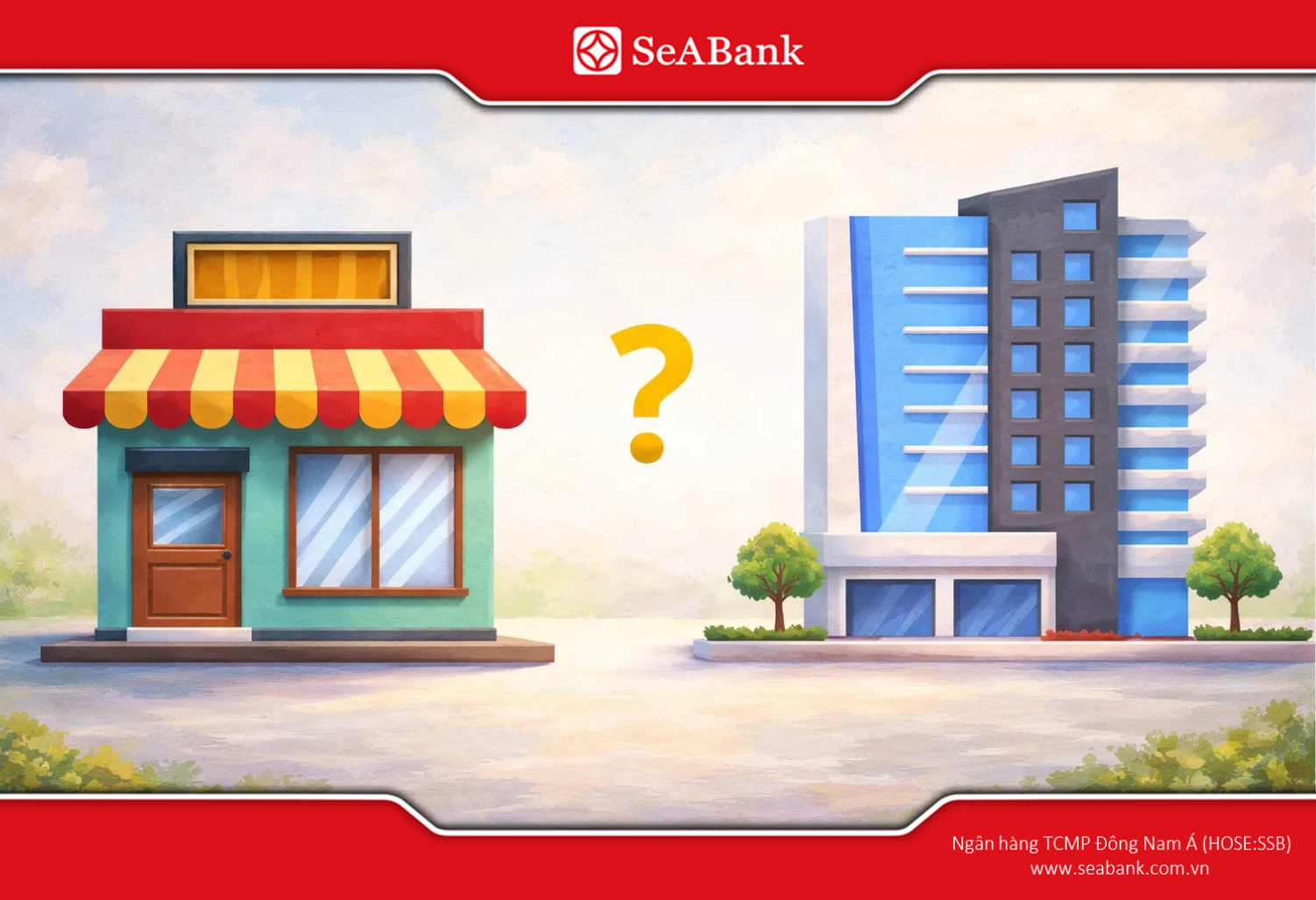
3. Differences Between Household Businesses, Private Enterprises, and Limited Liability Companies
Many people still confuse household businesses with private enterprises or limited liability companies. The following table summarizes some basic criteria to help you compare these business models before making a suitable choice.
Criteria
Household Business
Private Enterprise
Limited Liability Company (LLC)
Legal entity status
No
No
Yes
Establishing entity
An individual or household members
One individual
One or more organizations or individuals (up to 50 members)
Asset liability
Unlimited liability with all assets
Unlimited liability with all assets of the business owner
Limited to the capital contribution
Scale and number of branches
Small-scale; not permitted to establish branches but may operate at multiple business locations
No limit on the number of branches
No limit on the number of branches
Capital mobilization
Limited
Limited
May issue bonds and admit additional capital-contributing members
In general, household businesses are suitable for individuals and families looking to start a business with simple procedures and limited capital, without immediate plans for large-scale expansion. Private enterprises and limited liability companies, on the other hand, are often chosen by those planning to raise capital, expand operations, or obtain legal entity status to enter into contracts and participate in bidding processes.
4. Who Is Eligible to Register a Household Business?
According toClause 2, Article 82 of Decree No. 168/2025/ND-CP, eligible parties for establishing a household business include individuals or household members who are Vietnamese citizens with full civil act capacity under the Civil Code, except for the following cases:
Individuals whose civil rights are restricted or who are serving a sentence:
Individuals facing criminal prosecution or currently held in temporary detention.
Individuals serving a prison sentence.
Individuals subject to administrative handling measures at compulsory rehabilitation centers or compulsory education establishments.
Individuals prohibited by court decisions: Individuals who are currently subject to a court-imposed ban on holding certain positions, practicing certain professions, or performing specific jobs related to the business sector for which they intend to register.
Individuals prohibited under other specialized laws: Individuals who are not permitted to establish household businesses under the specific provisions of relevant laws (e.g., officials, civil servants, public employees, and members of the armed forces).
Cases Exempt from Mandatory Household Business Registration
Agricultural, forestry, fishery, and salt production: Households directly engaged in traditional production activities in these sectors.
Small-scale and mobile trading and service activities:
Street vendors and snack sellers (selling cakes, snacks, and other light refreshments).
Itinerant traders (purchasing goods in one location and selling them elsewhere on a trip-by-trip basis) or mobile businesses without a fixed location.
Seasonal businesses that operate only during certain periods of the year.
Service providers with low incomes.
Exceptions (Registration is still mandatory):
If the above individuals engage in conditional business investment sectors (such as food-related businesses or services subject to security, public order, or food safety requirements), they must register their household business as required by law to ensure regulatory oversight.
The income threshold used to determine "low income" will be specifically set by the People's Committee of each province or centrally governed city to reflect its local socioeconomic conditions.
5. Household Business Registration: Procedures, Process, and Required Documents
5.1. Registration Location
According toClause 1, Article 22 of Decree No. 168/2025/ND-CP, the authority responsible for issuing household business registration certificates has been transferred from the district level to the commune-level business registration authority. Applicants may now submit their applications and receive the results at any commune-level business registration authority within the province or centrally governed city where the household business is headquartered.
5.2. Documents Required for Household Business Registration
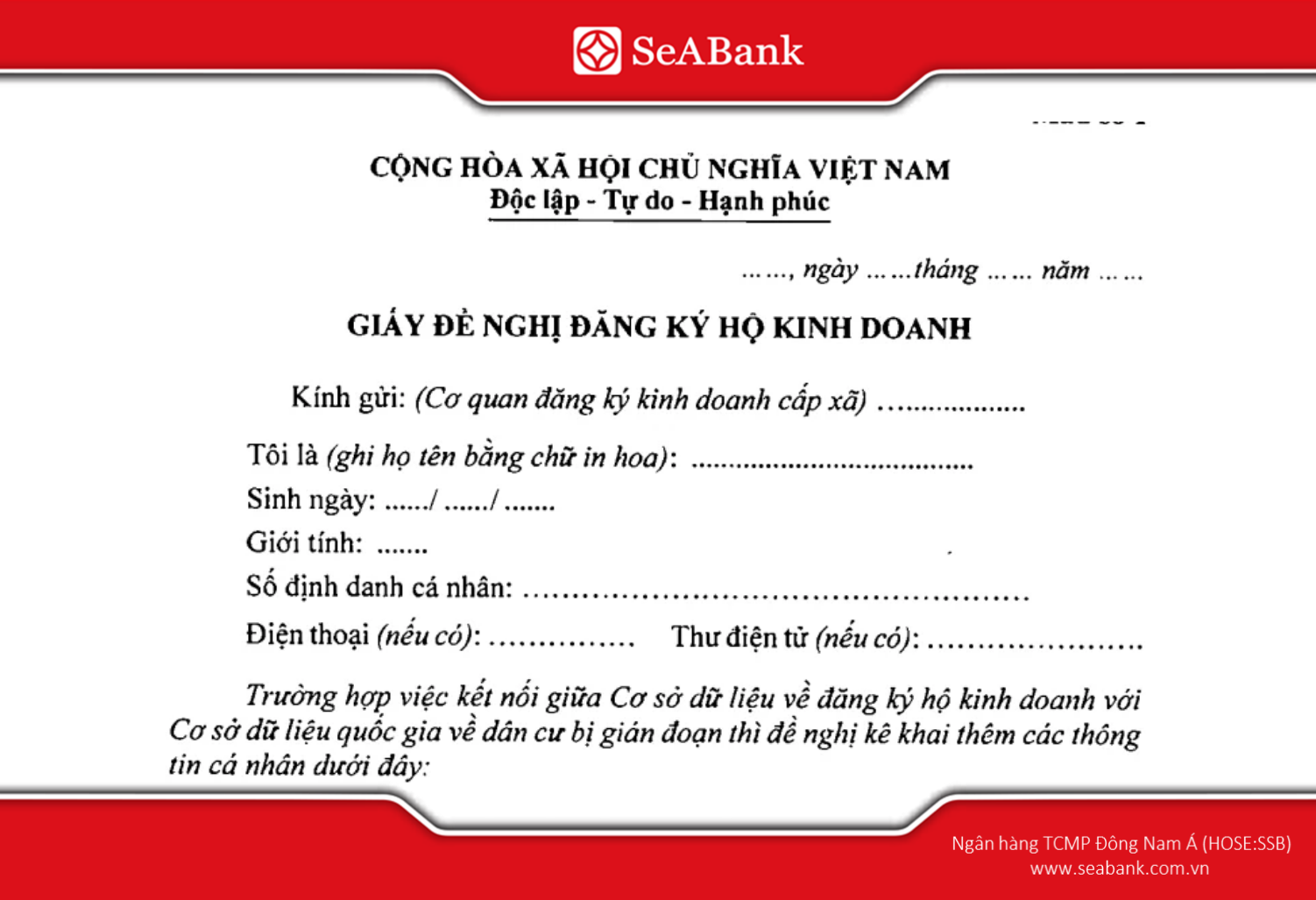
An application for household business registration using the prescribed form.
A copy of the legal identification document of the household business owner (citizen ID card).
A copy of the notarized or certified written authorization, if household members jointly register the business and authorize one member to act as the household business representative (under Clause 1, Article 82 of Decree No. 168/2025/ND-CP).
5.3. Household Business Registration Process
Prepare all the required documents listed above and choose a household business name that complies with legal regulations.
Submit the application directly to the commune-level business registration authority where the business is headquartered, or online through the National Business Registration Portal using an electronic identification account.
The business registration authority receives and processes the application and returns the results within the prescribed timeframe.
If the application is valid, a Household Business Registration Certificate will be issued within 3 days. If the application is invalid, the receiving authority will provide a specific notice requesting amendments or additional documents.
The household business owner submits the registration application to the commune-level business registration authority.
6. How Are Household Businesses Taxed?
After completing the registration process, one of the most important obligations for household business owners to understand is how to fulfill their tax responsibilities.
UnderResolution No. 198/2025/QH15 andDecree No. 68/2026/ND-CP, the presumptive tax method and business license fees for household businesses and individual business operators have been officially abolished. As a result, household businesses are transitioning to a declaration-based system in which they declare their revenue, calculate their own tax liabilities, and pay taxes based on accounting records, supporting documents, and invoices generated during the tax period, instead of paying a fixed presumptive tax amount as before.
According toArticle 3 of Decree No. 68/2026/ND-CP, as amended byDecree No. 141/2026/ND-CP dated April 29, 2026, household businesses and individual business operators with annual revenue of 1 billion VND or less are exempt from value-added tax (VAT) and personal income tax (PIT).
Other cases are subject to tax calculated using the following formulas:
Case 1: PIT payable = Taxable PIT Revenue × Applicable PIT Rate (applicable to businesses taxed based on revenue, namely household businesses with annual revenue above 1 billion VND and up to 3 billion VND that choose this method).
Case 2: PIT payable = (Revenue – Deductible Expenses) × Tax Rate (applicable to businesses taxed based on taxable income).
For more details, see: How Are Household Businesses Taxed from 2026? A Detailed Guide
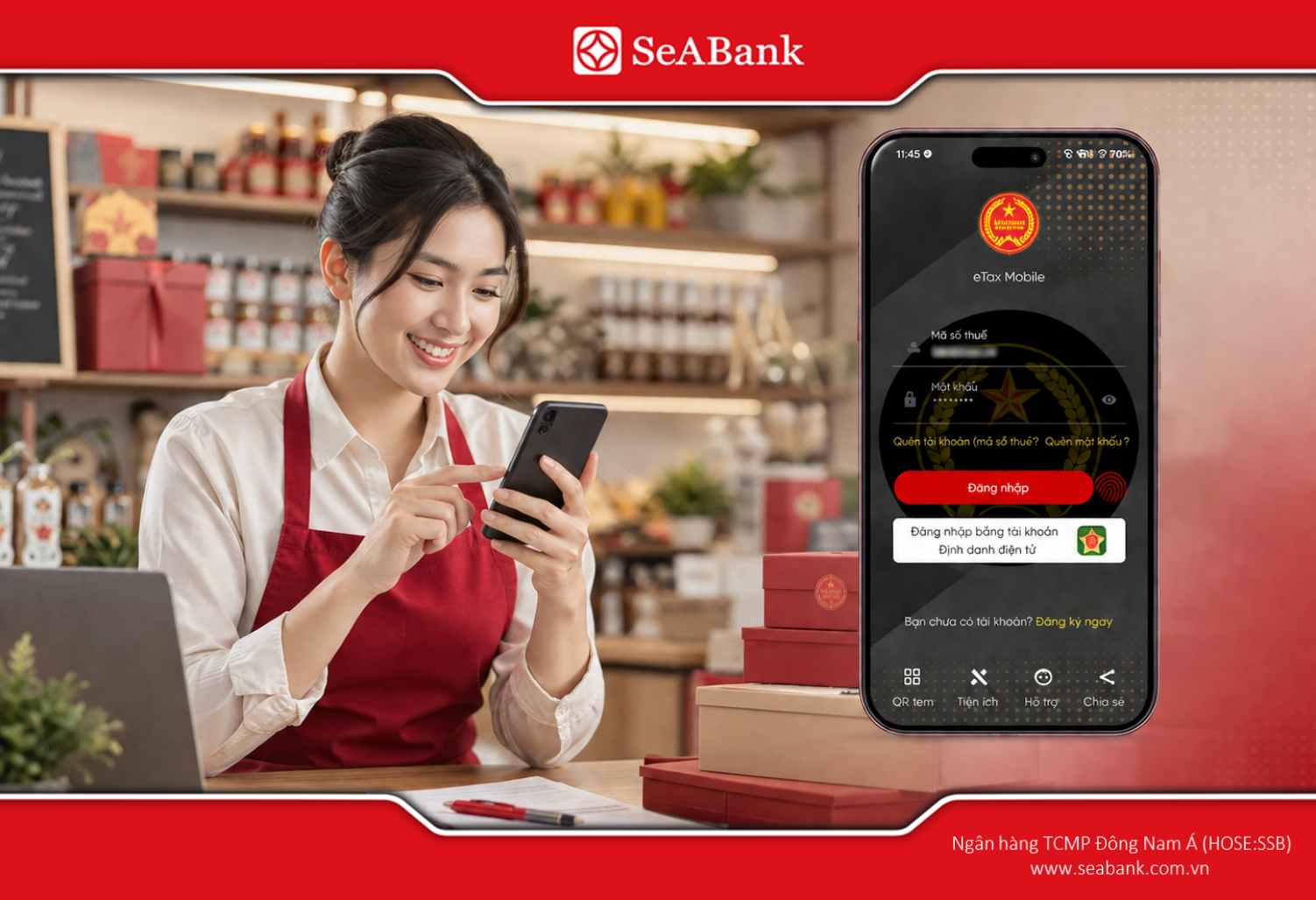
Household business owners proactively declare their revenue to calculate VAT and PIT.
7. What to Do Immediately After Receiving a Business Registration Certificate
After receiving a Household Business Registration Certificate, you need to complete several additional steps to ensure that your household business can officially begin operations in a lawful and professional manner.
Have a business stamp made (if needed): Household businesses are not required to have a seal like enterprises. However, many choose to have a stamp bearing the business name or a square stamp for convenience when conducting transactions and issuing supporting documents or invoices.
Register for taxes and fulfill related obligations: Update tax registration information using the personal identification number, choose an appropriate tax declaration method, and report revenue in accordance with the instructions of the tax authority directly managing the business.
Open a separate bank account for the household business: This is an important step in separating business cash flows from personal finances, making it easier to monitor revenue and expenses and fulfill tax declaration obligations more transparently.
Suggestion: Build your brand identity today by opening a free, personalized account number under your shop or household business name at SeABank. An easy-to-remember account number that reflects your brand identity can help customers recognize your business in every bank transfer while reinforcing a professional image.Register for a personalized account number and enjoy a full package of special offers here:Open a SeABank Personalized Account for Household Businesses.
8. Frequently Asked Questions (FAQs)
1. Does a household business have legal entity status? No. A household business does not have legal entity status. The household business owner is liable for its business activities with all of their assets.
2. Can a household business hire more than 10 employees? Yes. The limit of fewer than 10 employees under Decree No. 78/2015/ND-CP is no longer in effect. Current legislation no longer limits the number of employees a household business may hire.
3. Is a household business required to have a business stamp? No. Having a business stamp is optional and depends on the actual needs of each household business when conducting transactions.
4. Which tax method applies to household businesses? According to Clause 6, Article 10 of Resolution No. 198/2025/QH15, household businesses are transitioning to a declaration-based system in which they declare their revenue, calculate their own tax liabilities, and pay VAT and PIT based on a percentage of revenue (or actual profit, depending on the applicable case), replacing the previous presumptive tax method.
5. Where can I register a household business? Household business registration applications can be submitted to the commune-level business registration authority where the business is headquartered, or online through the National Business Registration Portal.
Understanding what a household business is, its legal characteristics, registration procedures, and tax calculation methods will help you take a more proactive approach when starting your business. This model is suitable for small-scale operations with streamlined procedures, but it also comes with unlimited asset liability, which household business owners should carefully consider. After obtaining the registration certificate, remember to open a separate bank account to manage business cash flows more transparently and professionally.
Southeast Asia Commercial Joint Stock Bank (SeABank)