Bad Debt Check: 3 Quick and Accurate Ways to Look It Up
23/10/2026
Guide to checking bad debt via the CIC app, MoMo, and at a bank. See quick lookup methods and important notes before applying for a loan.
Before applying for a loan or opening a credit card, many people are unexpectedly rejected because they have bad debt without even knowing it. Proactively checking bad debt helps you clearly understand your personal credit status, promptly handle overdue debt, and prepare your loan application more smoothly. This article summarizes 3 common ways to check bad debt together with important notes you need to know.
Note: The figures and information in this article are compiled from general market sources and do not apply exclusively to SeABank's products.
1. What Is Bad Debt and Why Should You Proactively Check It?
1.1. What Is Bad Debt Under Current Regulations?
Under Clause 1, Article 10 of Circular 31/2024/TT-NHNN of the State Bank of Vietnam regulating the classification of assets in the operations of commercial banks and non-bank credit institutions (as amended and supplemented by Circular 37/2025/TT-NHNN), debts are classified into 5 groups based on their level of risk. Bad debt refers to debts in Group 3 (substandard debt), Group 4 (doubtful debt), and Group 5 (potentially irrecoverable debt). Information about customers' debt groups is reported by banks and credit institutions and recorded in the system of the National Credit Information Center of Vietnam (CIC).
1.2. Benefits of Proactively Checking Bad Debt
Proactively checking your credit status provides several benefits:
Understand your current debt group before submitting a loan application or opening a credit card.
Promptly detect errors or signs that your identity may have been misused to take out a loan.
Proactively contact the bank or credit institution to handle overdue debts.
Have more time to prepare and improve your credit history before carrying out important borrowing transactions.
2. 3 Common Ways to Check Bad Debt
Borrowers can check their bad debt status through one of the following channels.
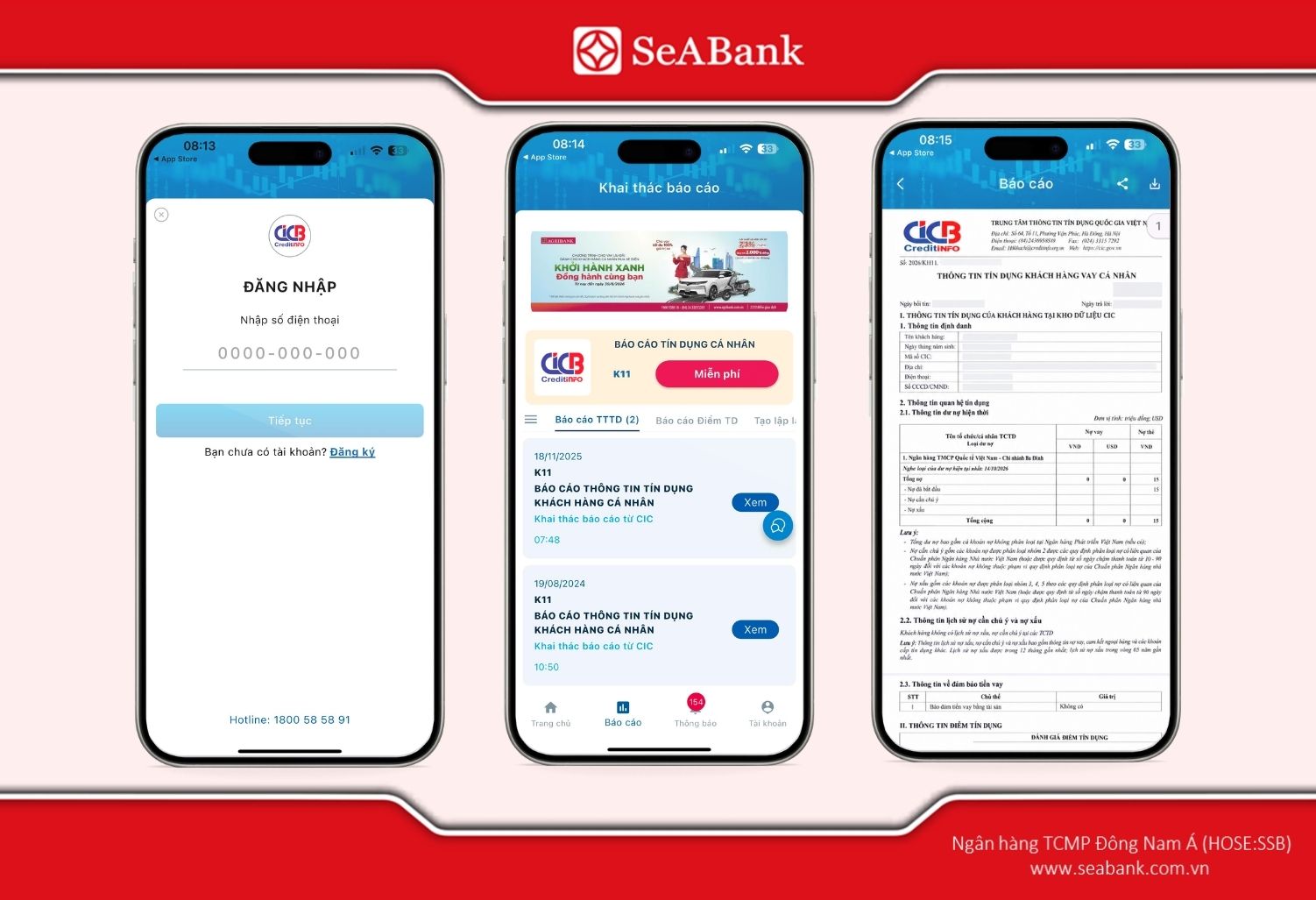
Method 1: Check Bad Debt Using Your Phone Number via the CIC Credit Connect App
Register an account to check bad debt using your Citizen ID and the phone number registered under your name, then verify with OTP.
Wait for CIC's professional department to check and verify the information before granting access to the report.
Log in and select the credit report access section to view your debt group, borrowing history, and credit score.
Check bad debt using your phone number via the CIC Credit Connect app
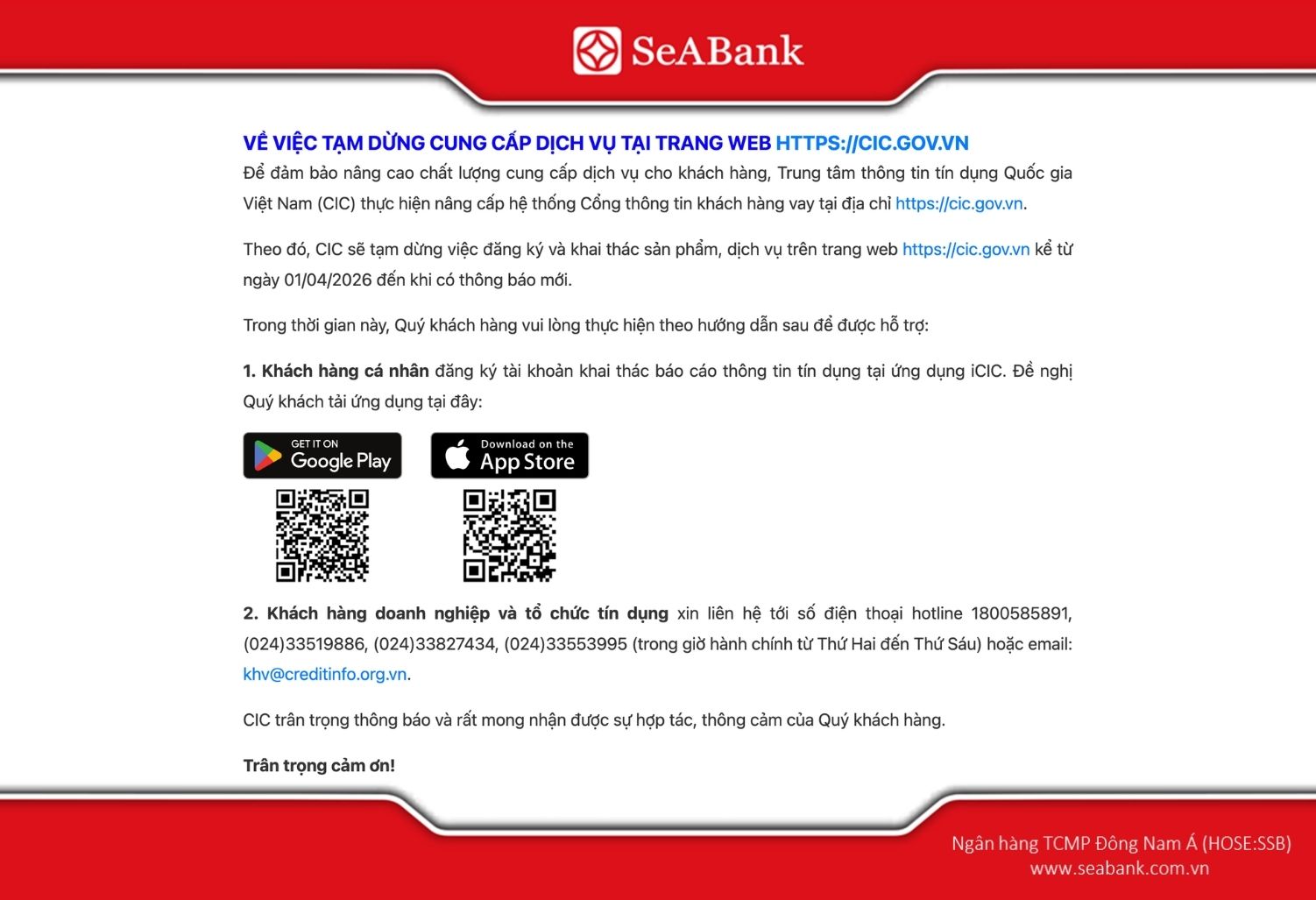
Note: From April 1, 2026, CIC has temporarily suspended registration for and access to products and services on the websitehttps://cic.gov.vn.
CIC has stopped providing credit reports on the website
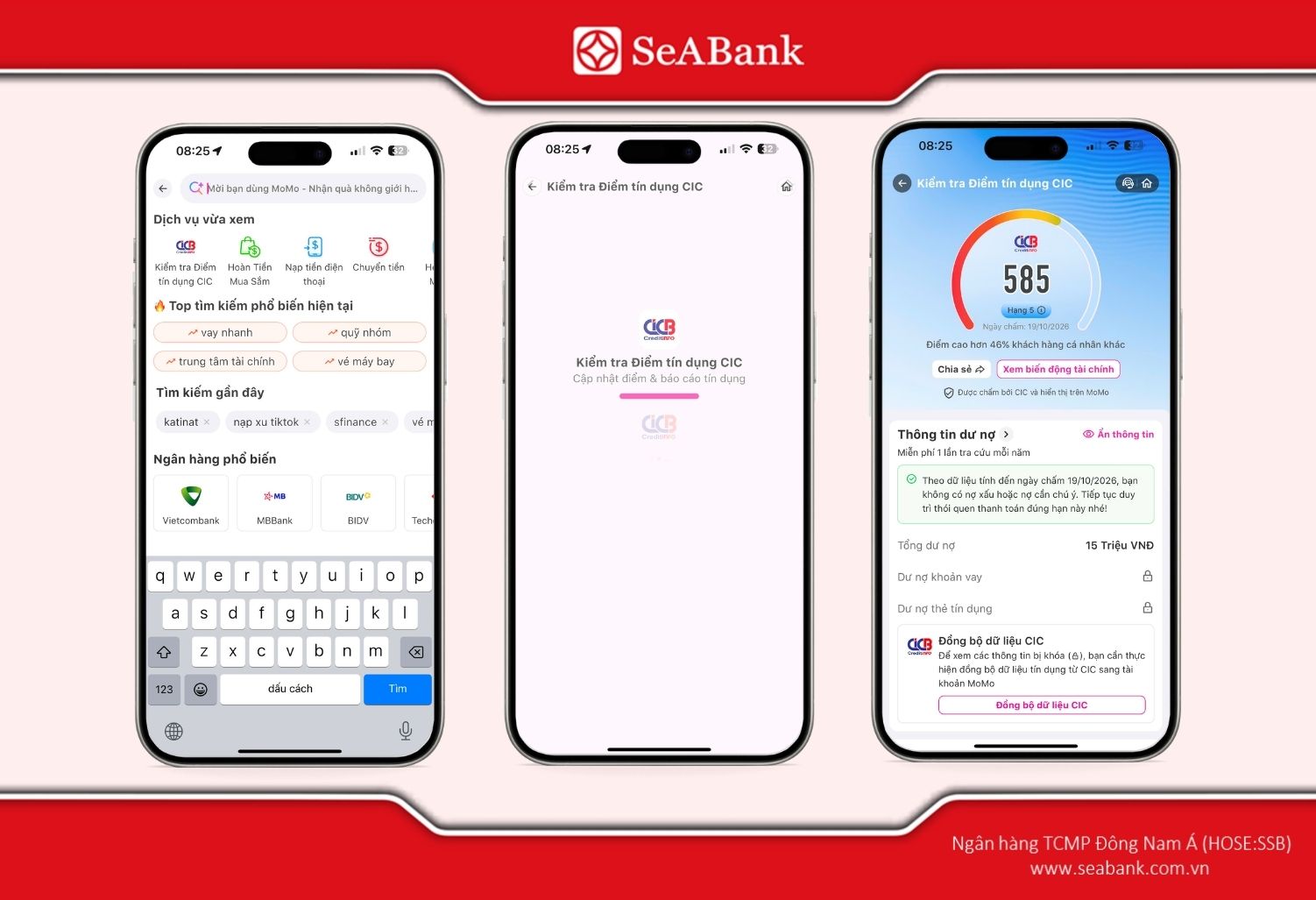
Method 2: Check Bad Debt Using Your Citizen ID via the MoMo App
Open the MoMo app, enter "Check CIC Score" in the search bar, or go to the Financial Center and select the "Check CIC Score" icon.
Verify your account as required by the app.
Tap "Check CIC Score" to view your debt group and credit score results.
Note: The data displayed on MoMo is provided by CIC; the app only supports lookup and displays the information and does not independently assess or change the customer's debt group.
Check bad debt using your Citizen ID via the MoMo app
Method 3: Check Bad Debt Using Your Citizen ID Directly at a Bank Transaction Counter
Bring a valid Citizen ID Card/Identity Card to the nearest bank transaction office.
Ask a staff member to assist in checking your credit information and bad debt status, usually together with a loan application or credit card application request.
The bank staff retrieves the report from the CIC system, explains the result, and advises on how to handle the situation if bad debt is found.
Customers can ask bank staff to assist with checking credit information directly at the transaction counter
3. Important Notes When Checking and Handling Bad Debt
Fully repaying overdue debt is a necessary condition for gradually improving your credit history.
For debts in Groups 3, 4, and 5, most banks will be more cautious when considering new loan applications; you should proactively contact the bank for advice on a suitable solution.
Under Clause 1, Article 13 of Circular 15/2023/TT-NHNN, bad debt information is stored on the CIC system for a maximum of 5 years from the date the customer fully settles the debt, except for certain special cases as prescribed. However, for bad debts with an outstanding balance of less than 10 million VND, the information may be removed from the system immediately after the customer settles the debt.
4. Frequently Asked Questions
1. Is There a Fee for Checking Bad Debt?
It depends on the checking channel. Currently, CIC allows individuals to check their credit history and debt group via the CIC Credit Connect app or MoMo; some basic lookup functions are free of charge, while certain more detailed reports may incur fees in accordance with CIC regulations. You should check the current fee schedule before proceeding.
2. Which Bad Debt Groups Make It Difficult to Get a New Loan Approved by a Bank?
Bad debt includes Group 3 (substandard debt), Group 4 (doubtful debt), and Group 5 (potentially irrecoverable debt). Customers in these groups, especially Groups 4 and 5, generally face greater difficulty when applying for new loans at banks.
3. If a Husband or Wife Has Bad Debt, Can the Other Person Still Get a Bank Loan?
In principle, bad debt is recorded according to each individual's credit information. The other person may still have their loan application considered by the bank if they do not personally have bad debt and meet all loan conditions. However, certain loans involving jointly owned assets or requiring a co-borrower or guarantor may be affected depending on the specific case.
Understanding how to check bad debt via CIC, MoMo, or directly at a bank helps you proactively manage your credit history and avoid unexpected issues when applying for a loan. If bad debt is found, fully repay it and patiently wait for the system to update so that your credit score can gradually improve. Once your credit profile has stabilized, you can consider suitable loan solutions from SeABank to meet your financial needs.
Southeast Asia Commercial Joint Stock Bank (SeABank)