News
What Is Attention-Grade Debt? How to Clear It From Your CIC Credit Report
 25/09/2026
What attention-grade debt is, how many overdue days trigger it, whether you can still borrow money, and how to clear it from your CIC record quickly.
Attention-grade debt happens when a loan payment stays overdue for a certain period and gets flagged in the credit information system run by Vietnam's National Credit Information Center (CIC). It's a common worry for anyone planning to borrow or open a credit card. This article walks through what attention-grade debt is, how it affects you, and how to clear it from your CIC record as quickly as possible.
1. What is attention-grade debt, and how many overdue days does it take to fall into this group?
Vietnam's national credit information system sorts every loan into one of five debt groups, based on how overdue it is and how likely it is to be repaid. Attention-grade debt is debt group 2 - the group borrowers fall into most often, usually just from missing a payment date.
1.1. Definition under current regulations
Under Article 10 of Circular No. 11/2021/TT-NHNN (State Bank of Vietnam), debt group 2 covers loans overdue by 10 to 90 days, as well as loans whose repayment schedule has been restructured for the first time and are still within that new term. It's lower-risk than bad debt, but credit institutions still monitor it closely.
Once a payment passes the 90-day mark, the loan moves into group 3 or higher and officially becomes bad debt. That makes the 10 - 90 day window a critical opportunity to fix the problem before it does more lasting damage to your credit profile.
1.2. The State Bank's five debt groups
Here's where attention-grade debt sits among all five:
2. What are the consequences? Can you still borrow or open a credit card?
Attention-grade debt isn't bad debt yet, but it still affects your ability to access financial products.
2.1. Getting a new loan
If your loan history shows attention-grade debt, credit institutions will scrutinize your repayment ability more closely. Approval is still possible - especially for secured loans with collateral - but usually on stricter terms, and you'll likely need to show that the late payment was a one-off caused by circumstances outside your control.
2.2. Opening a credit card
The same applies to credit cards: attention-grade debt makes approval harder. The bank may ask you to settle the overdue amount first, and will look more closely at your income and recent credit history before deciding.
3. How to check CIC for attention-grade debt
Checking your credit report regularly is the best way to catch attention-grade debt early and act before it becomes a bigger problem.
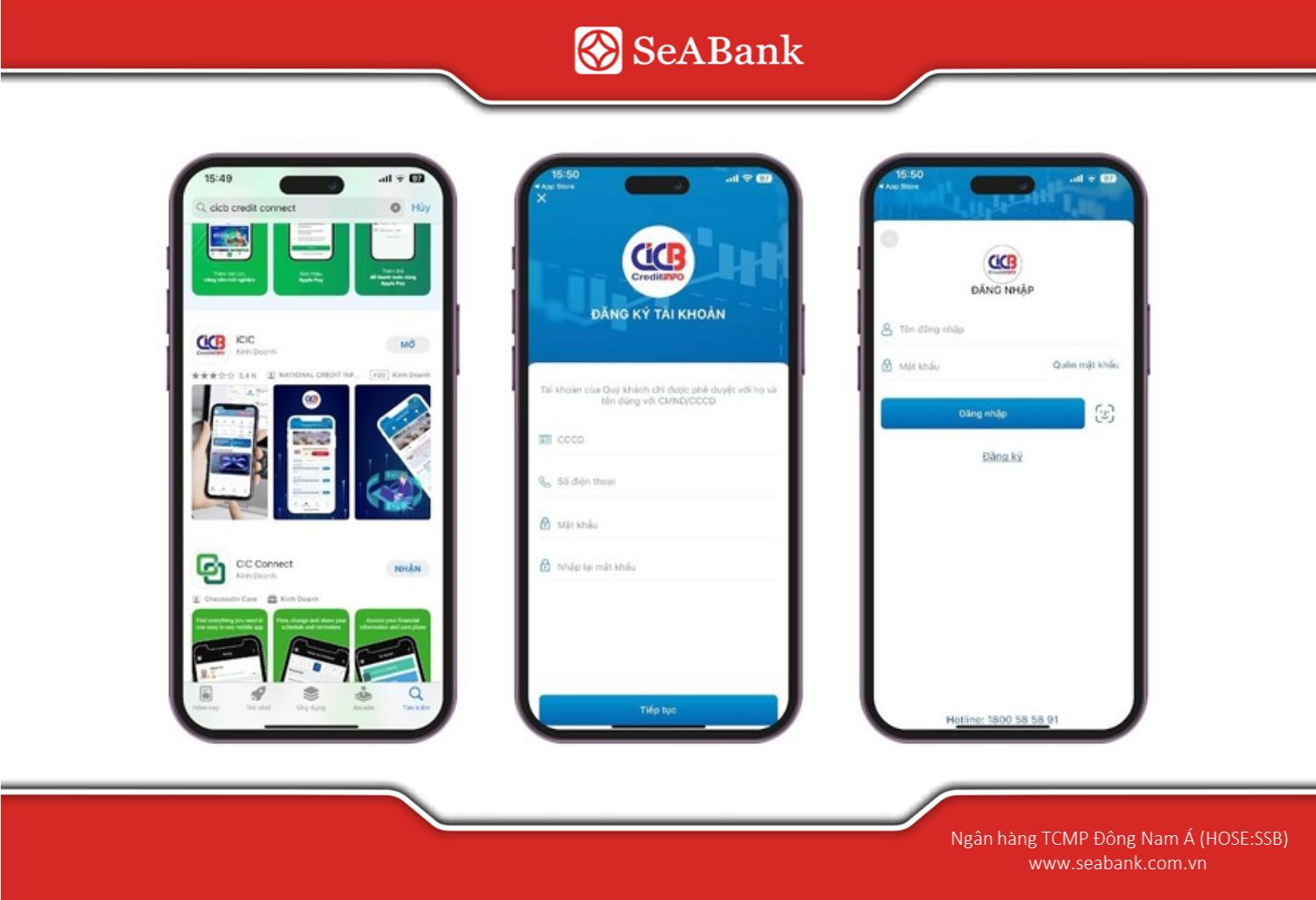
- Go to https://cic.gov.vn/ or download the CIC Credit Connect app from Vietnam's National Credit Information Center.
- Register an account and verify your personal information as instructed.
- Open the credit history section to view your current loans.
- Check the debt group and number of overdue days, if any, for each loan.
If any loan shows up in group 2, that's your signal - it's classified as attention-grade debt, and you should deal with it before it slides into bad debt.
4. How to resolve attention-grade debt, and how long it stays on your CIC record
Once you know you have attention-grade debt, resolve it as soon as you can to limit the damage to your credit history.
4.1. Steps to settle an overdue loan
- Contact your lender right away to confirm the exact principal, interest, and any fees owed.
- Pay off the full overdue amount as soon as possible so overdue days stop accumulating.
- Keep your payment receipts and settlement confirmation in case you need them later.
- Keep paying your other loans on time to start rebuilding a positive credit history.
4.2. How long before the record clears automatically
Under Clause 1, Article 13 of Circular No. 15/2023/TT-NHNN, once you've paid off the principal and interest in full, the attention-grade debt record still stays on file at CIC for a period - up to five years in some cases - before it's removed completely. In practice, though, most credit institutions only look at the most recent 12 months of repayment history when deciding on a new loan. So the priority is simple: keep paying on time and avoid any further overdue debt during that period.

Attention-grade debt isn't bad debt, but it can still make it harder to borrow or open a credit card. Checking your CIC record regularly, settling overdue debt quickly, and paying on time are the simplest ways to avoid and recover from attention-grade debt. Hopefully this has helped clear things up.
Related News
How Much Is 1 Tael Of Gold? Update Today's Gold Price And Notes 09/10/2026
Russian Currency: Denominations, Exchange Rates, and How to Exchange Russian Rubles 09/10/2026
What Is German Currency? Denominations, Exchange Rates, and How to Convert to Vietnamese Dong 09/10/2026
What Is a Dynamic QR Code? Comparison with Static QR Codes and How to Create One 09/10/2026
How to Create a Bank QR Code on SeAMobile in Just 3 Steps 09/10/2026

How Much Is 1 Tael Of Gold? Update Today's Gold Price And Notes
How much is 1 tael of gold? Update the latest price of 1 tael of 9999, 24K, 18K gold today and instructions on how to calculate and buy gold safely and reliably.
09/10/2026
Read more

Russian Currency: Denominations, Exchange Rates, and How to Exchange Russian Rubles
Learn about Russian currency (Ruble), including its denominations, the current RUB/VND exchange rate, where to exchange money, and tips for exchanging Rubles when traveling to Russia. Find out more with SeABank.
09/10/2026
Read more

What Is German Currency? Denominations, Exchange Rates, and How to Convert to Vietnamese Dong
Germany's currency is the euro (EUR). Learn about German currency denominations, the EUR/VND exchange rate, where to exchange money, and how to receive money from Germany in Vietnam via SeABank.
09/10/2026
Read more