News
Can You Get a Credit Card with Bad Debt? Regulations and Important Notes
 30/10/2026
Can you get a credit card with bad debt? Learn about debt classification, how long bad debt information is retained on CIC, and how to improve your credit profile to increase your chances of card approval.
Having previously made late loan repayments or overdue credit card payments leaves many people wondering whether they can get a credit card with bad debt. In practice, approval depends on the debt group, settlement status, income, and the credit assessment policy of each bank. The article below helps you understand what bad debt is, how long the information is retained on CIC, and how to improve your credit profile to increase your chances of getting a credit card.
1. What Is Bad Debt? How Are Debt Groups Classified?
Under Clause 5, Article 3 of Circular 31/2024/TT-NHNN, bad debt refers to debts classified as Group 3, Group 4, and Group 5, generally including debts overdue for 91 days or more or debts assessed by a credit institution as difficult to recover. Information about these debts is recorded in the system of the National Credit Information Center of Vietnam (CIC).
Not only consumer loans, home loans, car loans,.... but also credit card balances that remain overdue for an extended period may become bad debt.
5 common credit debt groups
Debts are divided into 5 groups depending on their level of risk. The table below summarizes the classification criteria based on the number of overdue days:
In addition to the number of overdue days, certain other cases such as debts with restructured repayment terms or extended repayment periods may also cause a loan to be classified into a higher-risk group. In addition, if you incur bad debt at one credit institution, loans at other institutions may also be adjusted according to the higher-risk debt group recorded on CIC.
2. Can You Get a Credit Card with Bad Debt?
Customers with bad debt may still be able to get a credit card, but the likelihood of approval depends on the specific debt group recorded in the system of the National Credit Information Center (CIC).
Likelihood of card approval in different cases
- Currently having Group 1 or Group 2 debt: These are not yet classified as bad debt, although Group 2 is debt requiring special attention. You may still submit an application, but the bank may require additional income documents or grant a lower credit limit.
- Currently having unsettled bad debt: The likelihood of rejection is relatively high. You should prioritize fully resolving the debt before applying for a credit card.
- Bad debt already settled: Bad debt information may still appear on CIC for a period after full repayment. In this case, the bank will also consider the settlement date, your current income, and your recent payment history.
3. How Long Is Bad Debt History Retained on CIC?
Under Clause 1, Article 13 of Circular 15/2023/TT-NHNN of the State Bank of Vietnam on credit information activities, bad debt information of borrowers is retained and provided on the CIC system for a maximum of 5 years from the date the customer fully settles the debt. Some points you should note include:
- Starting point for the retention period: The 5-year period starts from the date the debt is fully repaid, not from the date the loan first became overdue. Therefore, the sooner the debt is settled, the sooner the credit history can become "clean."
- No distinction based on amount: Whether the bad debt amount is large or small, the information retention period is generally the same.
- Beware of "bad debt removal" services: No individual or organization can remove or modify bad debt information on CIC upon request. Offers to "remove bad debt" or "clean CIC records" carry a high risk of fraud, so you should not provide personal information or transfer money to these parties.
IMPORTANT: To facilitate access to credit for customers facing financial difficulties, from December 1, 2014, CIC temporarily stopped providing bad debt history for customers with outstanding balances below 10 million VND immediately after the debt is fully settled.
4. How to Check Bad Debt Before Applying for a Credit Card
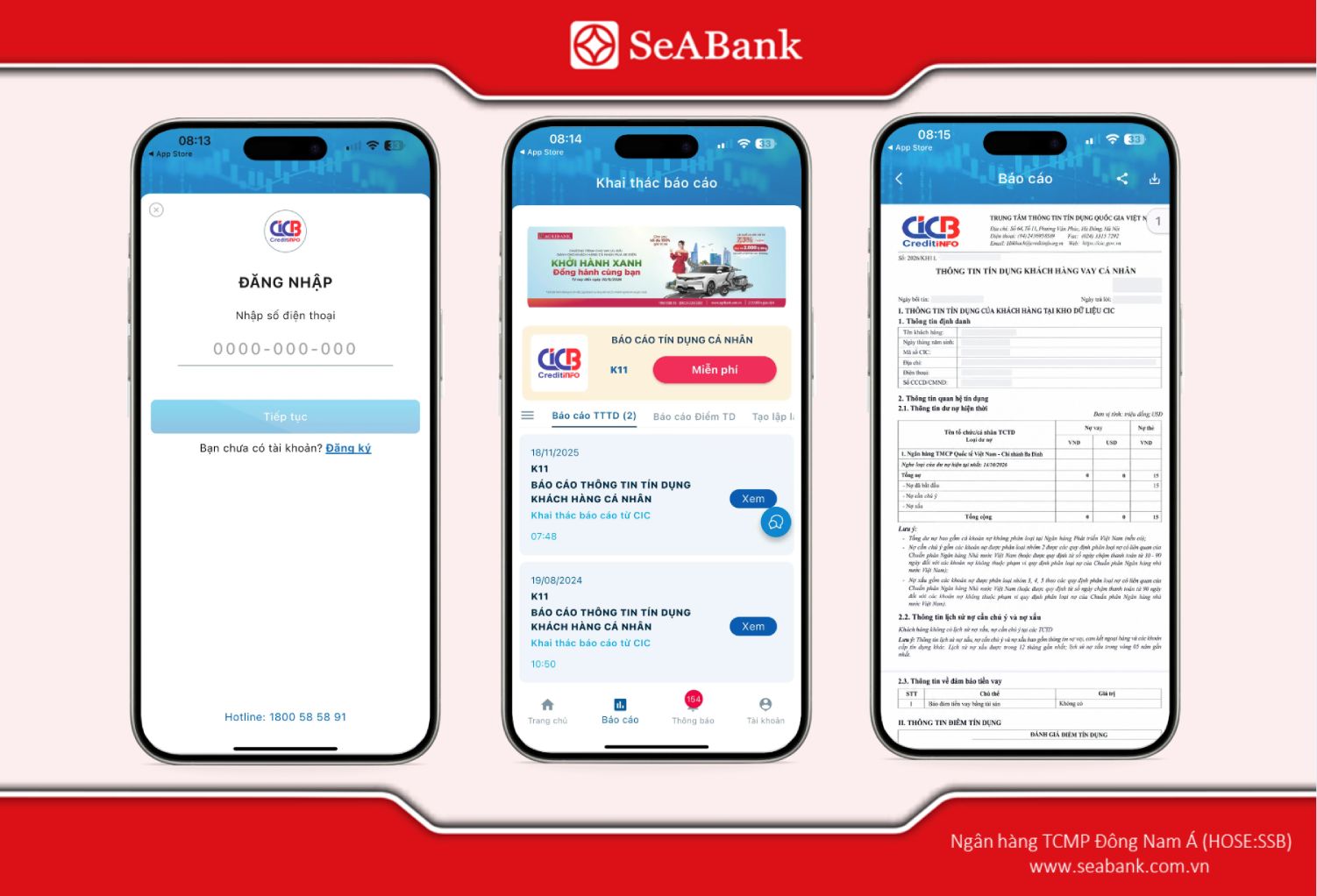
Checking your credit history before submitting an application helps you determine your current debt group and prepare proactively. Customers can check their own credit information free of charge once per year. You can refer to the following steps:
- Download and install the CIC Credit Connect app on your phone.
- Register an account using your Citizen ID and the phone number registered under your name, then verify with OTP.
- Wait for CIC's professional department to review and verify the information before granting access to the report.
- Log in and select the credit report access section to view your debt group, borrowing history, and credit score.
In addition, you can check at bank transaction counters or via the MoMo app.
See the detailed guide in the article: Bad Debt Check: 3 Quick and Accurate Ways to Look It Up.
Note: From April 1, 2026, CIC has temporarily suspended registration for and access to products and services on the website https://cic.gov.vn.
5. How to Improve Your Chances of Getting a Credit Card If You Previously Had Bad Debt
If you have previously had bad debt, you can gradually improve your credit profile through the following measures:
- Fully settle all overdue debt: Pay all outstanding principal, interest, and applicable fees to end the bad debt status and begin the CIC information retention period.
- Maintain on-time payments for remaining debts: After a period of full and timely repayment, a loan may be considered for reclassification into a lower-risk debt group.
- Prove stable income: Prepare an employment contract, salary statements, or other lawful income documents so the bank has a basis for assessing your repayment capacity.
- Consider a secured credit card: Some banks may issue credit cards backed by collateral such as a savings deposit. Whether this option is available depends on each bank's policy.
- Apply for a credit limit appropriate to your income: Request a moderate credit limit consistent with your repayment capacity instead of applying for a high limit from the outset.
Proactively manage your finances with SeABank: Once you have improved your credit history and are ready to own a credit card, you can explore SeABank's international credit card products and apply for card issuance online directly through the SeAMobile App.
6. Frequently Asked Questions
1. Can You Get a Credit Card with Group 2 Debt?
Possibly. Group 2 debt is debt requiring special attention and is not yet classified as bad debt. You may still submit an application, although the bank may assess it more cautiously and determine the credit limit according to its internal policies.
2. How Long After Fully Repaying Bad Debt Can You Get a Credit Card?
There is no fixed period. Bad debt information may be provided by CIC for up to 5 years from the settlement date, and each bank will have its own assessment approach to this credit history.
3. Is Small-Value Bad Debt Removed Immediately After Full Repayment?
Yes. To facilitate access to credit for customers facing financial difficulties, from December 1, 2014, CIC temporarily stopped providing bad debt history for customers with outstanding balances below 10 million VND immediately after the debt is fully settled.
4. Is There Any Service That Can Remove Bad Debt from CIC?
No. Credit information can only be adjusted when the data is genuinely incorrect and supporting documents are available. You should be cautious of offers to remove bad debt to avoid fraud.
5. Can Someone with Bad Debt Get a Debit Card?
A person with bad debt can still obtain a debit card (ATM card, Visa Debit, Visa Prepaid) because a debit card allows you to spend the money available in your payment account and does not involve the bank granting a credit limit as with a credit card.
Whether you can get a credit card with bad debt depends on the specific case. If you currently have unsettled bad debt, the likelihood of approval is generally quite low, but you can still gradually improve your credit profile. Prioritize fully repaying overdue debts, maintain a habit of making repayments on time, and regularly check your credit information before applying for a card.
Proactively monitor your loans with SeABank: To reduce the risk of unintentionally falling into Group 2 debt, you can use repayment reminder and loan information lookup features directly on SeABank's SeAMobile. The app also supports personal financial health monitoring, helping you proactively manage cash flow and maintain a good credit history.
Related News
What Is a Savings Account? Types and a Quick Guide to Opening One 13/11/2026
What Is Online Savings? How to Save and 6 Important Notes 13/11/2026
How to Make an Online Savings Deposit Easily and Earn Attractive Returns 05/11/2026
What Is Flexible Savings? Comparison with Traditional Savings 05/11/2026
Online Land Tax Payment: 2 Quick and Compliant Methods 05/11/2026
What Is a Savings Account? Types and a Quick Guide to Opening One
What is a savings account and how is it different from a payment account? Learn about common types of savings deposits, their benefits, and how to open an account online or at a branch.
13/11/2026
Read more


What Is Online Savings? How to Save and 6 Important Notes
What is online savings? Learn about its advantages, how to open a savings account on a banking app, and important notes on interest rates, security, and deposit insurance for online savings in this article.
13/11/2026
Read more

How to Make an Online Savings Deposit Easily and Earn Attractive Returns
Learn how to make an online savings deposit on SeAMobile in 4 steps, including requirements, interest rates, early withdrawal, and deposit insurance.
05/11/2026
Read more