What Is Group 3 Bad Debt? Signs, Consequences, and How to Handle It
23/10/2026
What is Group 3 bad debt, why does it occur, and how does it affect your ability to borrow? See how to check it on CIC and appropriate ways to handle it.
When a loan remains overdue beyond a certain period, the bank will classify the debt into a higher-risk group on the national credit information system. This is when many people begin to wonder what Group 3 bad debt is and why their loan has fallen into this category. This article helps you understand the concept, common causes, its impact on borrowing ability, and appropriate ways to handle it to restore your credit history.
Note: The figures and information in this article are compiled from general market sources and do not apply exclusively to SeABank's products.
1. What Is Group 3 Bad Debt?
Under Clause 1, Article 10 of Circular 31/2024/TT-NHNN of the State Bank of Vietnam, debts at credit institutions are classified into 5 groups based on their level of risk, of which debts in Group 3, Group 4, and Group 5 are considered bad debt. Group 3 bad debt, also known as substandard debt, is the lowest-risk category among these 3 bad debt groups.
A debt is classified as Group 3 if it falls into one of the following cases:
The debt is overdue for between 91 and 180 days, except for debts classified into a higher-risk group.
The debt has been extended for the first time and remains within the extended term, except for debts whose repayment term has been restructured or that have already been classified into a higher-risk group.
Interest on the debt has been waived or reduced because the customer is unable to fully pay interest as agreed.
The debt is within the recovery period specified in an inspection or supervision conclusion.
The debt must be classified as Group 3 at the request of the State Bank of Vietnam based on inspection and supervision results and relevant credit information.
Forgetting payment schedules or confusing different loans and credit card balances currently in use.
Borrowing from several credit institutions at the same time, making repayment cash flow difficult to manage.
A debt has already been fully settled, but the credit information system has not yet been updated, resulting in an incorrect bad debt record.
Being a co-borrower or guarantor for another person's overdue loan.
Temporary financial difficulties are one of the common causes of overdue debt
3. How Does Group 3 Bad Debt Affect Borrowers?
3.1. Difficulty Accessing New Loans
When a credit history records Group 3 debt, most banks and finance companies will be more cautious when reviewing applications for new loans, installment purchases, or credit cards. In some cases, credit may be denied until the bad debt history has improved.
3.2. Impact on Co-Borrowers and Guarantors
If a loan has a co-borrower or guarantor, the Group 3 bad debt status may also affect these individuals' future access to credit because related credit information is recorded on the system.
4. Where Can You Check Group 3 Bad Debt?
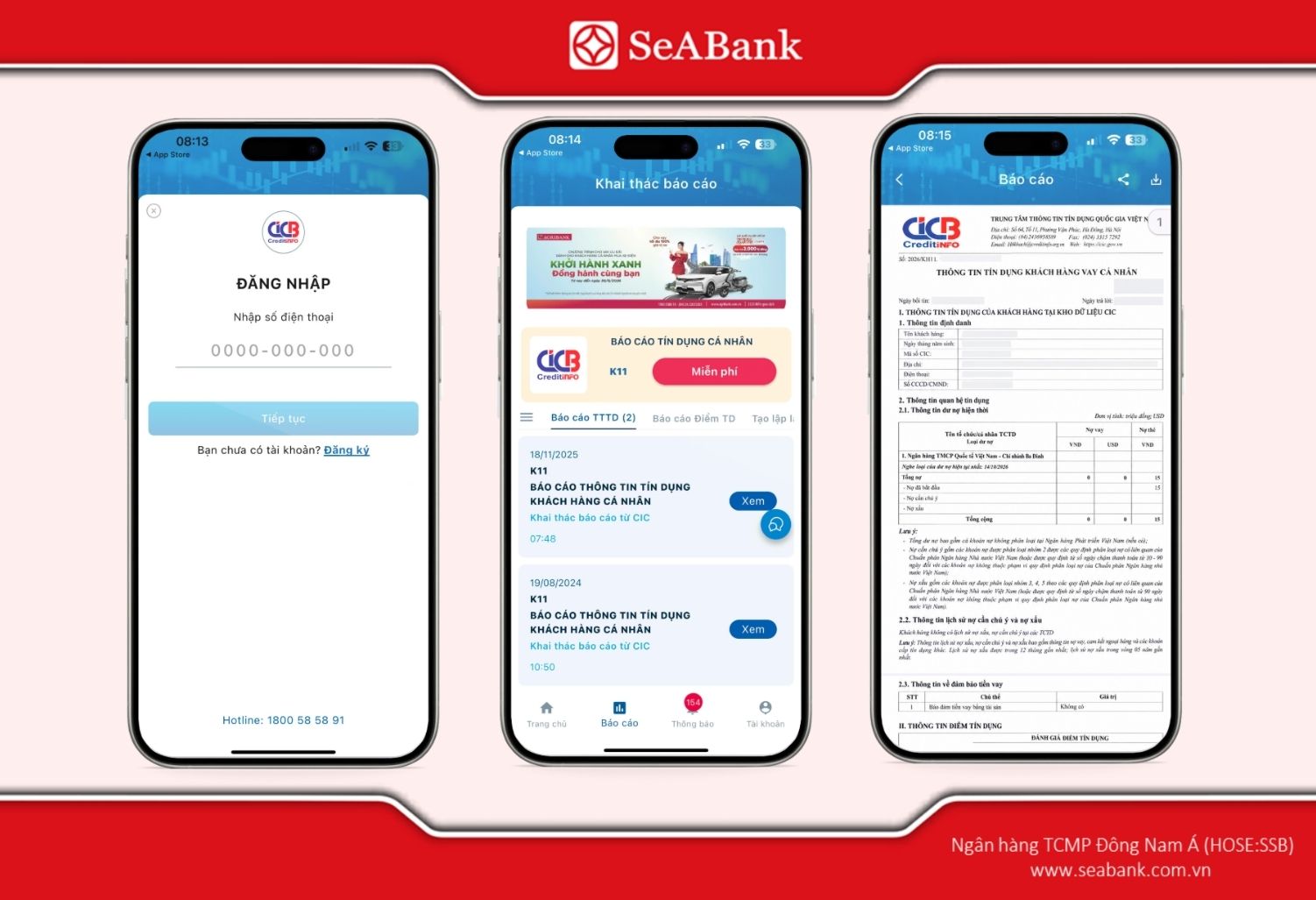
You can check your current debt group yourself by following these steps:
Register an account using your Citizen ID and the phone number registered under your name, then verify with OTP.
Wait for CIC's professional department to review and verify the information before granting access to the report.
Log in and select the credit report access section to view your debt group, borrowing history, and credit score.
In addition, you can check at a bank transaction counter or via the MoMo app. See the detailed guide in the article: Bad Debt Check: 3 Quick and Accurate Ways to Look It Up
Check bad debt using your phone number via the CIC Credit Connect app
Note: From April 1, 2026, CIC has temporarily suspended registration for and access to products and services on the websitehttps://cic.gov.vn.
5. How to Handle Group 3 Bad Debt
If you discover that your loan is classified as Group 3, you can take the following steps to improve the situation:
Fully repay the outstanding principal, interest, and any applicable fees in accordance with the credit agreement.
Proactively contact the bank or credit institution to discuss restructuring the repayment term if the financial difficulty is genuine and temporary.
Regularly monitor your credit information on CIC to confirm that the system has correctly updated the debt status after payment.
Build a reasonable spending and repayment plan to avoid incurring additional overdue debts.
If you discover errors in your credit information, submit a correction request to the credit institution or CIC for resolution.
6. How Long Does It Take for Group 3 Bad Debt to Be Removed from CIC?
Under Clause 1, Article 13 of Circular 15/2023/TT-NHNN on credit information activities of the State Bank of Vietnam, negative information about borrowers (including bad debt information) may only be provided for a maximum period of 5 years from the date such negative information ends. In other words, after you fully settle the overdue debt, your Group 3 bad debt history may still be stored and provided on the CIC system for up to 5 years before it is no longer used to assess borrowing ability. However, for bad debts with outstanding balances below 10 million VND, the information may be removed from the system immediately after the customer fully settles the debt.
You should periodically check your credit information on CIC to determine exactly when the system has been updated, as processing times may vary between credit institutions.
7. Frequently Asked Questions
1. Can You Get a Bank Loan with Group 3 Bad Debt? Approval depends on the risk policies of each credit institution at the relevant time. Many banks will carefully consider or temporarily refrain from granting new credit to customers with Group 3 debt until their credit history has improved.
2. How Do You Know Whether You Have Group 3 Bad Debt? You can check it yourself free of charge through the CIC app or directly contact the credit institution where you currently have a loan for assistance.
3. Can You Borrow Again Immediately After Fully Repaying Group 3 Bad Debt? Fully settling the debt is a necessary condition, but when you can be approved for a new loan also depends on each bank's credit policy and the time required for the system to update the information.
Understanding Group 3 bad debt helps you proactively manage your credit history and reduce difficulties when you need to borrow in the future. In addition to fully repaying overdue debt, you should regularly monitor your credit information and develop reasonable spending habits to prevent bad debt from recurring.
Proactively monitor your loans with SeABank: To reduce the risk of unintentionally falling into Group 3 debt, you can use repayment reminder and loan information lookup features directly on SeABank's SeAMobile. The app also supports personal financial health monitoring, helping you proactively manage cash flow and maintain a good credit history.
Southeast Asia Commercial Joint Stock Bank (SeABank)