News
What Is Group 4 Bad Debt? Characteristics, Impacts, and How to Handle It
 23/10/2026
What is Group 4 bad debt, how long is the overdue period, and how does it affect your ability to borrow? Learn how to check and handle Group 4 bad debt effectively.
Many borrowers are surprised when their loan is classified as Group 4 bad debt after a period of late payment. This is doubtful debt, a high-risk debt category that directly affects future borrowing ability. So, how is Group 4 bad debt determined, how long is it stored on CIC, and how should it be handled? The following article will help you understand it more clearly.
1. What Is Group 4 Bad Debt?
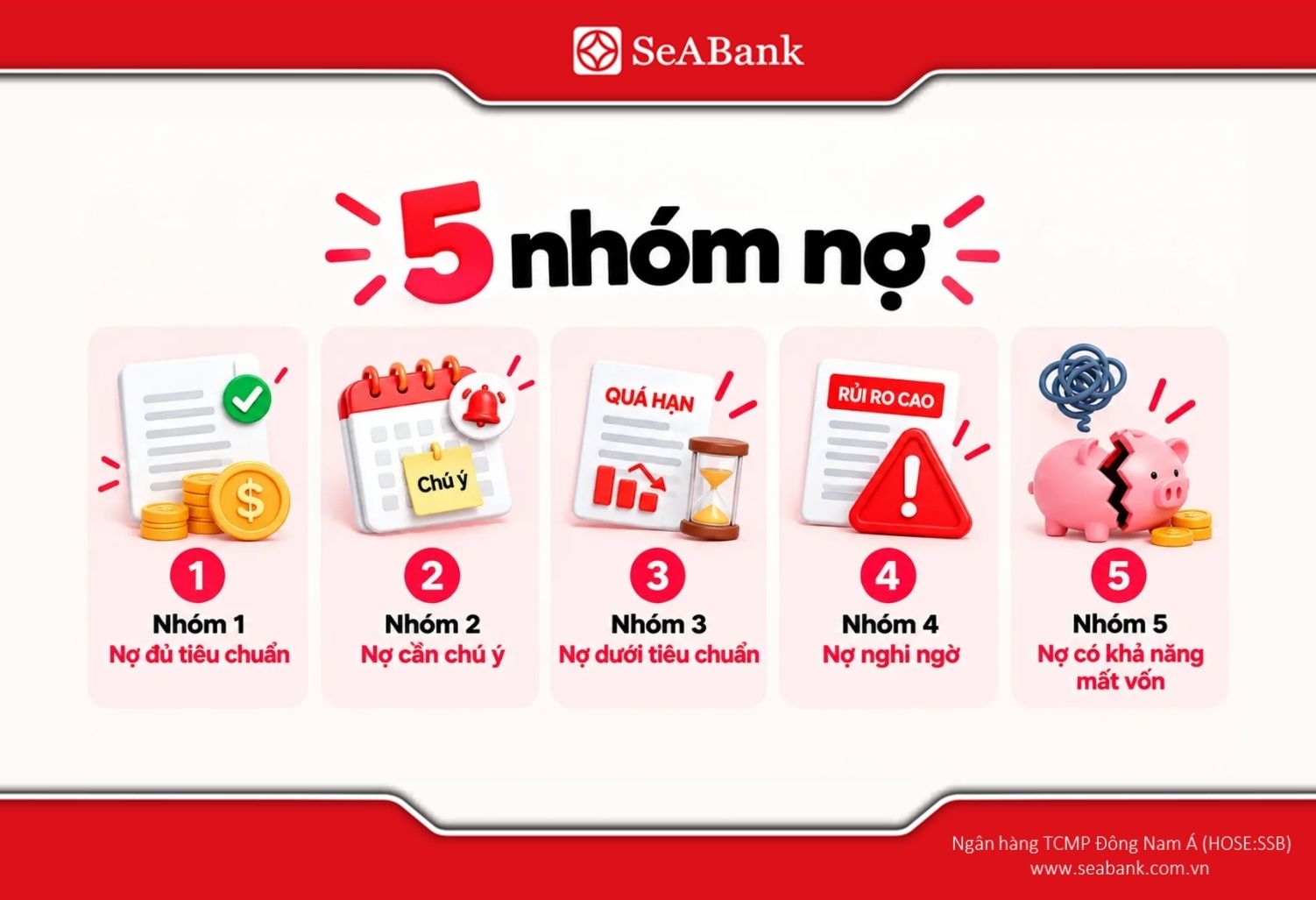
Under Clause 5, Article 3 of Circular 31/2024/TT-NHNN, bad debt refers to debts classified by credit institutions into Group 3, Group 4, or Group 5. Among these, Group 4 bad debt - also known as "doubtful debt" - is a high-risk debt category immediately preceding Group 5 (debt with potential loss of principal).
When a loan falls into Group 4, the bank or credit institution has a low likelihood of fully recovering both principal and interest. At the same time, the debt will be updated on the system of the National Credit Information Center of Vietnam (CIC), directly affecting the borrower's credit history.
2. What Criteria Are Used to Determine Group 4 Bad Debt?
The classification of Group 4 bad debt is specifically stipulated at Point d), Clause 1, Article 10 of Circular 31/2024/TT-NHNN
3. How Does Group 4 Bad Debt Affect Customers?
3.1. Impact on Borrowing Ability
Once classified as Group 4 bad debt, most banks and credit institutions will refuse to grant additional new credit limits until the debt is fully settled and the customer's credit history improves. In some cases, even a small remaining outstanding balance may still result in the customer being considered as having bad debt.
3.2. Impact on Credit History on CIC
Under Clause 1, Article 13 of Circular 15/2023/TT-NHNN, negative information about borrowers (including bad debt history) may only be provided by CIC for a maximum period of 5 years from the date such negative information ends. This means that even after you fully settle the debt, your Group 4 bad debt history may still be stored and affect the assessment of future loan applications for a certain period.
Note: To facilitate access to credit for customers facing financial difficulties, from December 1, 2014, CIC temporarily stopped providing bad debt history for customers with outstanding balances below 10 million VND immediately after the debt is fully settled.
4. Differences Between Group 4 Bad Debt and Groups 3 and 5
For a broader overview, you can refer to the comparison table below among the three bad debt groups under current regulations.
As shown above, Group 4 bad debt is at an intermediate risk level: more serious than Group 3 but not yet assessed as having potential loss of principal like Group 5. If a Group 4 debt remains overdue for an additional period without being resolved, it may be moved to Group 5.
5. How to Check Group 4 Bad Debt
- Download and install the CIC Credit Connect app on your phone.
- Register an account using your Citizen ID and the phone number registered under your name, then verify with OTP.
- Wait for CIC's professional department to review and verify the information before granting access to the report.
- Log in and select the credit report access section to view your debt group, borrowing history, and credit score.
In addition, you can check at a bank transaction counter or via the MoMo app. See the detailed guide in the article: Bad Debt Check: 3 Quick and Accurate Ways to Look It Up
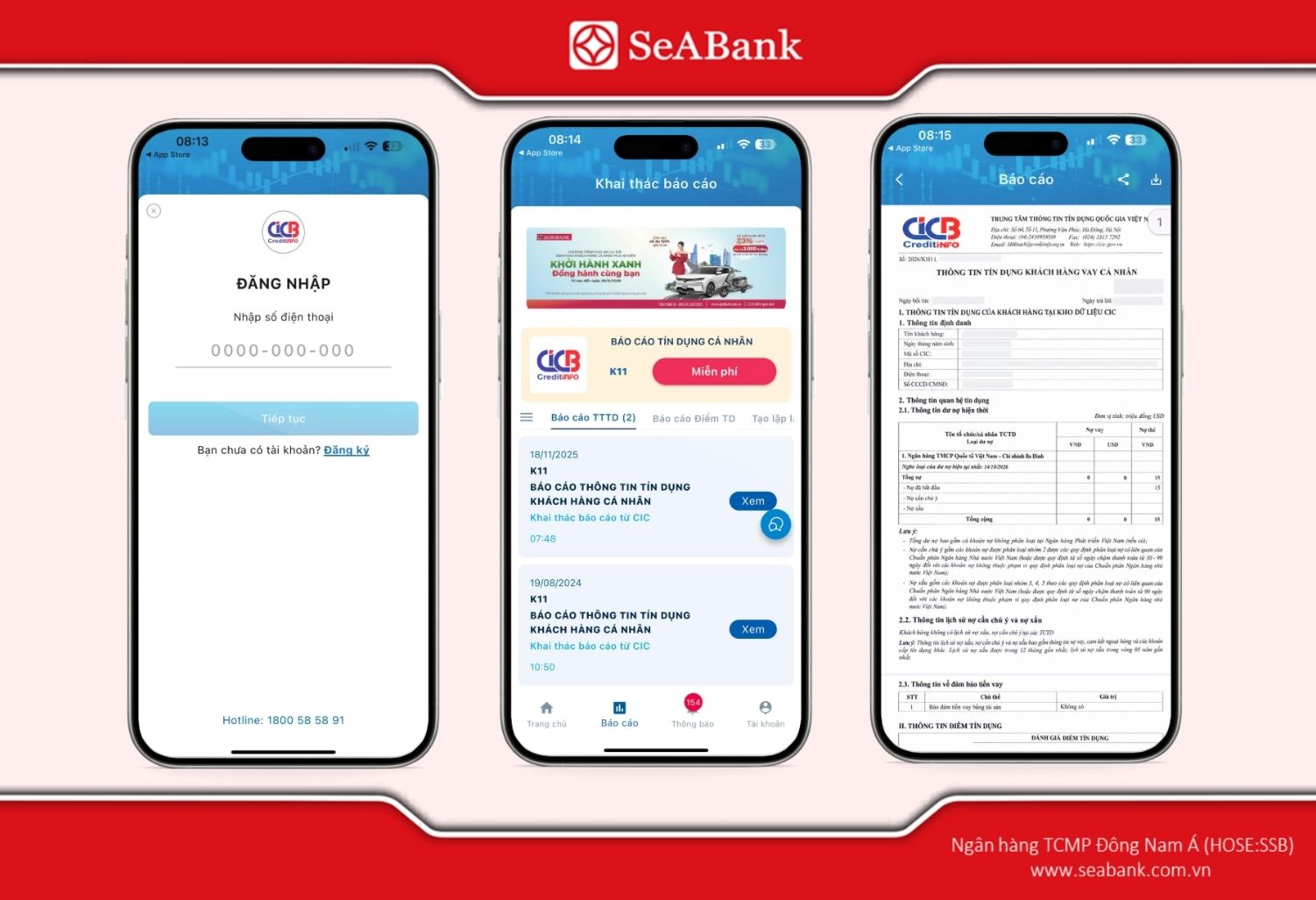
Note: From April 1, 2026, CIC has temporarily suspended registration for and access to products and services on the website https://cic.gov.vn.
6. How to Handle Group 4 Bad Debt
When you discover that your loan has been classified as Group 4 bad debt, you should take the following steps to improve your financial situation as soon as possible:
- Contact the bank or credit institution providing the loan immediately to discuss your repayment situation and find an appropriate solution.
- Prioritize fully repaying the outstanding principal, interest, and any applicable fees as soon as possible to prevent the debt from remaining overdue and moving into a higher-risk group.
- Consider requesting the credit institution to restructure the repayment term if you are experiencing temporary financial difficulties, rather than allowing the loan to remain overdue.
- Build a clear spending and repayment plan and avoid taking out additional new loans while handling the bad debt.
- Regularly monitor your credit history on CIC to identify when the bad debt information is updated after the debt has been fully settled.
7. Frequently Asked Questions About Group 4 Bad Debt
1. Can You Get a Bank Loan with Group 4 Bad Debt? Generally, customers with Group 4 bad debt will find it difficult to obtain approval for a new loan from banks or credit institutions until the debt is fully settled and their credit history improves.
2. How Is Group 4 Bad Debt Different from Group 3 Bad Debt? The main difference lies in the overdue period and level of risk: Group 3 debt is overdue from 91 to 180 days, while Group 4 debt is overdue from 181 to 360 days and carries a higher level of risk.
3. How Do You Know Whether You Have Group 4 Bad Debt? You can check free of charge through the CIC Credit Connect app using your Citizen ID, or monitor your loan status through personal financial management features on the banking app you are using.
In summary, Group 4 bad debt is an important warning sign regarding your financial situation that should not be overlooked. Monitoring your credit history, making payments on time, and creating a clear financial plan will help you avoid falling into a bad debt group while preserving your future borrowing opportunities. We hope this article helps you better understand Group 4 bad debt and how to manage your finances effectively.
Proactively manage your finances with SeABank: To identify risks early and avoid falling into bad debt, you can experience the Financial Health feature on SeABank's SeAMobile. This feature helps you track income and expenses, understand your current debts, and receive reasonable spending alerts, allowing you to be more proactive in making repayments on time and managing your personal finances.
Related News
What Is a Savings Account? Types and a Quick Guide to Opening One 13/11/2026
What Is Online Savings? How to Save and 6 Important Notes 13/11/2026
How to Make an Online Savings Deposit Easily and Earn Attractive Returns 05/11/2026
What Is Flexible Savings? Comparison with Traditional Savings 05/11/2026
Online Land Tax Payment: 2 Quick and Compliant Methods 05/11/2026

What Is a Savings Account? Types and a Quick Guide to Opening One
What is a savings account and how is it different from a payment account? Learn about common types of savings deposits, their benefits, and how to open an account online or at a branch.
13/11/2026
Read more


What Is Online Savings? How to Save and 6 Important Notes
What is online savings? Learn about its advantages, how to open a savings account on a banking app, and important notes on interest rates, security, and deposit insurance for online savings in this article.
13/11/2026
Read more

How to Make an Online Savings Deposit Easily and Earn Attractive Returns
Learn how to make an online savings deposit on SeAMobile in 4 steps, including requirements, interest rates, early withdrawal, and deposit insurance.
05/11/2026
Read more