What Is a Certificate of Deposit? Features, Pros, Cons, and Key Buying Tips
30/10/2026
What is a certificate of deposit, and how does it differ from a standard savings book? Explore key features, pros, cons, and essential legal considerations before purchasing.
What is a certificate of deposit, and does it yield higher returns than traditional bank savings? This is a common question among savers looking for a secure haven for their idle funds. This article provides a comprehensive overview of its legal definition under current banking regulations, prominent features, key differences from standard savings passbooks, and pros and cons to weigh before purchasing.
Note: The figures and information in this article are compiled from general market sources and do not apply exclusively to SeABank's products.
1. What Is a Certificate of Deposit?
A certificate of deposit is a form of deposit structured as a valuable paper and serves as proof certifying the debt repayment obligation of the issuing credit institution or foreign bank branch toward the purchaser within a specified maturity period, under designated interest payment terms and other contractual conditions (Under Article 4 of Circular No. 02/2025/TT-NHNN issued by the State Bank of Vietnam: Regulating the domestic issuance of certificates of deposit by credit institutions and foreign bank branches).
Simply put, a certificate of deposit functions much like a standard bank savings passbook. You commit a fixed sum of money for an agreed-upon term, and the bank disburses interest periodically (or at maturity) based on that principal balance and the contracted interest rate.
Furthermore, a certificate of deposit is a valuable paper, not a security, and therefore cannot be listed or traded on equity or bond exchanges like corporate stocks or bonds.
Eligible issuing entities include commercial banks, cooperative banks, general finance companies, specialized finance companies, and foreign bank branches within the regulatory scope defined in Article 2 of Circular No. 02/2025/TT-NHNN.
What is a certificate of deposit? A certificate of deposit is evidence certifying the debt repayment obligation of a credit institution toward the purchaser.
2. Key Prominent Features of a Certificate of Deposit
Form: Certificates of deposit can be issued in bearer, registered, or book-entry form, depending on each credit institution's policies.
Mandatory Content: According to Article 10 of Circular No. 02/2025/TT-NHNN, a certificate of deposit must clearly specify the title, symbol, issuance serial number, purchaser details, interest rate terms, tenor, and other statutory elements.
Tenor: The term, issuance date, and maturity date are determined by the credit institution per Article 7 of Circular No. 02/2025/TT-NHNN; prevailing maturities in the market typically range from several months to several years.
Interest Rates: On the whole, certificates of deposit generally offer slightly higher interest yields than conventional savings accounts of equivalent tenors, reflecting the investor's longer-term holding commitment.
Transferability and Collateralization: Depending on the issuing institution, certificates of deposit can be traded, transferred, or pledged as collateral to secure credit facilities.
3. Distinguishing Between Certificates of Deposit and Standard Savings Passbooks
Criteria
Certificates of Deposit (CD)
Standard Savings Passbook
Depository / Issuing Institution
Commercial banks
Cooperative banks
Foreign bank branches
Finance companies, financial leasing companies
Commercial banks
Cooperative banks
Non-bank credit institutions
Microfinance institutions
People's credit funds
Foreign bank branches
Minimum Balance
Prescribed minimum subscription amount depending on each issuance tranche
Determined by specific product regulations at each commercial bank
Tenor
Flexible
Broad and more diverse than certificates of deposit
Early Redemption
Restricted; if permitted, usually yields a lower agreed interest rate upon settlement
More flexible; select products allow partial early withdrawals
Interest Rates
Generally higher; Fixed or floating based on periodic disbursement schedules per bank rules
Usually lower than certificates of deposit for identical tenors; Typically fixed throughout the tenor; early settlement yields non-term demand rates (barring certain floating-rate products)
Transfer and Pledging
Can be transferred or pledged as loan collateral subject to issuer terms
Generally non-transferable; select banks accept them as credit collateral
Deposit Insurance
Covered within statutory caps under the Law on Deposit Insurance
Covered within statutory caps under the Law on Deposit Insurance
4. Pros and Cons of Investing in Certificates of Deposit
4.1. Pros
Interest rates are broadly more competitive than standard savings deposits with identical maturities.
Can be transferred or utilized as loan collateral across numerous credit institutions, giving savers proactive liquidity management when capital is needed.
Protected by deposit insurance up to statutory limits under the Law on Deposit Insurance, fully comparable to regular savings deposits.
Purchasing procedures are straightforward, available directly at counter branches or via digital banking channels provided by the issuing institution.
4.2. Cons
Lower liquidity compared to regular savings: Most certificates of deposit do not permit early redemption, or incur interest rate penalties if an early exit is authorized.
Minimum subscription amounts at many institutions are substantially higher than those required to open basic savings accounts.
Not classified as securities, meaning they cannot be traded on stock exchanges; secondary transfers, if available, remain subject to the internal regulations of each issuing bank.
5. Should You Buy a Bank Certificate of Deposit?
Whether to purchase a certificate of deposit depends primarily on your personal financial roadmap and your ability to lock away idle liquidity over medium-to-long horizons.
Ideal for savers with medium- to long-term surplus cash who do not anticipate emergency liquidity needs in the near term and wish to capture higher yields than conventional deposits.
If you need flexible on-demand withdrawals or lack certainty regarding capital allocation schedules, flexible-term savings packages or online savings accounts represent more appropriate choices.
Before committing funds, carefully examine issuance terms, premature liquidation guidelines, and the institutional solvency of the issuing credit institution.
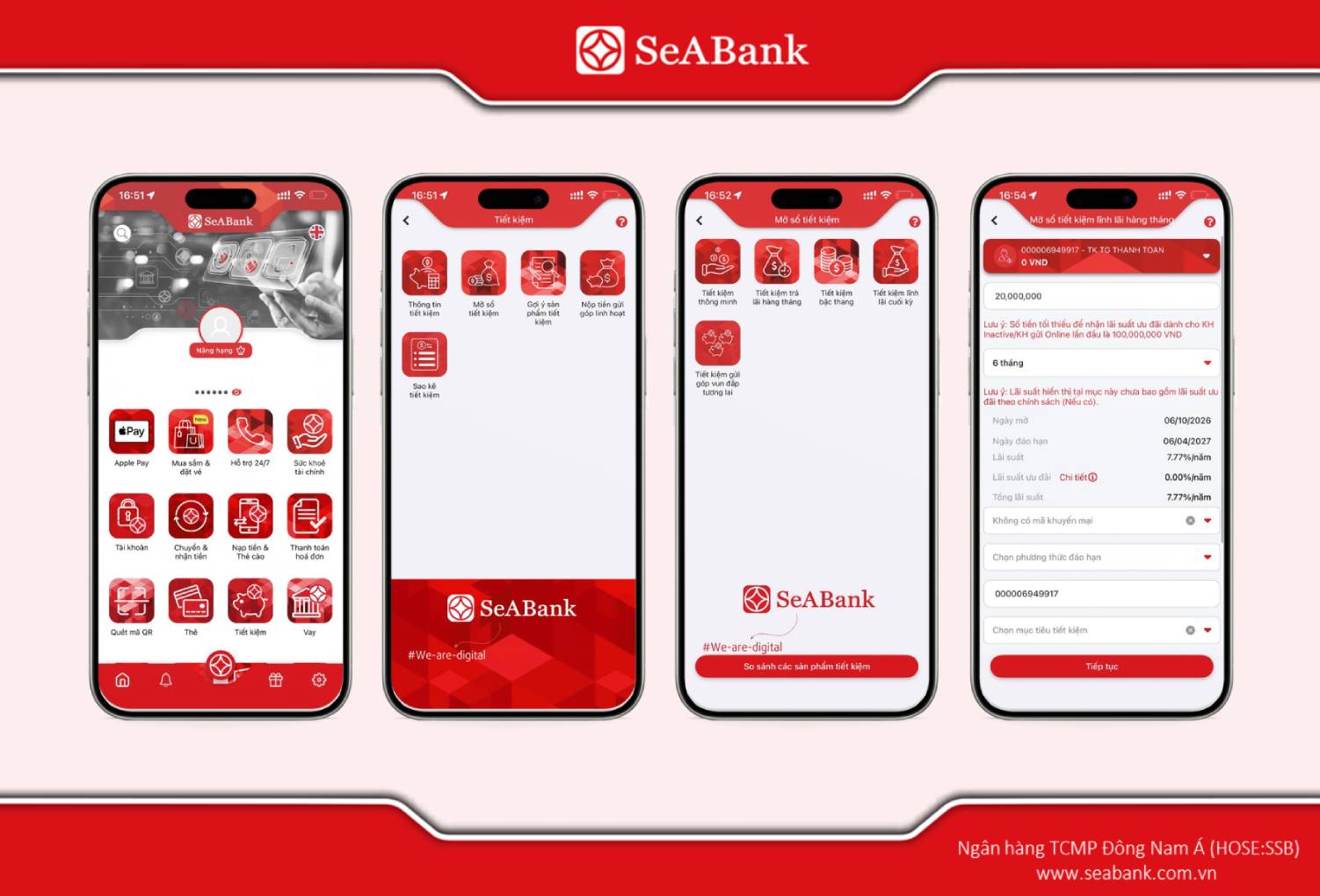
Optimize your wealth accumulation with SeABank: If you are evaluating deposit solutions to make the most of your idle funds, explore SeABank's diverse savings packages via the SeAMobile app or at transaction centers nationwide. You can easily access product details, compare suitable tenors, and initiate secure online deposits.
Steps to open an online savings account on the SeAMobile app.
6. Frequently Asked Questions
6.1. Can certificates of deposit be liquidated before maturity?
Yes, but with strict restrictions. Where early settlement is approved, customers usually receive the lowest non-term demand interest rate (significantly lower than the initial contracted rate) across the entire holding duration.
6.2. Are certificates of deposit secure?
Exceptionally safe. VND-denominated certificates of deposit owned by individuals at insured credit institutions fall under statutory deposit insurance protection, ensuring your legal rights are safeguarded identically to traditional savings accounts.
6.3. Is a certificate of deposit considered a security?
No. A certificate of deposit is a valuable paper governed by State Bank of Vietnam regulations and is not classified as a security (such as corporate stocks, bonds, or investment fund units).
We trust this analysis helps clarify what is a certificate of deposit through statutory definitions, standout attributes, pros and cons, and core differences from traditional savings passbooks. This vehicle serves as an effective wealth-building channel for individuals with medium-to-long-term surplus funds, provided you thoroughly review issuance terms and premature redemption policies prior to subscribing.
Southeast Asia Commercial Joint Stock Bank (SeABank)