News
What Is German Currency? Denominations, Exchange Rates, and How to Convert to Vietnamese Dong
 09/10/2026
Germany's currency is the euro (EUR). Learn about German currency denominations, the EUR/VND exchange rate, where to exchange money, and how to receive money from Germany in Vietnam via SeABank.
The official currency currently used in Germany is the euro (EUR), which is also the common currency of the euro area (including Germany and 19 other member countries). If you are planning to travel, study, or work in Germany, or receive money from relatives, understanding the denominations, exchange rates, and where to exchange money will help you prepare more effectively. This article provides essential information about German currency, along with useful tips for exchanging money and receiving money in Vietnam.
1. Overview of German Currency
- Official name: Euro.
- Currency code under ISO 4217: EUR.
- Common symbol: €.
- Issuing authority: European Central Bank (ECB) and the central banking system of the member countries in the euro area.
The euro officially entered circulation in 2002, completely replacing the former German Deutsche Mark. As it is commonly used by many European countries (the Eurozone), it is one of the world's strongest and most liquid currencies, making it highly convenient when traveling, visiting, or working across countries in the region. Each 1 euro is divided into 100 cents and is available in both banknotes (with advanced security features) and coins (with the reverse side featuring distinctive designs of each issuing country).
2. German Currency Denominations Currently in Circulation
2.1. Banknotes
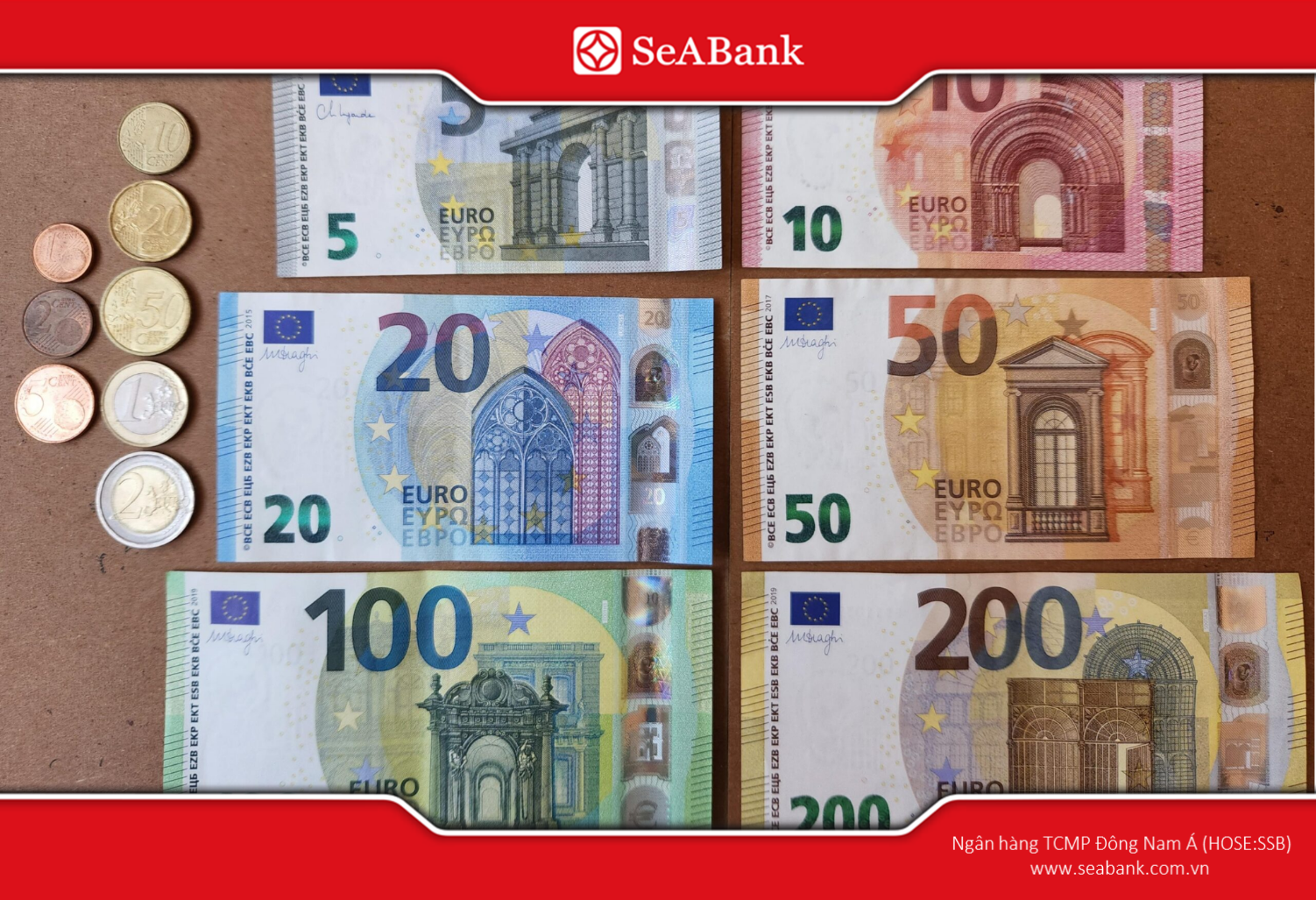
Euro banknotes can be used throughout the entire euro area. The denominations currently in circulation include:
- €5 banknote (Gray)
- €10 banknote (Red)
- €20 banknote (Blue)
- €50 banknote (Orange)
- €100 banknote (Green)
- €200 banknote (Brown/yellowish-brown)
- €500 banknote: This is the highest-denomination banknote. The European Central Bank (ECB) stopped issuing new €500 banknotes in 2019; however, banknotes issued previously remain legal tender and continue to circulate legally as a means of payment.
2.2. Coins
The euro is divided into smaller units called cents (1 Euro = 100 Cents). Coins have two sides: one common side for the entire Eurozone and one side featuring the national symbols of the issuing country (German coins feature distinctive symbols such as the Brandenburg Gate, oak branches, or the German eagle on the national side).
Coin denominations include:
- Small-denomination coins (Cent): 1 cent, 2 cents, 5 cents, 10 cents, 20 cents, and 50 cents.
- Large-denomination coins: 1 Euro (€1) and 2 Euro (€2).
3. German Currency Exchange Rate Today: How Much Is 1 EUR in Vietnamese Dong?
The average euro exchange rate is approximately VND 289,660/EUR(*). The following table provides reference conversions:
(*) The exchange rate was updated as of October 09, 2026. Exchange rates may vary over time and according to each bank's policies. You should check the bank's official information for the latest and most accurate exchange rate.4. Where Can You Exchange German Currency?
- At commercial banks: Banks are a common channel for foreign currency exchange. You need to bring identification documents when making a transaction and should check the listed exchange rate on the bank's website or banking app before visiting a branch.
- At licensed foreign currency exchange locations: You can also exchange euros at gold and jewelry shops licensed to provide foreign currency exchange services or at airports. Prioritize locations that are properly licensed and clearly display their exchange rates.
5. Tips for Exchanging German Currency When Traveling or Going on a Business Trip to Germany
- Prepare euros in Vietnam: Exchange a sufficient amount of euros before departure to cover initial expenses (train and bus tickets, transportation, and meals at the airport) as well as purchases at small restaurants, outdoor markets, or traditional cafés.
- Combine card payments to optimize costs: Use a Visa/Mastercard as a flexible payment option at hotels, restaurants, shopping centers, or when purchasing public transport tickets; prioritize cards with low foreign currency conversion fees or attractive international transaction benefits to save costs.
- Always keep some cash as a backup: Carry around 50 - 100 euros in cash in case the card terminal malfunctions, there is a network issue, or the merchant does not accept card payments.

6. Germany - Vietnam Money Transfers with SeABank
6.1. International Money Transfers to Germany with SeABank
In addition to carrying cash, if you need to transfer tuition fees or living expenses to relatives studying or working in Germany, or receive money from Germany in Vietnam, you can consider SeABank's International Money Transfer Service. The service supports fast transfers to more than 200 countries and territories, with simple procedures and competitive fees, while allowing individual customers to conveniently track transactions directly on the SeAMobile app.

If your relatives are in Germany and want to send money to Vietnam, you can receive the funds via a bank account or through the remittance service on SeABank's SeAMobile app.
6.2. Receiving Money from Germany via International Transfer (SWIFT)
Provide the sender with the following information:
- Recipient's full name (matching the name registered for the account).
- SeABank account number.
- Bank name: SeABank (Southeast Asia Commercial Joint Stock Bank).
- SWIFT code: SEAVVNVX.
- Purpose of transfer (for example: family support, education expenses).
Once the sender submits the transfer instruction, the funds will be credited to your account according to the processing times of the banks involved. Fees and currency conversion rates will be applied by the sending and receiving banks at the time of the transaction.
6.3. Receiving Remittances via MoneyGram on SeAMobile
SeABank partners with MoneyGram to provide an online remittance receipt solution on the SeAMobile app, allowing funds to be credited directly to your account without visiting a transaction counter. Your relatives in Germany can send money through MoneyGram, after which you can receive the funds on the SeAMobile app by following the instructions displayed in the app.
>>> Learn more about SeABank's MoneyGram remittance receipt service on SeAMobile
>>> Download the SeAMobile app to manage your account and receive money conveniently

7. Frequently Asked Questions About German Currency
1. Does Germany use the same currency as other European countries?
Yes. Germany is one of the member countries of the Eurozone and officially uses the common currency, the Euro (EUR). You can freely use euros when traveling to neighboring countries in the bloc, such as France, Italy, Spain, Austria,... without having to exchange money repeatedly.
2. Where should I exchange euros in Vietnam for a good exchange rate and reliable service?
You should exchange money at major banks such as SeABank or licensed foreign currency exchange agents. Remember to bring identification documents and relevant documents appropriate to each money transfer purpose to complete the required procedures.
3. Can I use USD to make direct payments in Germany?
No. The US dollar (USD) is not accepted for direct payments for goods, services, or public transport tickets in Germany. You need to exchange it for euros or use an international payment card.
4. How much cash should I carry when entering Germany?
It depends on your intended use. However, based on practical experience, you should prepare around 300 - 500 euros in cash to cover small expenses that may arise during the first few days.
Understanding German currency, from denominations and exchange rates to where to exchange money, will help you prepare more effectively for your trip or when receiving money from relatives. You should check the exchange rate at the time of the transaction and prioritize licensed service providers. If you need urgent assistance, call the hotline at 1900 555 588 or visit the nearest SeABank transaction office for detailed advice.
Related News
How to Make an Online Savings Deposit Easily and Earn Attractive Returns 05/11/2026
What Is Flexible Savings? Comparison with Traditional Savings 05/11/2026
Online Land Tax Payment: 2 Quick and Compliant Methods 05/11/2026
Borrowing Money with Group 5 Bad Debt: Eligibility and Solutions 05/11/2026
How Much Is 1 Tael Of Gold? Update Today's Gold Price And Notes 05/11/2026
How to Make an Online Savings Deposit Easily and Earn Attractive Returns
Learn how to make an online savings deposit on SeAMobile in 4 steps, including requirements, interest rates, early withdrawal, and deposit insurance.
05/11/2026
Read more

What Is Flexible Savings? Comparison with Traditional Savings
What is flexible savings? Learn about the concept, key features, differences from traditional savings, and minimum balance requirements when making a partial early withdrawal.
05/11/2026
Read more
Online Land Tax Payment: 2 Quick and Compliant Methods
Guide to paying land tax online via the National Public Service Portal and eTax Mobile, including the steps, payment deadlines, late payment charges, and important notes you should know.
05/11/2026
Read more