News
Russian Currency: Denominations, Exchange Rates, and How to Exchange Russian Rubles
 09/10/2026
Learn about Russian currency (Ruble), including its denominations, the current RUB/VND exchange rate, where to exchange money, and tips for exchanging Rubles when traveling to Russia. Find out more with SeABank.
Russian currency is the Ruble (RUB), the official currency of the Russian Federation issued by the Central Bank of Russia. If you are preparing to travel or go on a business trip to Russia, or send money to relatives there, understanding the denominations, exchange rates, and where to exchange money will help you prepare more effectively. This article provides essential information about the Russian Ruble.
1. Overview of Russian Currency
Russian currency is known in English as the Ruble or Rouble. It is the official currency of the Russian Federation and is issued and managed by the Central Bank of Russia. Some basic information about the Ruble includes:
- Symbol: ₽
- Currency code (ISO 4217): RUB
- Subunit: 1 Ruble equals 100 kopeks
- Issuing authority: Central Bank of Russia
The Ruble has a long history and was previously the official currency of the Russian Empire and the Soviet Union. Although cashless payments are becoming increasingly common, banknotes and coins remain an important part of Russia's financial system, so you should still prepare a certain amount of Rubles in cash when traveling there.
2. Russian Currency Denominations Currently in Circulation
Russian currency currently circulates in two forms: banknotes and coins.
2.1. Banknotes
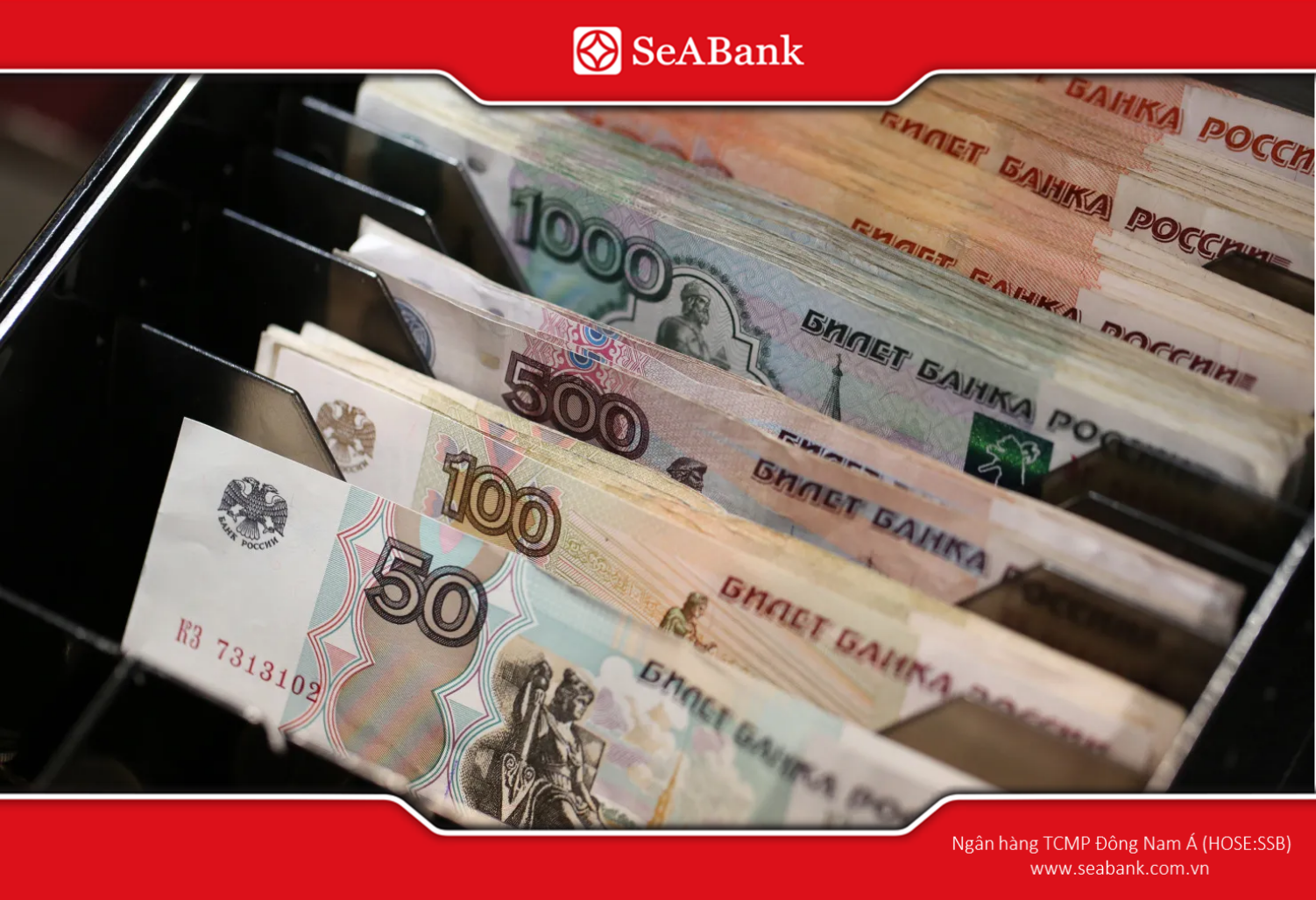
Russian banknotes currently come in 9 denominations: 5, 10, 50, 100, 200, 500, 1,000, 2,000, and 5,000 Rubles. Of these, the 200 and 2,000 Ruble banknotes were introduced in 2017. The Central Bank of Russia also introduced a new 100 Ruble banknote in 2022 to replace previous versions.
2.2. Coins
Russian coins are divided into two groups:
- Ruble coins (₽): 1, 2, 5, and 10 Rubles. The 1, 2, and 5 Ruble coins are made from nickel-plated steel alloy and feature a double-headed eagle, a symbol of Russia.
- Kopek coins (к): 1, 5, 10, and 50 kopeks. Due to their low value, kopek coins are rarely used in everyday transactions.
3. Reference Exchange Rate Between Russian and Vietnamese Currency
1 RUB is equivalent to approximately VND 305(*). When making transactions at a bank, buying and selling rates differ, ranging from approximately VND 290 - 330 per RUB(*), depending on the transaction method (cash or bank transfer) and whether the transaction involves buying or selling.
The following is a reference conversion table based on 1 RUB ≈ VND 305(*):
The value of the Ruble is often affected by various factors, such as:
- Monetary policy of the Central Bank of Russia.
- Economic and political factors and fluctuations in the global energy market.
- Movements of the USD and the international foreign exchange market.
(*) The exchange rate was updated as of October 30, 2026. Exchange rates may vary over time and according to the policies of each bank or foreign currency exchange provider. You should check official information for the latest and most accurate updates.
4. Where Can You Exchange Russian Currency Reliably and at a Good Exchange Rate?
4.1. Exchanging Russian Currency in Vietnam
You can exchange Rubles at commercial banks authorized to conduct foreign exchange activities. However, not all banks list RUB. Therefore, you should:
- Contact the bank or nearest branch in advance to ask whether RUB cash is available and how much preparation time is required.
- Bring identification documents and documents proving the purpose of using foreign currency (such as a passport, airline ticket, or visa) if required by the bank.
- Avoid exchanging money at unlicensed locations to reduce legal risks and the risk of receiving invalid currency.
4.2. Exchanging Currency in Russia
Currently, USD and EUR are two common foreign currencies that can be easily exchanged for Russian Rubles. Therefore, you should exchange Vietnamese Dong for one of these two currencies in Vietnam in advance, then bring it to Russia and exchange it for Rubles (RUB) at airports, banks, or licensed foreign currency exchange counters.
5. Tips for Exchanging Russian Currency Safely
- Carry cash in major foreign currencies (USD or EUR): Since international bank cards issued in Vietnam (Visa/Mastercard) currently do not work in Russia, cash is the main and safest payment method for foreigners. You should prepare large-denomination USD or EUR banknotes (from 50 to 100 USD/EUR) and make sure the banknotes are not torn, worn, or marked with ink, as currency exchange locations in Russia are very strict about the condition of banknotes.
- Exchange money at official banks: When you arrive in Russia, prioritize exchanging cash for Rubles at transaction counters of major and reputable banks. Avoid exchanging money at informal street locations or on the black market to reduce the risk of receiving counterfeit money or being offered an unfavorable exchange rate.
- Keep your currency exchange receipts: After making a transaction at a bank, you should retain all documents and receipts confirming the foreign currency exchange. In certain situations, these receipts may help prove the legal source of the cash you are carrying.
- Manage cash carefully: You should divide the cash you carry into smaller amounts and keep it in different places in your luggage or bags, or use a money belt close to your body when traveling through crowded areas (such as metro stations, traditional markets, or popular tourist attractions) to reduce the risk of pickpocketing.
- Prepare a Russian domestic bank card (if you plan to stay long term): If you are going on a business trip or staying in Russia for an extended period, opening a Russian bank account and obtaining a domestic bank card (Mir system) is an optimal solution for paying bills, shopping online, and making transactions more conveniently.
6. Experience Fast and Secure International Money Transfer Services with SeABank
In addition to travel needs, if you need to transfer money from Vietnam abroad for legitimate purposes such as studying overseas, medical treatment, supporting relatives, settlement, business trips, or travel, SeABank provides a fast and secure International Money Transfer Service that strictly complies with applicable regulations.
- Various legitimate money transfer purposes: SeABank supports customers in transferring foreign currency abroad for legitimate purposes in accordance with regulations of the State Bank of Vietnam, including:
- Payment of overseas study expenses (tuition fees and living expenses for international students).
- Payment of overseas medical treatment expenses.
- Payment of business trip expenses, conferences, seminars, or overseas sightseeing and travel expenses.
- Financial support for relatives living or studying abroad.
- Money transfers for settlement or inheritance in accordance with applicable laws.
- Competitive exchange rates and transparent transaction fees: SeABank offers attractive foreign currency buying and selling rates along with a clear international money transfer fee schedule, helping customers optimize costs when transferring money through global correspondent banks (via the SWIFT network).
- Simple procedures and dedicated guidance: Customers only need to visit SeABank transaction offices/branches nationwide, complete an international money transfer order form, and provide documents proving the purpose of the transfer (such as tuition fee invoices, admission letters, medical documents, or documents proving family relationships,...). Professional bank staff will assist in checking and completing the required documents quickly.
- Fast and secure processing: Money transfer instructions are processed through a highly secure system, ensuring that your funds reach the recipient or organization abroad accurately, on time, and with absolute security.
Don't let complicated foreign exchange procedures disrupt your plans to study, travel for business, or support relatives abroad. With a strong global partner network and a professional advisory team, SeABank is always ready to support you with cross-border financial transactions.
- Explore detailed information about the service and fee schedule: Visit SeABank International Money Transfer for the latest information.
- Need fast, direct assistance? Contact SeABank's 24/7 customer service hotline at 1900 555 588 for detailed guidance on documents and procedures free of charge today!

7. Frequently Asked Questions
1. Can I use a Vietnamese bank card (Visa/Mastercard) to withdraw cash or make payments in Russia?
No. Due to international sanctions, most international cards (Visa, Mastercard, JCB) issued by banks in Vietnam or other countries currently do not work at Russian ATMs or card acceptance points.
2. Should I bring USD or EUR to exchange for Russian Rubles (RUB) when traveling to Russia?
Both currencies are widely accepted for exchange at Russian banks. However, the US Dollar (USD) generally has slightly higher liquidity at currency exchange counters.
3. Do I need to keep cash exchange receipts in Russia?
Yes. You should keep the foreign currency exchange receipts/documents issued by Russian banks. In certain cases involving administrative checks or when you need to exchange your remaining Rubles back into USD/EUR before returning home, some banks may require you to present the original currency exchange receipt.
Understanding Russian currency, from denominations and exchange rates to where to exchange money, helps you prepare your finances more effectively for your trip or when supporting relatives in Russia. You should compare exchange rates from multiple sources, exchange money at licensed providers, and make customs declarations when required. If you need to make an international money transfer, contact SeABank or access the SeAMobile app for detailed advice.
Related News
What Is a Savings Account? Types and a Quick Guide to Opening One 13/11/2026
What Is Online Savings? How to Save and 6 Important Notes 13/11/2026
How to Make an Online Savings Deposit Easily and Earn Attractive Returns 05/11/2026
What Is Flexible Savings? Comparison with Traditional Savings 05/11/2026
Online Land Tax Payment: 2 Quick and Compliant Methods 05/11/2026
What Is a Savings Account? Types and a Quick Guide to Opening One
What is a savings account and how is it different from a payment account? Learn about common types of savings deposits, their benefits, and how to open an account online or at a branch.
13/11/2026
Read more


What Is Online Savings? How to Save and 6 Important Notes
What is online savings? Learn about its advantages, how to open a savings account on a banking app, and important notes on interest rates, security, and deposit insurance for online savings in this article.
13/11/2026
Read more
How to Make an Online Savings Deposit Easily and Earn Attractive Returns
Learn how to make an online savings deposit on SeAMobile in 4 steps, including requirements, interest rates, early withdrawal, and deposit insurance.
05/11/2026
Read more