News
Borrowing Money with Group 5 Bad Debt: Eligibility and Solutions
 05/11/2026
Can you apply for a loan when having group 5 bad debt? Learn about CIC regulations, avoid predatory loan traps, and discover effective debt resolution solutions.
Borrowing money with group 5 bad debt causes widespread concern because this category carries the highest risk profile under current regulations, routinely leading banks and finance companies to reject new credit applications. This situation also creates an opening for fraudulent lending schemes to emerge. This guide explains what group 5 bad debt is, your realistic loan eligibility today, and practical steps to rebuild your credit history.
1. What Is Group 5 Bad Debt?
Under Clause 1, Article 10 of Circular No. 31/2024/TT-NHNN issued by the State Bank of Vietnam governing asset classification in commercial banks, non-bank credit institutions, and foreign bank branches, debts are categorized into 5 tiers based on ascending risk levels, from Group 1 (Standard debt) to Group 5 (Debt with potential loss of capital).
Group 5 debt represents the highest risk tier across the classification scale, typically comprising debts overdue by more than 360 days along with certain restructured debts that have subsequently defaulted under this Circular. In accordance with Clause 5, Article 3 of Circular No. 31/2024/TT-NHNN, bad debts (non-performing loans) encompass debts categorized under Group 3, Group 4, and Group 5, with Group 5 highlighting the most severe risk of total capital loss.
Once classified under Group 5, the borrower's credit profile is formally reported by the credit institution and archived within the National Credit Information Center of Vietnam (CIC). This record serves as a pivotal reference point for banks and financial firms during subsequent credit appraisals.
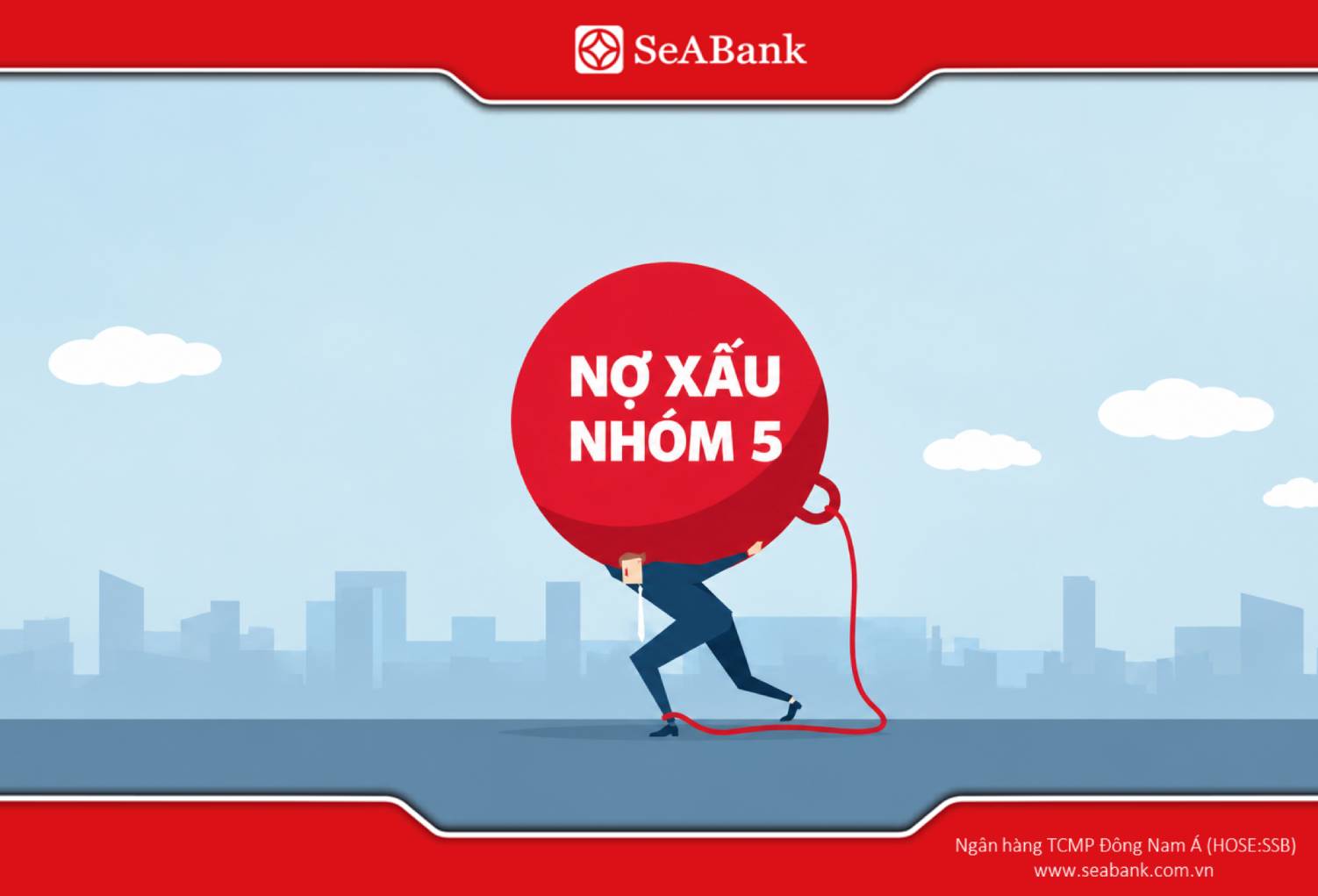
2. Can You Borrow Money with Group 5 Bad Debt?
In practice, virtually all licensed banks and consumer finance companies will restrict or outright decline new credit facilities for borrowers currently holding group 5 debt. Because this tier presents severe credit default risk, it directly jeopardizes the institution's capital recovery capabilities. Before approving any application, lenders routinely review the applicant's credit history through the CIC system.
According to Clause 1, Article 13 of Circular No. 15/2023/TT-NHNN issued by the State Bank of Vietnam regulating credit information activities, negative credit records of borrowers are retained and provided on the CIC platform for a maximum duration of 5 years, starting from the exact date the borrower completely settles the entire outstanding liability. Consequently, even after clearing the debt, your group 5 record remains visible to credit institutions for a designated observation period before any new financing can be entertained.
Therefore, rather than seeking loans at any cost, your immediate priority should be resolving your outstanding obligations and patiently allowing sufficient time for your credit profile to gradually recover.
3. Warning Signs: Scams Promising "Borrowing Money with Group 5 Bad Debt"
The pressing need for financing while dealing with group 5 bad debt creates opportunities for predatory actors to impersonate legitimate credit institutions for fraudulent gain. Borrowers - especially those facing acute cash crunches - must remain vigilant against several widespread tactics.
3.1. Upfront Fee Demands Prior to Disbursement
Many fraudsters instruct applicants to transfer advance funds disguised as "loan insurance fees," "disbursement processing fees," or "document verification fees," falsely guaranteeing immediate loan approvals despite active group 5 defaults. In reality, legitimate credit institutions never collect upfront fees before loan disbursement.
3.2. Impersonation of Banks and Finance Companies
Scammers frequently appropriate corporate visuals, logos, or brand names closely mimicking reputable lenders to establish false trust. They subsequently harvest personal details and identity document images to commit asset misappropriation or unauthorized identity exploitation.
3.3. Unregulated Online Lending Apps with Opaque Interest Rates
Certain unauthorized mobile lending apps deliberately obscure their actual interest charges, punitive fees, and contractual provisions. Borrowers who fail to inspect these terms thoroughly can quickly become trapped in compounding debt cycles.
4. Practical Solutions for Borrowers Facing Group 5 Bad Debt
When situated within the highest non-performing loan tier, implementing a disciplined recovery roadmap is critical instead of accumulating further liabilities.
4.1. Repaying and Fully Settling Existing Debts
- Contact the lending bank or finance company directly to negotiate repayment capacities, explore debt rescheduling, or structure a manageable installment plan.
- Prioritize liquidating smaller balances or accounts nearing immediate deadlines first, preventing additional overdue penalties from accruing.
- Safeguard all transaction receipts and formal payment vouchers, and request written confirmation from the lender upon final account settlement.
4.2. Rebuilding Your Credit Score
- Prevent new overdue incidents across all existing credit lines, credit cards, or retail installment purchases.
- Proactively monitor your personal credit score and debt records through the CIC portal to stay fully informed of your standing.
- Cultivate disciplined spending patterns and consistent on-time payment habits over the long term to gradually enhance your credit classification per regulatory guidelines.
IMPORTANT: To assist distressed borrowers in regaining access to legitimate credit channels, since December 1, 2014, CIC temporarily ceases disclosing non-performing loan records for borrowers whose outstanding default balance is below 10 million VND immediately after the debt is fully settled.

5. Frequently Asked Questions About Borrowing Money with Group 5 Bad Debt
1. How long does group 5 bad debt take to be removed from CIC?
Under Clause 1, Article 13 of Circular No. 15/2023/TT-NHNN, negative credit history is retained on the CIC system for up to 5 years starting from the date the borrower completely clears all outstanding obligations, barring specific regulatory exceptions. However, for non-performing debts with an outstanding principal balance below VND 10 million, the negative record can be cleared from the system immediately upon full repayment.
2. Can you borrow from consumer finance companies while carrying group 5 bad debt?
Most licensed finance companies also conduct credit evaluations via CIC prior to granting credit. Consequently, approval odds for new loan applications during active group 5 status remain extremely limited.
3. Is online lending safe for individuals with group 5 bad debt?
You should exercise severe caution toward platforms or individuals promising effortless approvals without financial underwriting, concealing effective interest rates, or demanding upfront fees prior to release. These are characteristic hallmarks of predatory lending and loan scams.
4. Can you apply for a new loan immediately after fully paying off group 5 debt?
This depends on the proprietary credit risk appetite of each individual lender. There is no automated guarantee that a new loan will be sanctioned immediately after payoff, though demonstrating a verified recovery track record is viewed favorably.
Borrowing money with group 5 bad debt remains manageable if you stay disciplined with debt settlement, steer clear of opaque lending invitations, and consistently rehabilitate your credit reputation over time. During your financial recovery, you can leverage SeAMobile to track personal expenses and structure realistic repayment goals. Once your credit profile recovers, explore tailored borrowing solutions from SeABank here.
Related News
What Is a Savings Account? Types and a Quick Guide to Opening One 13/11/2026
What Is Online Savings? How to Save and 6 Important Notes 13/11/2026
How to Make an Online Savings Deposit Easily and Earn Attractive Returns 05/11/2026
What Is Flexible Savings? Comparison with Traditional Savings 05/11/2026
Online Land Tax Payment: 2 Quick and Compliant Methods 05/11/2026
What Is a Savings Account? Types and a Quick Guide to Opening One
What is a savings account and how is it different from a payment account? Learn about common types of savings deposits, their benefits, and how to open an account online or at a branch.
13/11/2026
Read more


What Is Online Savings? How to Save and 6 Important Notes
What is online savings? Learn about its advantages, how to open a savings account on a banking app, and important notes on interest rates, security, and deposit insurance for online savings in this article.
13/11/2026
Read more

How to Make an Online Savings Deposit Easily and Earn Attractive Returns
Learn how to make an online savings deposit on SeAMobile in 4 steps, including requirements, interest rates, early withdrawal, and deposit insurance.
05/11/2026
Read more