What Is a Student Loan? Eligibility, Loan Amount, and Latest Interest Rates
23/10/2026
What is a student loan, who is eligible, and what are the preferential loan amounts and interest rates? Learn about the application process, procedures, and important notes in the article below.
If your child is about to enter university but your family is facing financial difficulties, a student loan is a preferential credit solution that helps cover tuition fees and living expenses. The program is implemented by the Vietnam Bank for Social Policies for students from poor households, near-poor households, or families facing unexpected financial difficulties. The following article helps you understand the eligible borrowers, conditions, loan amount, interest rates, and application procedures.
1. What Is a Student Loan?
A student loan is a preferential credit policy of the State, implemented through the Vietnam Bank for Social Policies under Decision No. 157/2007/QD-TTg dated September 27, 2007 of the Prime Minister on credit for pupils and students (HSSV) (as amended and supplemented by Decision No. 05/2022/QD-TTg dated March 23, 2022).
The loan is intended to support pupils and students in difficult circumstances in covering tuition fees, the cost of books and learning materials, as well as food, accommodation, and transportation expenses during their studies at universities, colleges, intermediate schools, and lawful vocational education institutions. The loan does not require collateral and is based on confirmation from local authorities and the educational institution.
In addition to this general program, from August 28, 2025, the State also issued Decision No. 29/2025/QD-TTg, introducing a separate credit program for pupils, students, master's students, and doctoral candidates studying science, technology, engineering, and mathematics, with separate eligible groups and applicable interest rates.
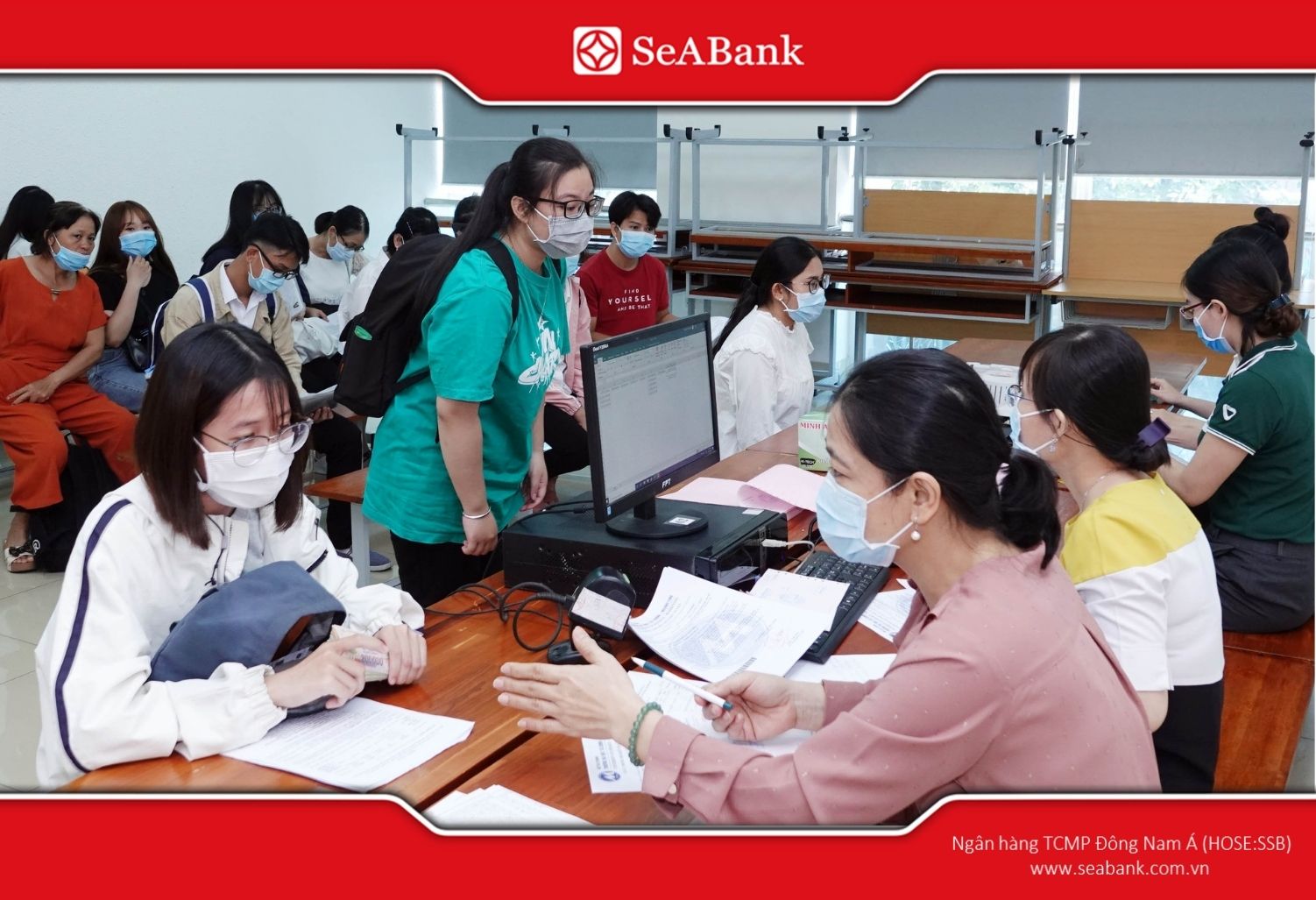
Student loans help many families feel more secure about their children's educational journey
2. Eligible Borrowers and Conditions for Student Loan Support
For first-year pupils and students: Have an admission notice or a confirmation of enrollment issued by the educational institution.
For pupils and students from the second year onward: Have confirmation that they are currently studying at the institution and have not been subject to disciplinary action at the warning level or higher during the previous academic year.
Regarding place of residence: Pupils/students and their households must legally reside in the locality where the loan is granted.
Pupils and students (who have graduated from high school):
First year: All 3 years of high school must be rated Good or higher in Academic Performance/Learning Results OR the Grade 12 average score in Mathematics, Physics, Chemistry, and Biology must be 8.0 or higher.
From the second year onward: Academic results in the immediately preceding year must be rated Excellent or higher.
Master's students and doctoral candidates: Must be officially recognized by the higher education institution in accordance with regulations.
When applying for a loan: Complete the Information Declaration Form (Appendix I), obtain confirmation from the educational institution, and submit the full set of relevant documents to the Vietnam Bank for Social Policies (VBSP).
Annually (for disbursement): Complete the Information Declaration Form (Appendix II), obtain confirmation from the educational institution, and submit it to the VBSP.
3. Loan Amount and Preferential Interest Rates
3.1. Maximum Loan Amount
General program: Under Clause 2, Article 1 of Decision No. 05/2022/QD-TTg, the maximum loan amount is 4,000,000 VND/month/pupil or student. The Vietnam Bank for Social Policies determines the specific loan amount based on the tuition fees charged by each institution and living expenses in each region. If a family has several pupils or students borrowing at the same time, the loan amount is equal to the total maximum loan amount applicable to each individual.
STEM program: Under Article 7 of Decision No. 29/2025/QD-TTg, the maximum loan amount for one learner to help cover tuition fees, living expenses, and other study-related costs during the remaining period of the course is determined as follows:
Tuition fees: The full tuition amount payable by the learner (after deducting scholarships and other financial support from the educational institution, if any), as confirmed by the educational institution.
Living & other study expenses: Up to 5,000,000 VND/month.
The Vietnam Bank for Social Policies will reach an agreement with the borrower to consider and determine the specific loan amount for each learner based on the above regulations.
The loan disbursement period is calculated from the date the borrower receives the first disbursement until the pupil or student completes the course, including any period of temporary leave or reservation of academic results permitted by the educational institution (if any).
The repayment period is calculated from after the completion of the course and includes a grace period to allow the pupil or student to stabilize employment before beginning repayment of principal and interest. The specific repayment period is determined by the Vietnam Bank for Social Policies based on the duration of the course and is clearly stated in the credit agreement.
3.3. Preferential Loan Interest Rates
Implemented in accordance with the latest interest rate policy adjustments of the Vietnam Bank for Social Policies:
Interest rate for the student loan program under Decision No. 157/2007: The preferential lending rate has been adjusted down to 6.24%/year (equivalent to 0.52%/month). The overdue debt interest rate is calculated at 130% of the lending rate.
Interest rate for the STEM program (Under Article 8 of Decision 29/2025): A special preferential interest rate of 4.8%/year (*) applies.
(*) Note: Interest rates were updated as of October 2026. Interest rates may change over time and according to State policies. Borrowers should check official information at the Vietnam Bank for Social Policies in their place of residence for the latest and most accurate updates.
4. Student Loan Application Process and Procedures
To apply for a student loan, households and pupils/students generally follow the steps below:
Prepare the application documents, including: Loan application cum debt acknowledgment form according to the Vietnam Bank for Social Policies' template (Form No. 01/TD), admission notice or confirmation of current enrollment from the educational institution, and documents proving that the household belongs to a poor household, near-poor household, household with an average standard of living, or is facing unexpected financial difficulties.
Submit the application to the commune-level People's Committee where the household resides for confirmation of eligibility.
The commune-level People's Committee compiles the list and sends it to the Vietnam Bank for Social Policies where the loan is granted.
The Vietnam Bank for Social Policies reviews the application, announces the result, and provides the disbursement schedule to the household.
Sign the credit agreement and receive disbursement by semester or academic year, depending on the educational institution's tuition fee notice.
Preparing a complete set of documents from the beginning helps the loan approval process proceed more smoothly
5. Important Notes When Taking Out a Student Loan
Reconfirm the student's academic status with the educational institution at the beginning of each semester or academic year to ensure continued disbursement on schedule.
Closely monitor disbursement periods and compare them with tuition fee notices to avoid shortages in study-related expenses.
Proactively plan for principal and interest repayment; under regulations, the borrower must make the first repayment immediately after the pupil or student gets a job and earns income, but no later than 12 months from the date the course ends.
Promptly notify the Vietnam Bank for Social Policies where the loan was obtained if there are changes in family circumstances, place of residence, or academic status.
Maintain regular contact with local authorities and the educational institution to receive timely support with document confirmation and avoid interruptions during the loan period.
6. Frequently Asked Questions About Student Loans
1. Does a student loan require collateral?
No. This is a policy credit program and does not require collateral. Approval is based on confirmation of eligibility by the commune-level People's Committee and confirmation of academic status by the educational institution.
2. Who is named as the borrower?
Normally, a representative of the household (father, mother, or legal guardian) is named as the borrower and signs the credit agreement with the Vietnam Bank for Social Policies. Certain special cases under current regulations may be handled differently; you should contact the Vietnam Bank for Social Policies in your place of residence directly for specific guidance.
3. When must repayment begin?
Under regulations, the borrower must make the first repayment of principal and interest immediately after the pupil or student gets a job and earns income, but no later than 12 months from the date the course ends. Therefore, during the entire study period, the family is not yet required to repay the principal.
4. What documents are required for a student loan application?
The basic application includes the loan application cum debt acknowledgment form according to the Vietnam Bank for Social Policies' template (Form No. 01/TD), admission notice or confirmation of current enrollment from the educational institution, together with documents certifying that the household is poor, near-poor, has an average standard of living, or faces unexpected financial difficulties, issued by the commune-level People's Committee.
5. Does the loan amount change from one academic year to another?
The Vietnam Bank for Social Policies determines the specific loan amount based on tuition fees charged by each institution and regional living expenses at each point in time, but it may not exceed the maximum amount prescribed under current regulations. Borrowers should update the information directly with the local authority to understand the exact loan amount for their academic year.
In summary, student loans are a practical policy that helps many families reduce the financial burden during their children's educational journey. You should prepare a complete set of documents and carefully understand the process at the Vietnam Bank for Social Policies in your place of residence to facilitate approval. In addition to this preferential source of funding, families may consider other suitable financial solutions to ensure that education is not interrupted.
Accompanying you with SeABank: In addition to policy credit, if your family needs an additional reserve to cover tuition fees or living expenses for your child during university, you can learn more about SeABank's personal consumer loan products. Monitoring loans and managing daily finances also becomes more convenient through the SeAMobile app. Find out more at SeABank Personal Loans.
Southeast Asia Commercial Joint Stock Bank (SeABank)