News
Updated regulations on personal income tax for 2026 and how to calculate it accurately
 26/01/2026
Summary of the provisions of the Personal Income Tax Law expected to be implemented from 2026: effective date, tax rates, family deductions, and calculation methods (for reference)
The Personal Income Tax Law of 2026 has made notable adjustments related to the tax schedule, family allowance deductions and tax calculation methods. This article provides a detailed summary of the latest updates and tax calculation methods.Personal income tax rates are expected to be applied from 2026. And here are some things taxpayers need to keep in mind to fulfill their tax obligations accurately and optimize their personal budget.
1. What is the Personal Income Tax Law of 2026? When will it come into effect?
Amended Personal Income Tax Law of 2025 Law No. 109/2025/QH15, passed by the National Assembly, will officially effective from July 1, 2026, replacing Personal Income Tax Law 2007. The specific implementation date and detailed content will be determined according to the official guidance document from the competent authority. From this point onwards, the new regulations on personal income tax will be in effect and other amendments applied uniformly within the tax legal system.
Regulations on personal income tax are adjusted according to each implementation period.
However, for income from salaries and wages, important content such as progressive tax rate (5 brackets), personal deductions will be applied for the tax period of 2026 (Effective from January 1, 2026). This approach aims to ensure consistency in annual tax settlements and avoid having to split the tax schedule between two periods within the same fiscal year.
2. New changes to personal income tax in 2026.
21. Reduce the tariff structure from 7 brackets to 5 brackets.
According to Article 9 of the Personal Income Tax Law 2025, the new progressive tax rate system has been simplified to only 5 brackets from 2026 onwards, instead of 7 ranks as before. Here's the solution: Reducing the number of tax brackets makes calculations easier and prevents situations where people only see a slight increase in income but are subject to a higher tax rate.
The new tax schedule is designed to broaden income brackets in the middle classes, the group most affected by wages. This has significant practical implications for office workers, technical professionals, and middle managers.
The latest progressive tax rate schedule (applicable from the 2026 tax year - i.e., from January 1, 2026):
The highest tax rate is 35%, applied to taxable income exceeding 100 million VND per month. Maintaining the highest tax rate at 35% but only applying it to very high incomes reflects the principle of reasonable income regulation, avoiding putting pressure on the vast majority of salaried workers.
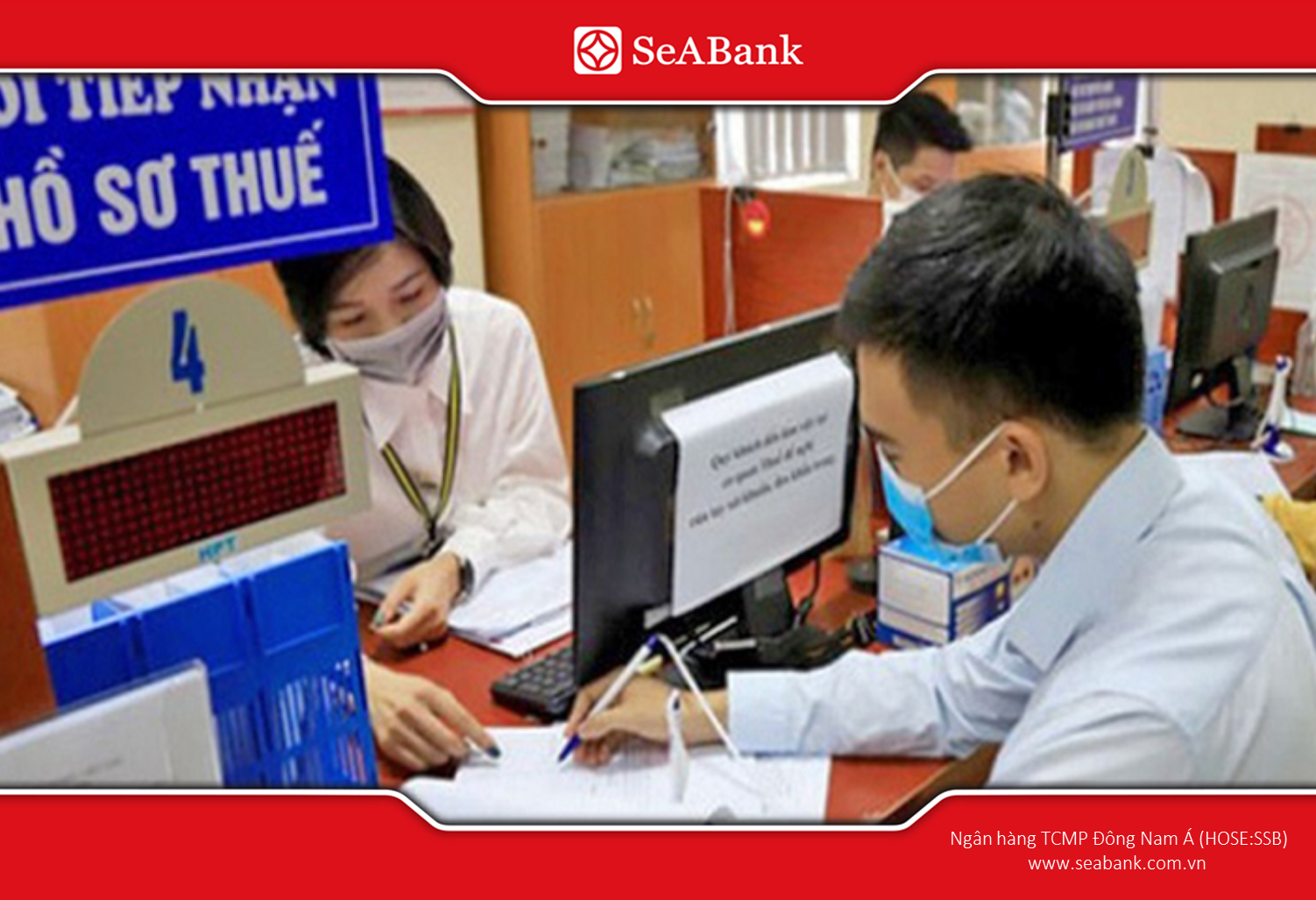
The new tax policy aims to simplify and support workers.
2.2. Significantly increasing the personal allowance.
Another significant change in the 2026 Personal Income Tax Law is the increase in the personal allowance for taxpayers and their dependents. According to Clause 2, Article 29 of the Personal Income Tax Law 2025, the regulations on personal deductions for 2026 will be applied from the 2026 tax year - that is, from January 1, 2026. Specifically:
- Personal deduction amount taxpayers are being upgraded: 15.5 million VND/month instead of 11 million VND/month as before. (186 million VND/year)
- For each dependent, the deduction amount is adjusted upwards: 6.2 million VND/month.
This is considered to have the most direct and positive impact on the real income of workers, especially households with young children or those caring for relatives.
According to analyses from economic news sources, with the new tax deductions, many middle-income earners will no longer have to pay personal income tax, or the amount of tax payable will be significantly reduced compared to before 2026.
2.3. Updating the scope of taxable income in the new context.
The amended law also clarifies the scope of taxable and tax-exempt income, especially in the context of the digital economy, freelance work, and the increasing prevalence of multiple income sources. Some new income generated from digital platforms and online businesses is still subject to taxation according to general principles.
However, the law continues to maintain social welfare tax exemptions, such as subsidies and allowances, to ensure the goal of supporting workers. Specifically, some common income levels subject to personal income tax according to the new family allowance deduction table have included other deductible and exempt expenses, including:
- Insurance premiums, voluntary pension funds, charitable contributions, educational support, and humanitarian aid.
- Income is exempt from personal income tax.
- Tax-exempt personal income includes certain allowances, subsidies, lunch money, etc.

The new method of calculating personal income tax is more favorable to employees.
3The most accurate and up-to-date method for calculating personal income tax in 2026.
To calculate personal income tax payable, it is first necessary to determine taxable income, then apply the tax rate according to the new 5-tier progressive tax schedule. The general formula is as follows:
The remaining taxable income will be subject to a five-tiered progressive tax rate. Each income segment within a range will be subject to a corresponding tax rate, instead of a single tax rate applied to the entire income.
This method ensures that those with higher incomes only pay higher taxes on the excess, making the tax system fairer and more acceptable. This also helps reduce the psychological tax burden on workers as their income increases.
For example: Let's assume Ms. H has monthly income of 50 million VND and must pay the following mandatory insurance premiums:
- Social insurance: 8%
- Health insurance: 1.5%
- Social insurance: 1%
Ms. H has 2 dependents and there are no charitable contributions or other deductions.
According to the formula, we can calculate:
1. Taxable income = 50 million VND (total income from salaries and wages)
2. Calculate the deductions:
- Personal deductions: 15.5 million VND
- Tax deductions for 2 dependents: 6.2 × 2 = 12.4 million VND
- Compulsory insurance = 50 million × (8% + 1.5% + 1%) = 5.25 million VND
→ Total deductions =15.5 + 12.4 + 5.25 = 33.15 million VND
3. Taxable income= 50 – 33.15 = 16.85 million VND
4. Applying a progressive tariff system:
→ Total provisional personal income tax paid during the month: 0.5 + 0.685 = 1.185 million VND.
4. Notes on applying the new Personal Income Tax Law
In practice, employees need to pay attention to the timing of income payment to accurately determine the tax period in which the new deductions apply. According to the guidelines, income generated from 2026 onwards will be fully subject to the new regulations, including cases of delayed salary payments.
In addition, registering dependents correctly and with complete documentation remains a mandatory requirement to be eligible for tax deductions. Failure to register in time may result in higher tax charges for the year, and the taxpayer may only receive a refund upon final tax settlement.

Taxpayers need to proactively update and comply with regulations.
Finally, for those with multiple sources of income, proactively monitoring, compiling, and settling taxes is essential to avoid the risk of back taxes or penalties.
The updated Personal Income Tax Law of 2026 marks a significant adjustment in tax policy, aiming to support workers and more accurately reflect actual income. Increases in personal deductions, simplification of tax brackets, and clarification of tax calculation methods help make the tax system more transparent, understandable, and fair.
To take full advantage of the new regulations, employees should proactively update their information, declare their income fully, and manage it wisely. This is also an important foundation for individuals to build a sustainable financial plan in the new period.
Related News
FRAUD AND ASSET MISAPPROPRIATION ALERT BULLETIN Q2/2026 26/06/2026
Guidelines for increasing pensions, social insurance benefits, and monthly allowances by 8% from July 1, 2026. 15/06/2026
5 things that household businesses with revenue under 1 billion VND need to be aware of according to the new regulations. 20/05/2026
What is consumer credit? 5 common types of consumer credit 31/03/2026
What is a demand deposit? Interest rates and how interest is calculated (updated 2026). 31/03/2026

FRAUD AND ASSET MISAPPROPRIATION ALERT BULLETIN Q2/2026
Dear Our Esteemed Customers,
26/06/2026
Read more


Guidelines for increasing pensions, social insurance benefits, and monthly allowances by 8% from July 1, 2026.
The Minister of Home Affairs issued Circular No. 14/2026/TT-BNV detailing the adjustment of pensions, social insurance benefits, and monthly allowances. Accordingly, from July 1, 2026, pensions, social insurance benefits, and monthly allowances will increase by 8%.
15/06/2026
Read more

5 things that household businesses with revenue under 1 billion VND need to be aware of according to the new regulations.
The new regulations officially raise the taxable revenue threshold for household businesses to 1 billion VND per year. However, household businesses with revenue below 1 billion VND should take note of the following points.
20/05/2026
Read more