News
How much is 1 Baht in Vietnamese Dong? Update the latest THB exchange rate
 19/11/2025
Finding out the exchange rate between currencies, like wondering "How much is 1 Baht in Vietnamese Dong?", not only helps tourists be proactive in spending when coming to Thailand but also supports investors and businessmen to make accurate financial decisions. The article below will provide updated and accurate information on the exchange rate of Thai Baht compared to Vietnamese Dong, and at the same time suggest important notes when conducting foreign currency transactions.
1. Currency conversion
Before we get into more detail,customers can easily use the online currency converter provided by SeABank to look up exchange rates quickly and accurately.Just enter the amount and select the currency, the system will automatically calculate and display the exact result.
>>> Experience the currency converter here: https://www.seabank.com.vn/cong-cu-tien-ich/ty-gia
Note: The displayed results apply the effective exchange rate of SeABank.
2. How much is 1 Thai Baht (THB) in Vietnamese Dong?
Calculation formula:
According to the reference exchange rate on November 11, 2025 at SeABank: 1 Thai Baht (THB) ≈848 Vietnamese Dong (VND)
From the above exchange rate, some common currencies can be calculated:
- 10 THB = 8,480 VND
- 50 THB = 42,400 VND
- 100 THB = 84,800 VND
- 500 THB = 424,000 VND
- 1,000 THB = 848,000 VND
Note: The conversion rate is updated according to the exchange rate nNovember 11, 2025 at SeABank. Exchange rates may change when customers make actual transactions at the bank, depending on the time, payment method and policy of each unit.
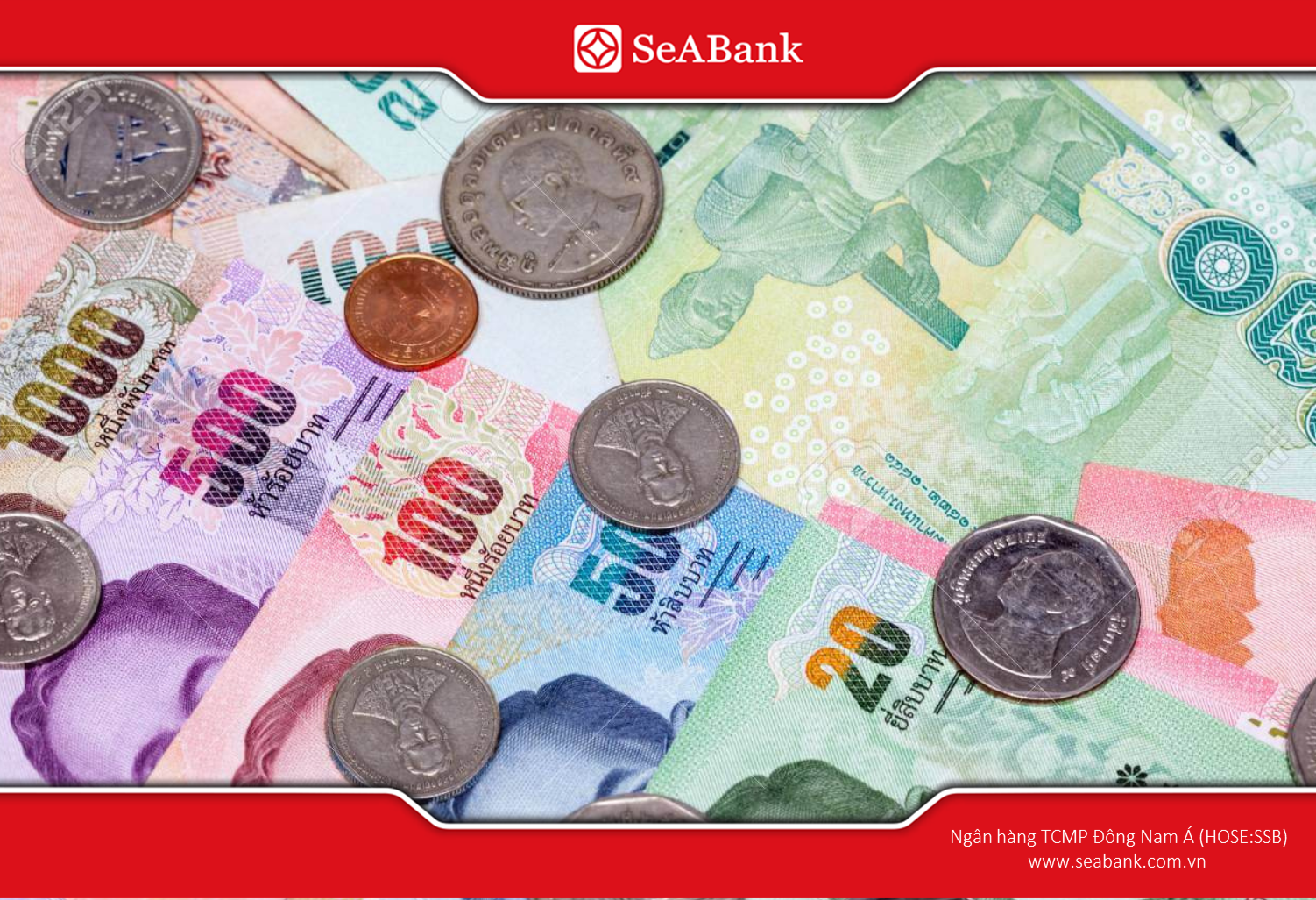
Nowadays, Thai money is circulated in two forms: coins and banknotes.
3. How to update the most accurate Thai Baht (THB/VND) exchange rate
Foreign exchange rates fluctuate frequently during the day, depending on market developments. Therefore, timely and accurate exchange rate updates are important if you are planning to exchange money, make international payments or monitor your investments. Here are some popular and reliable ways to update exchange rates:
- Banking website and application: Commercial banks provide real-time foreign exchange rates, with charts, detailed buying and selling rates for each payment method (cash, transfer,...). This is the most reliable source to refer to exchange rates if customers need to buy/sell foreign currency at the bank.
- Prestigious financial and economic information site: Sites like Bloomberg, Reuters, Trading Economics or the State Bank of Vietnam portal provide updated exchange rates according to international and domestic market developments. In addition to specific figures, these sites also analyze the market and forecast trends to help you have a deeper look at exchange rates.
- Online calculator: Websites and applications such as Google Finance, XE.com, Wise.com, or tools directly on bank websites such as SeABank help users quickly convert between Baht and VND. Just enter the amount, customers will receive the conversion number based on the current exchange rate. Some tools also display the history of exchange rate fluctuations by day, month or year for you to easily track trends. However, this conversion rate is for reference only.

Customers should refer to exchange rate information on reputable sites and update exchange rates at banks before making financial decisions.
4. Factors affecting Thai Baht exchange rate
The exchange rate between Thai Baht (THB) and Vietnamese Dong (VND) does not stand still but changes according to many different economic and political factors. Below are the main factors you should know:
- International foreign exchange market: The THB/VND exchange rate is primarily governed by the supply and demand of Thai Baht in the global foreign exchange market. If the demand for holding Baht increases (e.g. due to strong growth in Thai tourism or foreign capital inflows into Thailand), the price of Baht will increase and vice versa.
- Monetary policy of Thailand and Vietnam: Any decision from the Bank of Thailand or the State Bank of Vietnam such as adjusting the base interest rate, foreign exchange reserves, or market intervention measures can increase/decrease the value of the domestic currency. If Thailand increases interest rates, the Baht will become stronger, causing the THB/VND exchange rate to increase.
- Economic fluctuations, interest rates and inflation: Macroeconomic fluctuations such as GDP growth rate, inflation rate, and public debt level are all important indicators that determine the strength of the Baht. For example, when inflation in Thailand increases, people and investors will lose confidence in the Baht, causing the Baht/VND exchange rate to fall. Similarly, if Vietnam controls inflation and economic growth well, the strength of the VND may increase compared to the Baht.
Updated information November 2025: According to Reuters, in the first nine months of 2025, the Thai Baht is facing appreciation pressure — it has risen about 8% against the USD, threatening Thailand's exports and tourism industry. The central bank Bank of Thailand (BoT) has kept the base interest rate at 1.50% and warned of possible future cuts, citing signs of weakening domestic economy.
In this context, a rising baht value could make the THB/VND exchange rate less competitive for Thailand – meaning each THB exchanged could cost less VND if the USD and other currencies are stable.
5. Reputable address to exchange Thai Baht to Vietnamese Dong
When there is a need to exchange Thai Baht (THB) to Vietnamese Dong (VND) or vice versa, customers should choose legal and reliable addresses to ensure safety and reasonable exchange rates. Below are the three most popular suggestions:
- Bank: Most banks offer foreign currency buying and selling services, including Thai Baht. Exchanging foreign currency at the bank is always considered the safest solution thanks to clear legal factors, transparent exchange rates and full documentation. In addition, some banks also support appointment booking or online currency exchange, helping to save time and avoid waiting at the counter.
- Licensed gold shops and foreign exchange dealers: Some large gold shops in cities such as Hanoi, Da Nang, and Ho Chi Minh City are licensed by the State Bank to trade foreign currencies. The advantages of this form are simple procedures, quick transaction times, and often relatively competitive exchange rates. However, customers should carefully check the operating license and compare exchange rates between shops to ensure they receive the best exchange rate.
- Money exchange counters in airports, supermarkets, shopping malls: Money exchange counters in international airports (Noi Bai, Tan Son Nhat, Da Nang,...) or in supermarkets and large shopping centers are usually operated by financial institutions or licensed entities. This form is suitable for those who need to exchange money urgently, but the exchange rate is often not as favorable as banks or gold shops.
Customers who want to exchange Thai Baht (THB) at competitive rates can do so at SeABank. Fast and safe foreign exchange service, with rates updated close to the market, is available at branches nationwide.
Foreign currency transactions, including THB, are conducted with transparent procedures and complete documentation, giving customers maximum peace of mind and convenience.
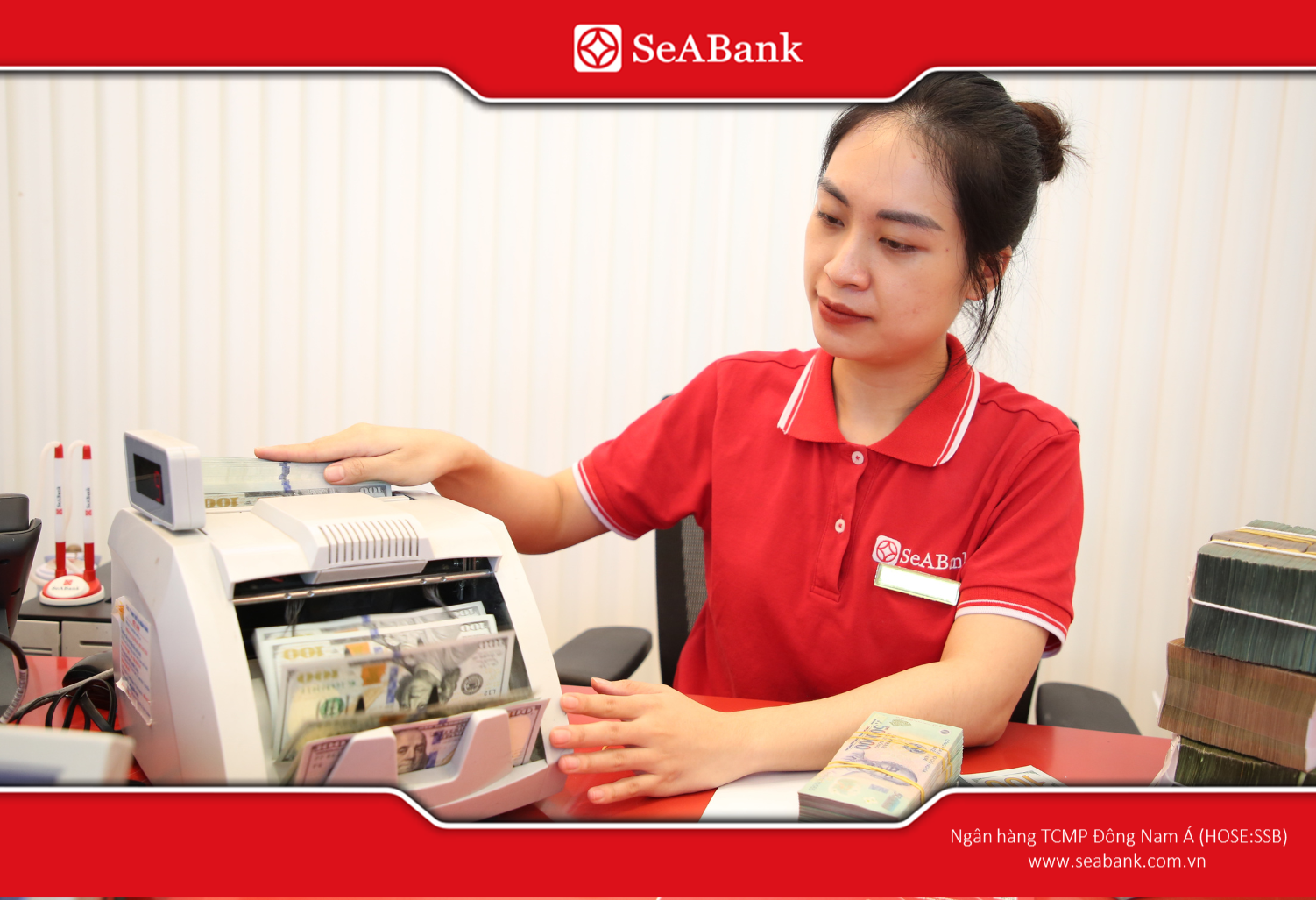
Customers can contact SeABank for support in exchanging foreign currency at good rates.
6. Frequently Asked Questions
1. Is there a fee to exchange 1 Thai Baht at the bank?
There are usually exchange rate differences or transaction fees, depending on each bank's policy.
2. How are the buying and selling rates of Thai Baht different?
Exchange rateThe buying rate is the rate at which banks buy foreign currency from customers, while the selling rate is the rate at which banks sell foreign currency to customers. Normally, the selling rate will be higher than the buying rate.
3. Does the Thai Baht exchange rate change frequently?
Yes, exchange rates change according to foreign exchange market developments and monetary policy in each stage.
4. Can I convert Thai Baht to VND online?
Yes, there are many banks and services that support online currency exchange. However, you need to research carefully to choose a reputable unit.
5. When exchanging Thai Baht to VND, do I need to verify my account?
For online or large volume transactions, service providers often require identity verification as required by law.determineto ensure safety and compliance with foreign exchange management procedures.
Above is the information to answer the question "How much is 1 Baht in Vietnamese Dong?". In general, clear exchange rates help you be more proactive in spending, investing or planning your travel. If you need to exchange foreign currency or learn more about SeABank products, you can contact the nearest transaction points or call Hotline 1900 555 587 or visit the website www.seabank.com.vn for more details.