News
Saving money in the bank: Benefits, methods, interest rates and 5+ tips for attractive profits
 11/11/2025
Safe savings deposit, attractive interest rates at SeABank–Smart choices help you generate profits effectively and manage finances sustainably.
In the context of economic fluctuations, depositing savings in banks is always a safe and effective choice to help each individual preserve capital and generate stable profits. Not only is it a form of financial accumulation, depositing savings also demonstrates the habit of managing expenses and planning for the future.
Quick summary:
Saving money is when a customer deposits an amount of idle money into a bank to receive interest according to an agreement. This is an investment channel.safe, stable and popular, helping to preserve and generate profits for money.
There are different forms of savings, specifically:
By term:
- Term:High interest rate, suitable for long term investment.
- No term:Flexible, withdraw money anytime.
By form of submission:
- At the counter:Safe, with support staff.
- Online:Convenient, interest rates are usually higher.
By product:
- Regular savings
- Accumulated savings (periodic deposits)
- Flexible savings and principal withdrawal
To achieve high efficiency, depositors should choose a reputable bank, take advantage of online savings, choose a reasonable term and flexibly manage deposits.
1. What is bank savings?
1.1. Concept
According to Article 5 Circular 48/2018/TT-NHNN, savings deposit is the amount of money that the depositor deposits at a credit institution under the principle of full repayment of principal and interest according to the agreement with the credit institution.
So, Saving money in a bank is a form of customer depositing idle money in a bank for a certain period of time to receive interest according to regulations. After the term expires, the depositor will receive the principal and interest, depending on the form of deposit that was registered before.
This is one of the safest and most popular investment channels, helping people preserve and profit from their money without having to participate in high-risk business activities.

With the development of digital banking technology, customers can save money easier than ever.
1.2. Characteristics
Before deciding to deposit savings, depositors should clearly understand some basic characteristics of this form to be able to choose a deposit package that suits their financial needs.
- High security: Savings deposits are guaranteed by the bank and are managed by the State Bank, helping customers feel secure about security and stable profitability.
- Flexible terms: Banks today offer many different deposit terms, from a few days, a few months to a few years, suitable for each individual's financial plan.
- Attractive interest rates: Compared with keeping money in a checking account, savings deposit interest rates are often higher, bringing significant benefits to depositors.
- Convenient deposit and withdrawal: Customers can open a savings book directly at the counter or deposit savings online through the electronic banking application, helping to save time and simplify operations.
- Various forms of sending: Each bank offers a variety of savings products such as term deposits, non-term deposits, cumulative savings or online savings, to meet the diverse needs of customers.
1.3. Suitable subjects
The form of bank savings deposits is suitable for many different customer groups, from individuals to organizations, depending on the purpose and financial capacity. In addition to the basic conditions specified in Article 3 Circular 48/2018/TT-NHNN, individual customers suitable for savings deposit products include:
- People with stable income: People who work, have a monthly income and want to gradually save to achieve financial goals such as buying a house, buying a car or paying for their children's education.
- People with temporarily idle money: Individuals or businesses that do not need to use capital immediately can save money to earn interest while waiting.
- People who prioritize financial security: Those who do not want to invest in high-risk channels such as stocks or real estate will find savings a safe and easy-to-control choice.
- Students, new workers: Small, flexible savings packages with regular contributions help form savings habits and effectively manage personal finances.
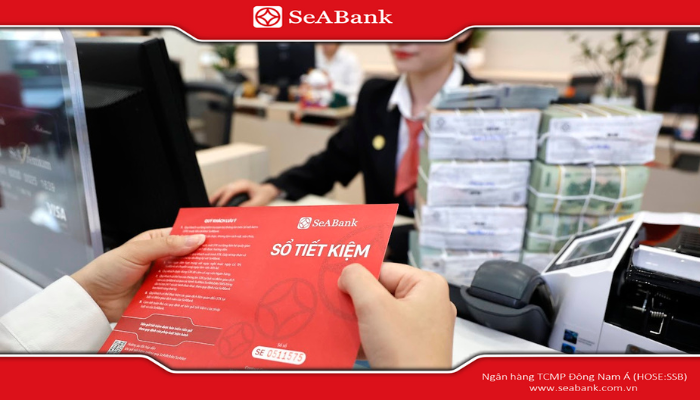
Anyone who wants to preserve capital, accumulate long-term or look for a safe investment channel can consider depositing savings at the bank.
1.4. Benefits
Saving money not only helps customers preserve the value of their money but also brings many other practical benefits:
- Stable profit: Deposits receive regular interest over the term, helping depositors earn additional passive income.
- Preserve and increase asset value: In the context of inflation, saving helps money not lose value and still grow safely over time.
- High flexibility: Depositors can choose the term and form of interest payment (in advance, later or periodically) to suit their personal needs.
- Easy financial support: Savings books can be used as collateral when customers want to borrow capital or participate in other financial products at the bank.
- Modern technology utilities:With the development of digital banking, customers can deposit, withdraw or close savings right on their phones without having to go to the counter.
2. Classification of bank savings deposit methods
2.1. Classification by deposit term
Banks often divide savings products by term to meet the diverse needs of customers. Each term has different characteristics and interest rates, suitable for short-term or long-term financial goals.
According to Article 6 Circular 48/2018/TT-NHNN, savings deposits are classified according to deposit term, including:
1 - Term savings
This is a form of deposit for a fixed period of time such as 1 month, 6 months, 12 months or longer. The depositor enjoys a high and stable interest rate throughout the term, suitable for those with long-term financial plans. However, if the money is withdrawn before the due date, the customer will only be charged a low interest rate like a non-term deposit, so the flexibility is not high.
2 - Non-term savings
Unlike term deposits, this form allows customers to deposit or withdraw money at any time without being bound by time. Although the interest rate is lower, in return, the depositor can actively use the capital when needed, very suitable for short-term deposits or daily expenses.
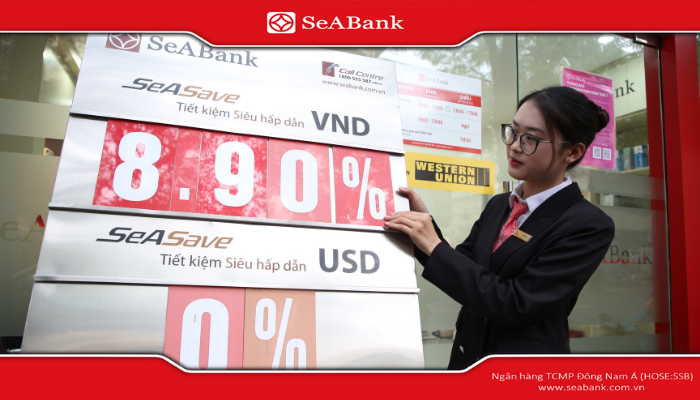
SeABank offers many savings products with attractive interest rates.
2.2. Classification by form of sending
In addition to the term, banks also classify savings deposits according to the form of transaction. Customers can choose to deposit at traditional counters or online depending on their habits and needs.
1 - Send at the counter
KCustomers go directly to the bank branch or transaction office to carry out the procedure of depositing savings. This form brings peace of mind and high trust thanks to the bank staff guiding and confirming specific information.
However, sending at the counter often takes time to travel, wait and is less flexible than sending online.
2 - Online savings
KCustomers can make all transactions of depositing, withdrawing or closing savings books through Internet Banking or Mobile Banking applications. This form brings convenience and speed. Many banks also apply higher preferential interest rates for online deposits, encouraging users to experience digital services.
However, this form requires customers to have an Internet-connected device and basic understanding of online transactions to ensure safety.
2.3. Classification by deposit products
In addition to classifying by term and deposit type, banks also divide savings products into many different types to meet the diverse needs of customers. Each product has its own characteristics, suitable for each financial goal and the ability to accumulate of the depositor.
1 - Regular savings
This is the most popular form of savings deposit today. Customers deposit a fixed amount of money for a certain period to receive interest rates as regulated by the bank. Interest can be received periodically, at the end of the period or added to the principal. This form is suitable for people with idle money, wanting to earn stable and safe profits without having to deposit more during the term.
2 - Accumulated savings
Accumulated savings is a product that allows customers to make regular weekly, monthly or quarterly deposits with flexible amounts. This form is suitable for people with regular income such as office workers, young people or families who want to save for long-term goals such as buying a house, studying or retirement. The advantage is that it helps form a saving habit and gradually increase the value of the deposit over time.
3 - Fixed savings with flexible principal withdrawal
With this product, customers deposit a fixed amount of money for a certain period but can withdraw a part of the principal before the due date when necessary without affecting the interest rate of the remaining principal. This is an ideal choice for those who want to deposit savings to earn profit but still need to keep a flexible part of capital for unexpected financial needs.

You need to consider your financial situation to choose the appropriate form of savings.
3. Latest bank savings interest rates
Recently, the interest rates on savings deposits at banks have tended to be flexibly adjusted according to the monetary policy of the State Bank.
After a period of easing to stimulate investment and consumption, many banks have now gradually stabilized interest rates, ranging from 3.5% to 6.5% per year depending on the term and type of deposit. The difference between banks mainly comes from capital mobilization policies, scale of operations and level of competition in the market.
Savings interest rates will be affected by the following factors:
- Term: Typically, interest rates increase over time. Shorter terms such as 1 or 3 months have lower interest rates, while 6, 12 or 24 month terms often have higher interest rates, encouraging customers to deposit for a long time.
- Deposit amount: The more customers deposit, the more opportunities they have to enjoy higher interest rates or participate in promotions and incentives on other financial products.
- Interest payment method: Typically, interest payments at the end of the term have the highest interest rate because the bank has full use of the money during the term. Conversely, periodic interest payments (monthly/quarterly) or interest payments at the beginning of the term usually have lower interest rates because the customer receives the money sooner.
- Liquidity: If you withdraw money before maturity, the bank will apply a non-term interest rate, which is usually very low (about 0.1% - 0.3%/year).
4. Procedures for depositing savings in banks
4.1. Online procedures
Deposit savings online is a form that is favored by many customers because of its convenience and speed. To do this, customers need to have a payment account at the bank and register for electronic banking services (Internet Banking or Mobile Banking).
Basic steps to save money online include:
- Step 1: Log in to your banking app or website.
- Step 2: Select “Savings online” or “Open a savings book”.
- Step 3: Enter the amount you want to deposit, term, interest payment method and confirm the transaction.
- Step 4: The system will automatically deduct money from the payment account and open an electronic savings book for the customer.
This procedure only takes a few minutes, no paperwork or counter visit required. When the maturity date comes, the principal and interest will be automatically transferred to the payment account, or renewed if the customer has previously chosen.
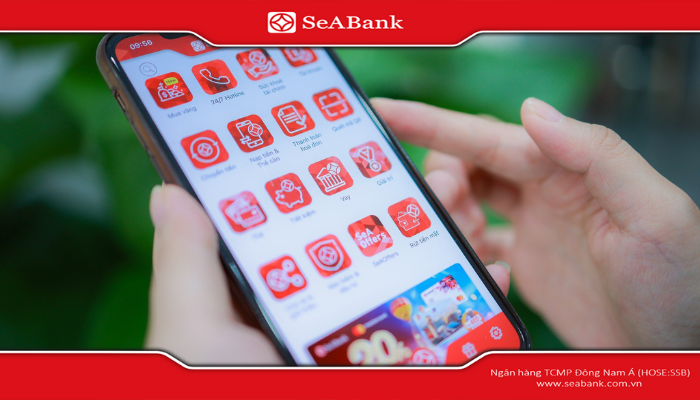
Customers can save online through the SeAMobile application.
4.2. Counter procedures
With the traditional form, customers can go directly to the bank branch or transaction office to deposit savingsThis procedure is suitable for those who want to bespecific instructions or are unfamiliar with using online services. The steps include:
- Step 1: Bring your ID card/CCCD or passport to verify your identity.
- Step 2: Fill out the deposit request form provided by the bank.
Step 3: Deposit cash or transfer from checking account to savings account. - Step 4: Bank staff confirm information and print savings book for customers.
When the term comes, customers can go to the counter to withdraw money, close or renew their savings. The advantage of this form is that there is direct support from staff, ensuring a safe and transparent process.
5. Experience to save safely, high interest
To make saving deposits not only safe but also bring optimal profits, customers should equip themselves with some important experiences:
- Choose a reputable bank: Priority should be given to banks with long-standing brands, strong financial potential and guaranteed liquidity by the State Bank. These banks often have stable interest rate policies, good customer care services and high security systems, helping depositors feel secure throughout the deposit period.
- Priority for online savings: Saving online not only saves time but also often enjoys higher interest rates than at the counter. In addition, customers can easily track, close or renew savings anytime, anywhere via the banking application.
- Priority for terms of 6 months or more: Deposits of 6 months, 12 months or 24 months are usually applied with significantly higher interest rates than short-term deposits. Therefore, if you do not need to use the capital in the near future, customers should choose medium or long-term deposits to get the maximum benefit from interest rates.
- Split your deposits into multiple savings accounts: Instead of putting all the money into a single savings account, customers should divide it into several accounts with different terms. This way, customers can be more flexible when they need to withdraw part of the money without affecting the entire deposit.

You should ask a consultant for specific information about savings packages.
6. Save with attractive interest rates at SeABank
Established in 1994, SeABank is one of the commercial joint stock banks with a solid foundation and stable growth rate in Vietnam. With a nationwide network of branches, SeABank constantly innovates and applies modern technology to bring convenient financial experiences to individual and corporate customers.
The bank is currently focusing heavily on digital transformation, notably online savings products and smart financial management on the SeAMobile platform. When depositing savings at SeABank, customers are not only guaranteed absolute safety for their deposits but also enjoy many outstanding benefits:
- Competitive interest rates, incentives for each term: SeABank regularly applies attractive interest rate policies, especially for customers who save online or for long terms.
- Diverse savings products: Including term savings, cumulative savings, online savings and flexible principal withdrawal savings, suitable for all financial needs.
- Fast transactions, absolute security: With the SeAMobile digital banking system, customers can open, close or renew savings books anytime, anywhere.
- Dedicated customer care policy: SeABank provides 24/7 support services, along with many attractive promotions for loyal customers.
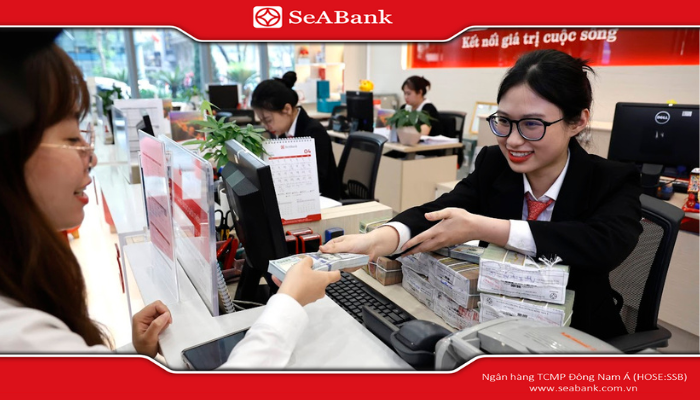
With prestige, safety and competitive interest rates, SeABank is a reliable choice for those looking for an effective savings solution with sustainable profits.
7. FAQ
1. If I withdraw money before maturity, how is interest calculated?
If the customer withdraws money before maturity, the entire deposit will be calculated at the non-term interest rate, which is usually much lower than the term interest rate (about 0.1% - 0.3%/year depending on the bank).
2. What is the minimum amount to start saving?
The minimum deposit amount depends on the regulations of each bank. Normally, customers can start saving from 100,000 VND or 1,000,000 VND for online or counter deposit.
3. Should I choose online or counter savings?
If you prioritize convenience and high interest rates, online savings is the optimal choice. On the contrary, if you want direct advice and feel secure when dealing with staff, you can choose to deposit at the counter.
4. Which term is the most beneficial for 3-month, 6-month and 12-month savings?
Normally, the longer the term, the higher the interest rate. Therefore, a 12-month deposit will bring better profits than a 3- or 6-month deposit. However, customers should consider the ability to use the capital to choose a suitable term, avoiding early withdrawal.
Deposit savings is a smart financial solution, bringing safety, stability and sustainable profits to depositors. Whether you want to save for long-term goals or just looking for a safe investment channel, bank savings are always a reliable choice. Start saving today at SeABank to enjoy attractive interest rates, professional service and absolute peace of mind in every financial transaction.
If youIf you want to learn more about SeABank's savings products, you can contact the nearest transaction point or call Hotline 1900 555 587 or visit the website www.seabank.com.vn for more details.