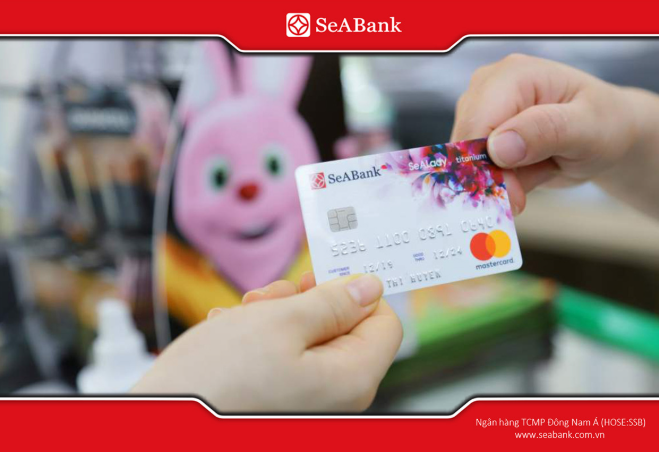
What Is Credit Card Balance Transfer? The Fastest and Most Effective Way to Do It
17/09/2025
A credit card balance transfer is a smart financial solution that allows you to move your credit card debt from one bank to another to enjoy preferential interest rates, consolidate debt, and optimize personal financial management. The following article explains the concept, benefits, process, and detailed guidance on balance transfers—especially at SeABank, one of the most reputable banks offering this service.
Note for readers: The figures and information in this article are compiled from general market sources and do not apply specifically to SeABank’s products or services.
Credit card transfer is a smart financial solution that helps you transfer your credit card balance from one bank to another.
1. What Is a Credit Card Balance Transfer?
A credit card balance transfer is the process of moving all or part of your outstanding credit card balance from Bank A to Bank B. Bank B pays off your remaining balance at Bank A, and you then repay Bank B under new terms—often with a promotional interest rate for a specified period.
How it works:
You have an outstanding balance on your credit card at Bank A.
You register for a balance transfer at Bank B (e.g., SeABank).
Bank B pays the balance to Bank A.
You repay Bank B according to the new interest rate and repayment schedule.
Comparison with personal loans or card refinancing:
Personal loan: Borrow cash to repay card debt—often higher interest rates and more complex procedures.
Card refinancing: The current bank increases your credit limit without transferring debt elsewhere.
Balance transfer: Enjoy lower interest rates, consolidate debt, and complete the process quickly.
Example: You owe VND 30 million on a card at Bank A at 25% interest per year. You transfer to Bank B, which offers 0% interest for six months. Bank B pays Bank A the VND 30 million, and you repay Bank B in installments without interest during the promotional period.
2. Benefits of a Balance Transfer
Lower interest rates: Many banks offer 0% promotional interest for the first 3–6 months.
Debt consolidation: Combine multiple credit card balances into one, making it easier to track and manage.
Credit score improvement: On-time payments can enhance your credit history.
Reduced minimum payment pressure: New repayment terms are often more flexible, easing monthly financial strain.
When you transfer your credit card, you can receive the following benefits: Reduced credit card interest rates, improved credit history, reduced minimum payment pressure...
3. When Should You Consider a Balance Transfer?
When paying a high interest rate on your current credit card.
When you cannot meet payment deadlines and wish to avoid penalties or credit score damage.
When you want to consolidate several credit card balances into one place.
Recommended situations: Large balances, high interest rates, or multiple credit cards. Not recommended: Small balances or when you can repay the debt immediately.
4. Step-by-Step Guide to a Balance Transfer
Review your current balance and finances: Evaluate total credit card debt and monthly repayment capacity.
Compare banks offering balance transfers: Look into reputable banks like SeABank for interest promotions, eligibility, and transfer fees.
Prepare documents and apply at the new bank: Typically includes ID (Citizen ID/Passport), a photo of your current credit card, a statement of your outstanding balance, and a completed transfer application form.
New bank settles debt with your old bank: Once approved, the new bank pays your outstanding balance to your previous bank.
Repay under the new terms: Make installment payments to the new bank according to the agreed schedule and promotional rate.
The bank will carefully review the customer's profile before deciding to approve the credit card transfer.
5. Conditions and Considerations
Income and credit history: Most banks require stable income and a good credit record without delinquency.
Transfer fees: Some banks may charge 1–3% of the total balance.
Risks of late payment: High interest may apply after the promotional period, potentially harming your credit score.
Limits and promotional periods: Each bank sets different transfer limits and promotional terms—read carefully.
6. Quick and Simple Balance Transfer at SeABank
SeABank (Southeast Asia Commercial Joint Stock Bank) is one of Vietnam’s leading and most reputable commercial banks, offering a wide network of branches and a full suite of financial products for individuals and businesses. SeABank stands out with modern, internationally accepted credit cards offering numerous benefits for spending, shopping, and payments both locally and abroad.
SeABank supports opening international credit cards through balance transfer—based on the credit limit of a card you already hold at another bank. This makes it easier to obtain a SeABank credit card without proving income—only an eligible existing credit card is required.
Key advantages:
Attractive offers: Free issuance of SeABank international credit cards, with many first-year annual fee waiver programs (depending on the card type).
Preferential interest rates (subject to specific periods).
Extra perks: Cashback, reward points, and discounts at SeABank partner merchants.
Flexible conditions: Only an existing credit card from another bank, a good credit record, and suitable balance are required.
Simple procedure: Apply online or at a branch with ID, a photo of your existing card, and a balance statement.
Fast approval: Only 3–7 business days.
Note: Promotions and fee waivers may change over time. For detailed conditions and offers, contact SeABank’s hotline at 1900 555 587.
SeABank offers special promotions, helping customers enjoy the optimal experience when transferring credit cards.
Document review: SeABank verifies and assesses your application.
Approval and card issuance: If approved, SeABank notifies you and issues your new credit card.
Activate and use your card: Follow the instructions provided.
Eligibility and documents:
Must be a Vietnamese citizen or a foreign resident legally living in Vietnam.
Hold an existing credit card at another bank with a good usage record.
Required documents:
Copy of ID (Citizen ID/Passport).
Photo of the front of your current credit card (mask or blur the CVV).
Credit card statement (within the last 3 months).
Completed SeABank credit card application form.
7. Frequently Asked Questions (FAQ)
Q1. Does a balance transfer affect my credit score? → Paying on time at the new bank can improve your credit score. Late payments may harm it.
Q2. Can I transfer multiple credit card balances at once? → Yes, depending on the new bank’s policy and credit limits.
Q3. How long does approval take? → At SeABank, approval typically takes 3–7 business days, depending on the completeness and accuracy of your documents.
A credit card balance transfer is an effective choice to ease financial pressure, benefit from preferential interest rates, and manage debt more efficiently. If you’re considering transferring your credit card balance, review SeABank’s conditions and offers carefully to make the best decision. Visit seabank.com.vn or contact 1900 555 587 for detailed advice and the latest updates.
Southeast Asia Commercial Joint Stock Bank - SeABank

 17/09/2025