News
All about Indonesian money: History, denominations and how to exchange money
 19/11/2025
Learn about Indonesian currency (Rupiah – IDR), denominations, exchange rates and how to convert to VND, making transactions, investments and travel convenient.
The Indonesian currency is the Rupiah (IDR), the official currency of the Republic of Indonesia, reflecting the country's economic development and financial sovereignty. Understanding the value, denominations and how to convert Indonesian currency helps tourists and investors trade more effectively.
1. Overview of Indonesian money
Copper Rupiah (IDR, symbol Rp) is the only official and legal currency of the Republic of Indonesia, and is also a symbol of national economic strength. The name “Rupiah” comes from the Sanskrit word“rupee”, meaning "silver".
After gaining independence in 1945, Indonesia officially issued the Rupiah in 1946, replacing the Dutch gold – affirming the country's financial sovereignty. Over the past 80 years, the Rupiah has witnessed many fluctuations, especially the Asian financial crisis of 1997–1998, which caused the currency's value to plummet.
Thanks to the reform policies of Bank Indonesia (BI) – the agency that issues and administers monetary policy – the Rupiah has recovered and maintained stability. Currently, BI continues to play a key role in ensuring purchasing power and stabilizing the value of the Rupiah, effectively serving trade, investment and consumption activities throughout Indonesia.
According to Wise's exchange rate, 1 IDR = 1.57 VND. The exchange rate is updated on 11/12/2025 and may change over time.
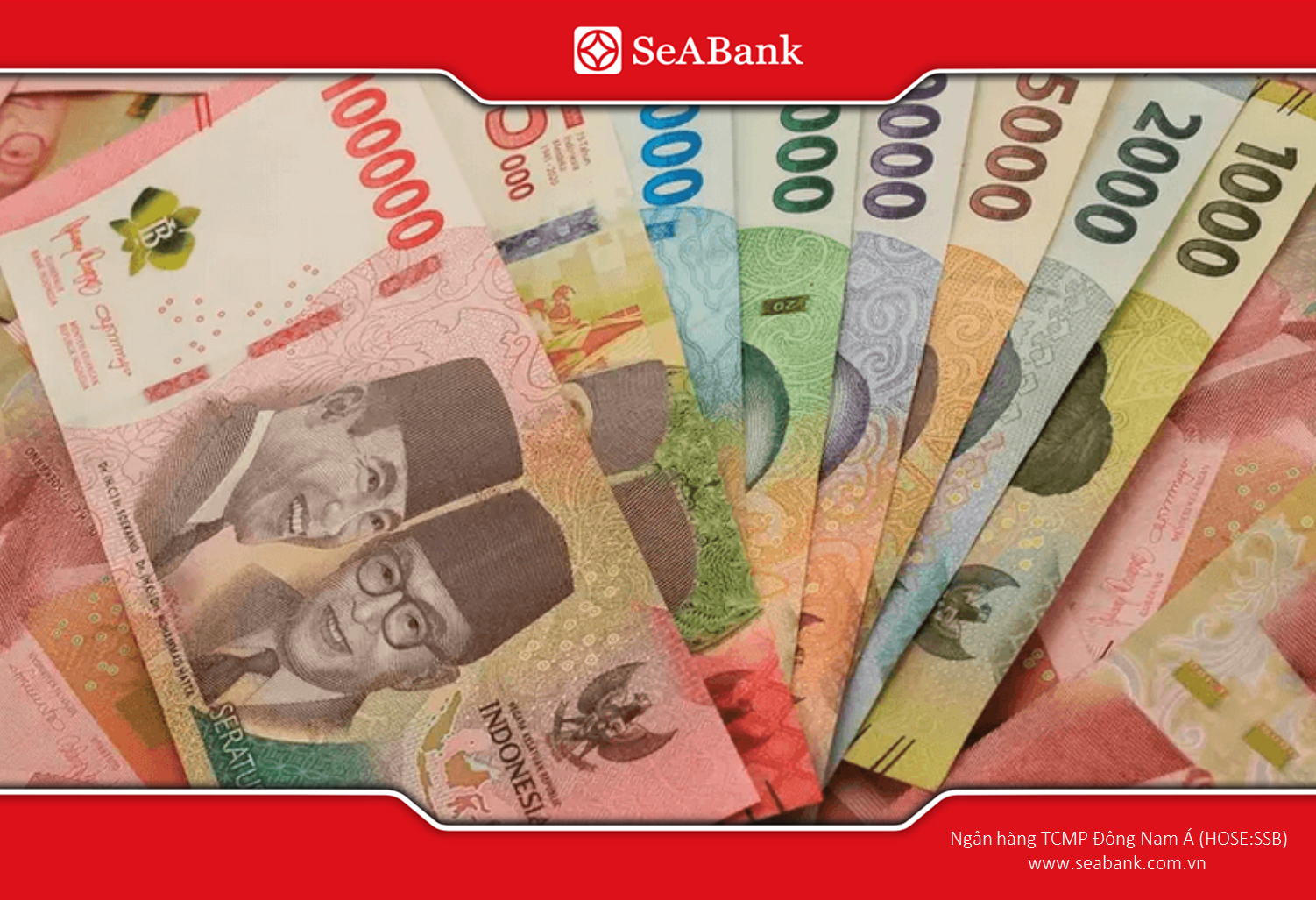
Indonesian Rupiah - the financial symbol of the archipelago nation
2. Current denominations of Indonesian currency
Currently, the Indonesian currency system includes both banknotes and coins with modern designs, imbued with national cultural identity. Each denomination is decorated with portraits of national heroes on the front and images of natural landscapes and cultural heritage on the back.
2.1. Rupiah Banknotes
The Rp 1,000 note is a yellow-green note and is the smallest denomination in the banknote system. The front features a portrait of the heroine Cut Nyak Meutia - a symbol of Indonesia's steadfast patriotism during the struggle for independence. However, due to its small value, this denomination is rarely used in daily transactions.
The grey Rp 2,000 note is an uncommon denomination and rarely appears in circulation. The Rp 5,000 note with its striking orange color is one of the denominations used quite often for small and medium transactions. This note bears the image of a national hero and unique cultural motifs.
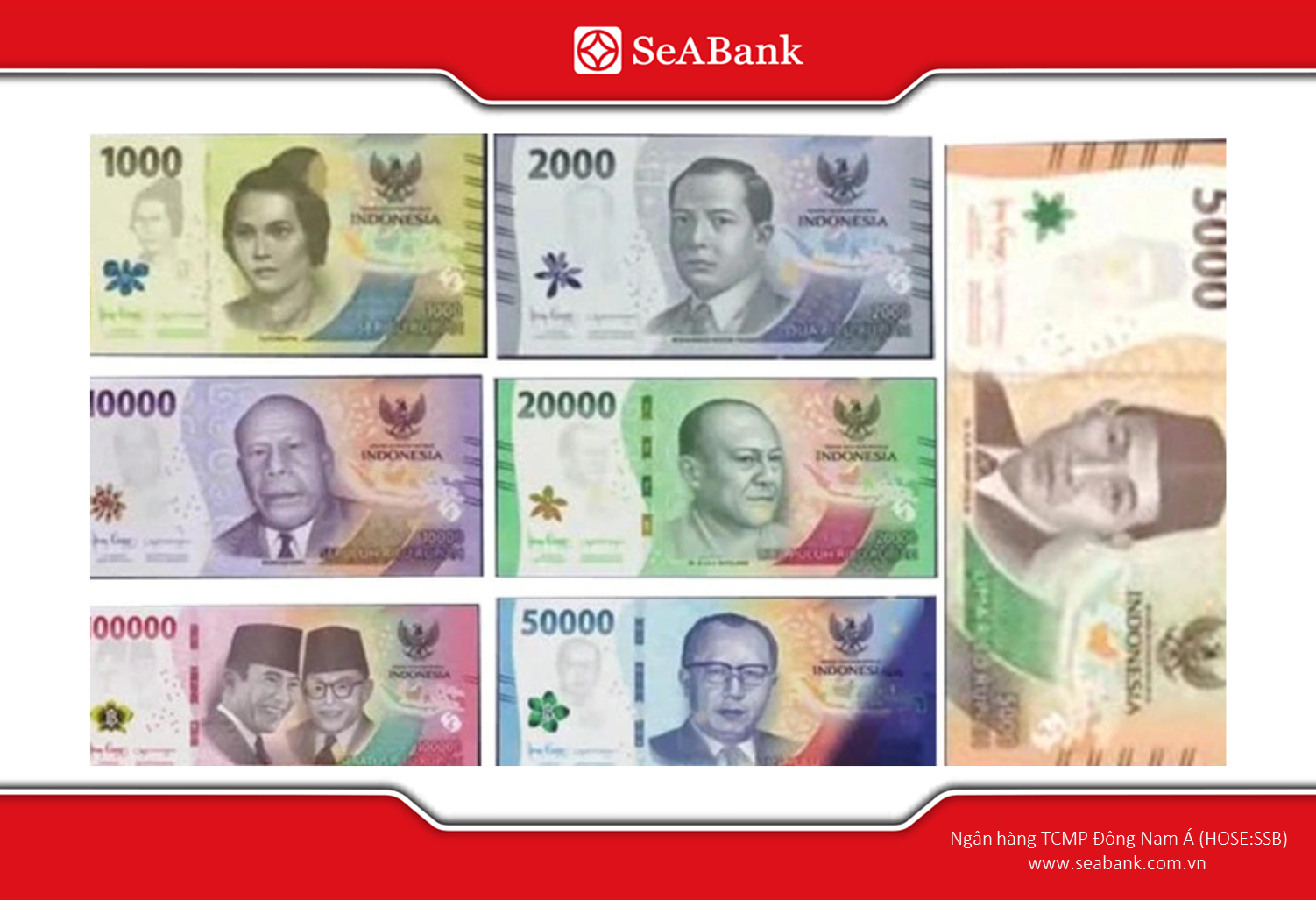
Indonesian Rupiah banknote image collection
The purple Rp 10,000 note is the most common denomination in everyday life for Indonesians. It is the most widely used note for shopping, dining and transportation. The green Rp 20,000 note is also quite popular, often used for payments at restaurants, hotels and shopping.
The dark blue Rp 50,000 note is the largest denomination, usually used for higher value transactions. The highest is the red Rp 100,000 note - the largest denomination in Indonesia, equivalent to about 159,000 VND, often used for ATM withdrawals and large payments.
In particular, Bank Indonesia also issued a red and white 75,000 IDR note to celebrate National Day, but this is a special edition and is rarely used in regular circulation.
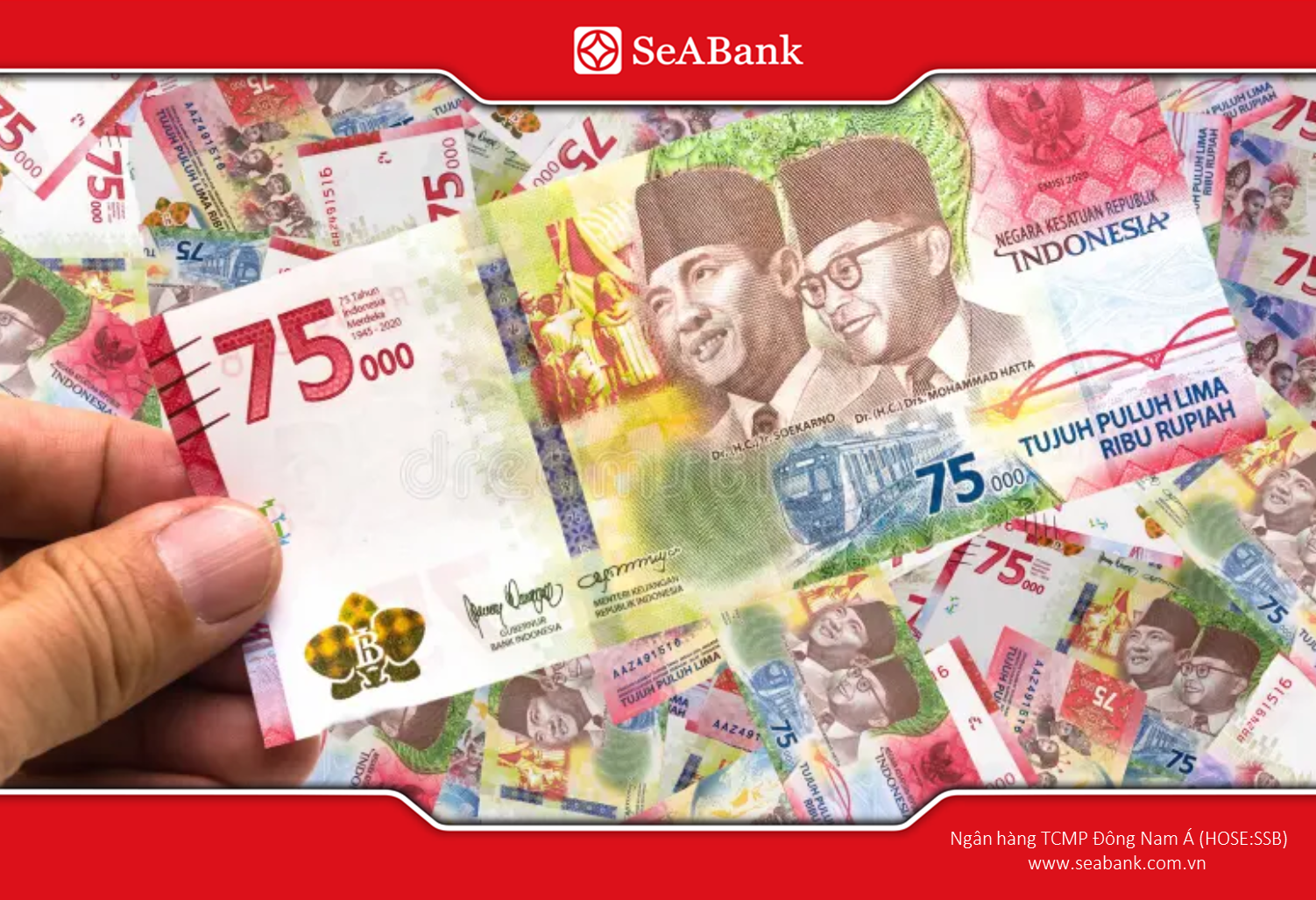
Image of special 75,000 IDR banknote
2.2. Rupiah Coins
The Indonesian coin system consists of denominations of Rp 100, Rp 200, Rp 500 and Rp 1,000. However, in practice, coins are less commonly used due to their small value and the development of electronic payments. Many stores even round up the amount to avoid having to give change in coins.
The entire modern Rupiah currency system is equipped with advanced printing and anti-counterfeiting technology, including watermarks, embedded security threads, tilt-sensitive ink and touch-sensitive embossing, ensuring high security in circulation and transactions.
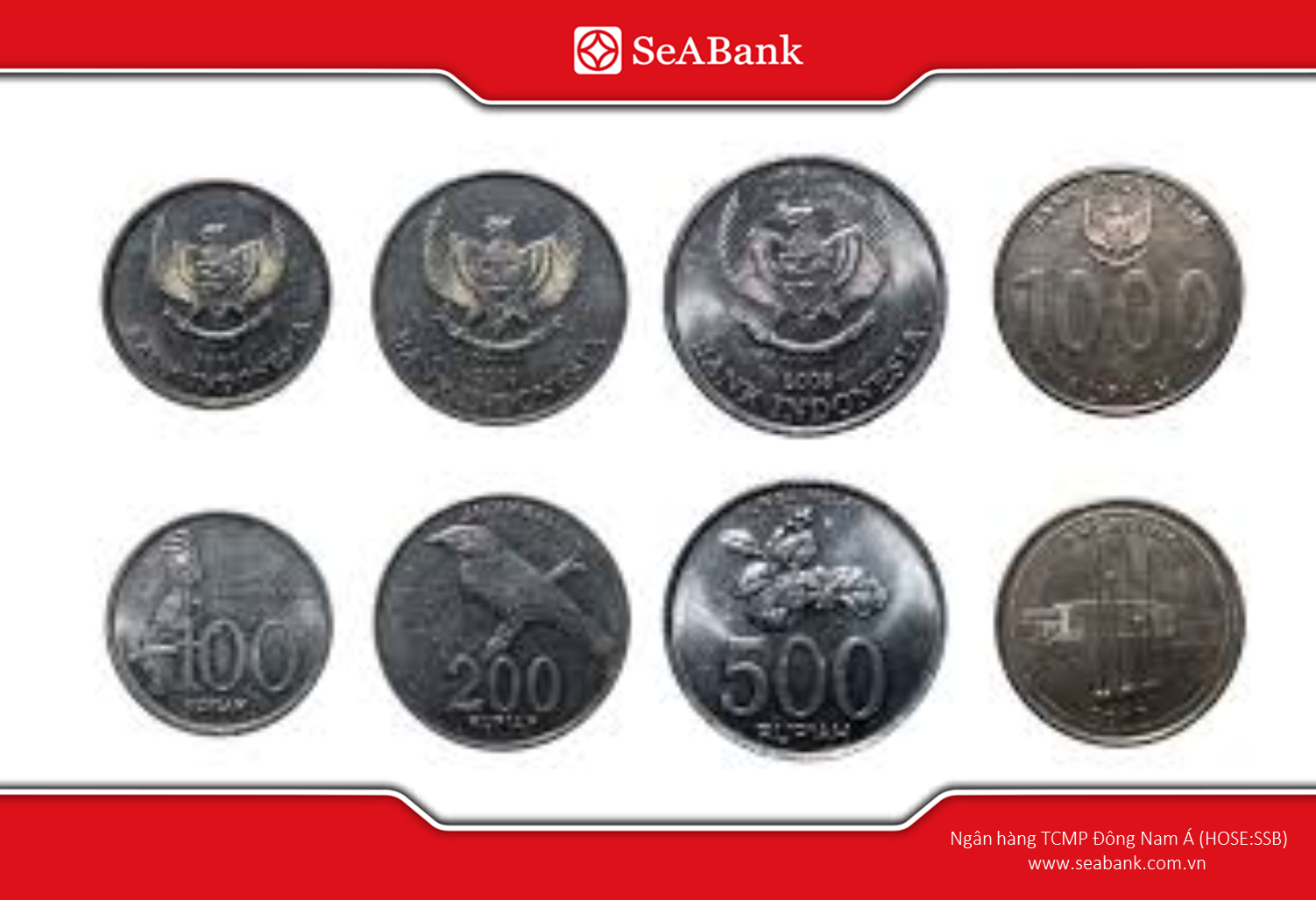
Official Coin Set of Indonesian Rupiah
3. How to exchange Indonesian money in Vietnam
Rupiah exchange in Vietnam can be done through many different channels, each with its own advantages and limitations. To ensure safe transactions and get the best exchange rate, you should research carefully before deciding on a currency exchange location.
- Commercial banks are considered the most prestigious and reliable foreign exchange channel. Exchange rates at banks are often updated in real time and are competitive compared to other channels. When transacting at the bank, you need to bring your ID card/CCCD, fill in all the information in the transaction form and will receive an official receipt for comparison. The biggest plus point of the bank is its high reliability, no need to worry about being scammed or receiving counterfeit money.
- For travelers who need to exchange money urgently or are in transit, money exchange counter at international airports is a convenient choice. The biggest advantage is that it operates 24/7, serving flexibly at all times. However, you should note that the exchange rate at the airport is usually 2-5% higher than the bank due to operating costs and convenience.

Banks are the most reputable and safest place to exchange Rupiah.
Customers who want to exchange Indonesian Rupiah (IDR) at competitive rates can do so at SeABank. Fast and safe foreign exchange service, with exchange rates updated close to the market, is available at branches nationwide.
Foreign currency transactions, including IDR, are carried out with transparent procedures and complete documentation, providing customers with maximum peace of mind and convenience.
4. Experience in using money when traveling to Indonesia
Using Indonesian currency effectively not only helps save costs but also ensures the safety of the trip. Below are practical experiences from the perspective of financial experts that you should know:
Before departure:
- Exchange 500,000 - 1,000,000 IDR in Vietnam for spending upon arrival
- Prepare an international card (Visa/Mastercard) for flexible withdrawal and payment
- Bring 200-300 USD in spare currency, easily exchangeable and widely accepted
- Divide your cash into different places to avoid risks.
When arriving in Indonesia:
- Priority for card payments at restaurants, hotels and shopping malls
- Only exchange money at banks or reputable money exchange places, as instructed by the hotel or tour guide.
- Check each note carefully when receiving, especially the 50,000 and 100,000 Rp denominations.
5. Notes when trading with Indonesian currency
To trade with Indonesian currency safely and effectively, you need to master the criteria for identifying real money, comply with legal regulations and apply smart financial strategies.
1 - Identify real money - fake money:
- Watermark: Backlit to reveal a clear portrait of a national hero
- Security Fiber: Metal fiber embedded in the paper body, not printed on the surface
- Color changing: Tilting the angle shows some color changing details
- Raised letters: Touch and feel the raised printed pattern, creating a slightly rough feeling
2 - Compliance with legal regulations:
- Do not carry more than IDR 100,000,000 in/out of the country without declaring to customs
- Keep your money exchange receipt to present when needed, especially when exchanging foreign currency.
- Only trade at licensed units, avoid black markets of unknown origin
- Comply with foreign currency restrictions of both Indonesia and Vietnam
Understanding Indonesian currency not only helps you master the denominations, exchange rates and conversions, but is also an important step in managing your personal finances, international transactions and or traveling in Indonesia. Mastering this knowledge will help you use Rupiah safely, accurately and effectively.
If you need to exchange foreign currency or learn more about SeABank products, you can contact the nearest transaction points or call Hotline 1900 555 587 or visit the website www.seabank.com.vn for more details.