News
What is the maturity date of a savings book? All the information you need to know from A–Z
 31/10/2025
Join SeABank to learn what savings book maturity is, how to calculate, process and important notes to optimize interest rates and protect rights.
In personal financial management, savings are always considered a safe form of investment, helping to preserve capital and bring stable interest over time. However, to optimize profitability, depositors need to clearly understand what a savings book maturity is, the implementation process and important notes to not miss out on benefits. Explore the details with SeABank in the article below.
Quick summary:
The maturity date of a savings book is the end of the deposit period, when the customer receives back all the principal and interest as agreed. In particular, some concepts that customers need to pay attention to include:
- The due date is the end date of the deposit period that was determined at the beginning of the contract.
- Settlement date is the date the customer actually withdraws money from the bank, which may be the same or different from the maturity date depending on the depositor's needs.
To calculate the maturity date, customers apply the formula: Maturity date = Opening date + Deposit term. When the maturity date comes, customers can choose to close the savings book or renew the savings book. Customers can renew the savings book online on the SeAMobile application.
1. What is the maturity date of a savings book?
In savings activities, maturity is an important concept, determining the time when customers can receive back all principal and interest after a deposit period. Understanding maturity helps depositors be more proactive in financial planning, avoiding interest rate risks or losing benefits when withdrawing money at the wrong time.
1.1. What is the maturity date of a savings book?
The maturity date of a savings book is the end date of the deposit term that the customer and the bank have agreed upon when opening the book or online savings account. On this date, the bank is responsible for repaying the entire principal amount along with the interest calculated according to the deposit contract.

Simply put, the maturity date is the "deposit expiration date", when your money will generate full profit according to the initially committed interest rate.
1.2. What is the maturity date?
Many people often confuse the maturity date and the settlement date, although there are certain differences between the two concepts:
- The due date is the end date of the deposit period that was determined at the beginning of the contract.
- Settlement date is the date the customer actually withdraws money from the bank, which may be the same or different from the maturity date depending on the depositor's needs.
Understanding these two concepts helps depositors choose the right time to withdraw money to optimize interest rates and avoid being charged non-term interest when withdrawing early.
2. How to calculate the maturity date of a savings book
To be more proactive in managing personal finances, depositors need to understand how to determine the maturity date. Accurate calculation not only helps to plan withdrawals at the right time but also avoids losing interest or being transferred to a new term unintentionally.
General formula
Calculating the maturity date is very simple:
This means that, as soon as the customer chooses the term (1 month, 3 months, 6 months, 12 months...), the bank will calculate this time starting from the deposit date to the end date of the term to determine the specific maturity date.
Illustrative example
- Opened on January 1, 2025, term of 6 months → Maturity date: July 1, 2025.
- Deposit savings online at SeABank on May 20, 2024, term of 12 months → Maturity date: May 20, 2025.
Important Note
In case the due date falls on a holiday, public holiday or Tet holiday, SeABank (and most other banks) will automatically switch to the next working day to make the final settlement or renewal of the book. This regulation is to ensure the rights of customers and comply with the bank's safe transaction process.
3. Options when the depositor's savings book matures
When the maturity date comes, customers will have two main options: to close or renew the savings book. Each form has its own characteristics and benefits, suitable for each specific financial plan. Understanding the difference between these two options will help depositors proactively optimize profits and use capital effectively.
3.1. Closing savings book
Closing a savings book means that the customer withdraws all principal and interest after the deposit term ends. This amount can be transferred to a payment account or received in cash directly at the counter.

Characteristic:
- The transaction is completely terminated, the old savings book is no longer valid.
- Customers can use this money for spending, investment or re-deposit with a new term.
Advantage:
- Actively use capital immediately after the term ends.
- Enjoy the full interest rate committed during the deposit period.
Disadvantages:
- Without a reinvestment plan, idle money may not generate additional profits.
- Be careful to do it at the right time to avoid being switched to automatic renewal.
3.2. Savings book renewal
Savings book renewal is a form of extending the deposit when it reaches maturity. Customers can keep the old term or choose a new term depending on their needs.
Characteristic:
- The principal (and in some cases the interest) will be automatically rolled over to the new term.
- The interest rate applied for the new term will be based on the current interest rate on the renewal date.
Advantage:
- Suitable for customers who want to continue saving without having to go to the bank to do the paperwork.
- Deposits earn interest according to the new term, helping to maintain continuous profits.
Disadvantages:
- The new period interest rate may be lower than the old period, reducing profits.
- If not monitored, customers may be subject to unwanted renewals and have difficulty withdrawing early.
4. Interest rate when savings book matures
Interest rate is the core factor that determines the profit that the depositor receives when the maturity date comes. However, depending on the time of settlement, whether on time, before or after the maturity date, the actual interest rate received will have significant differences. Below are details of each case so that depositors can proactively choose the most optimal option.
4.1. Timely payment
When the customer makes full payment on the due date, the bank will pay the entire principal and interest at the fixed interest rate agreed upon at the time of deposit.
- The longer the term, the higher the interest rate, helping to maximize profits for depositors.
- This is the form that brings the best profit, while ensuring full benefits according to the deposit contract.

4.2. Early repayment
Customers can withdraw money before the maturity date, however in this case the entire amount will only receive non-term interest, usually at a very low rate (about 0.1%/year).
- Some banks still apply penalty fees or require prior notice before withdrawal.
- Advice: Only withdraw money early when absolutely necessary, because this can cause lost all expected profits from the initial deposit.
4.3. Late payment
If you do not withdraw money on the due date, the bank will automatically renew the deposit according to current regulations.
- During the late withdrawal period (from maturity date to before renewal), the amount in the book will only enjoy non-term interest, much lower than the term savings interest rate.
- Therefore, depositors should monitor the maturity schedule and proactively decide early to avoid reduced profits or unwanted renewal.
5. Savings book maturity process
When the maturity date comes, the depositor can choose to make the final payment directly at the counter or online depending on the initial opening method. Below are specific instructions for each method:
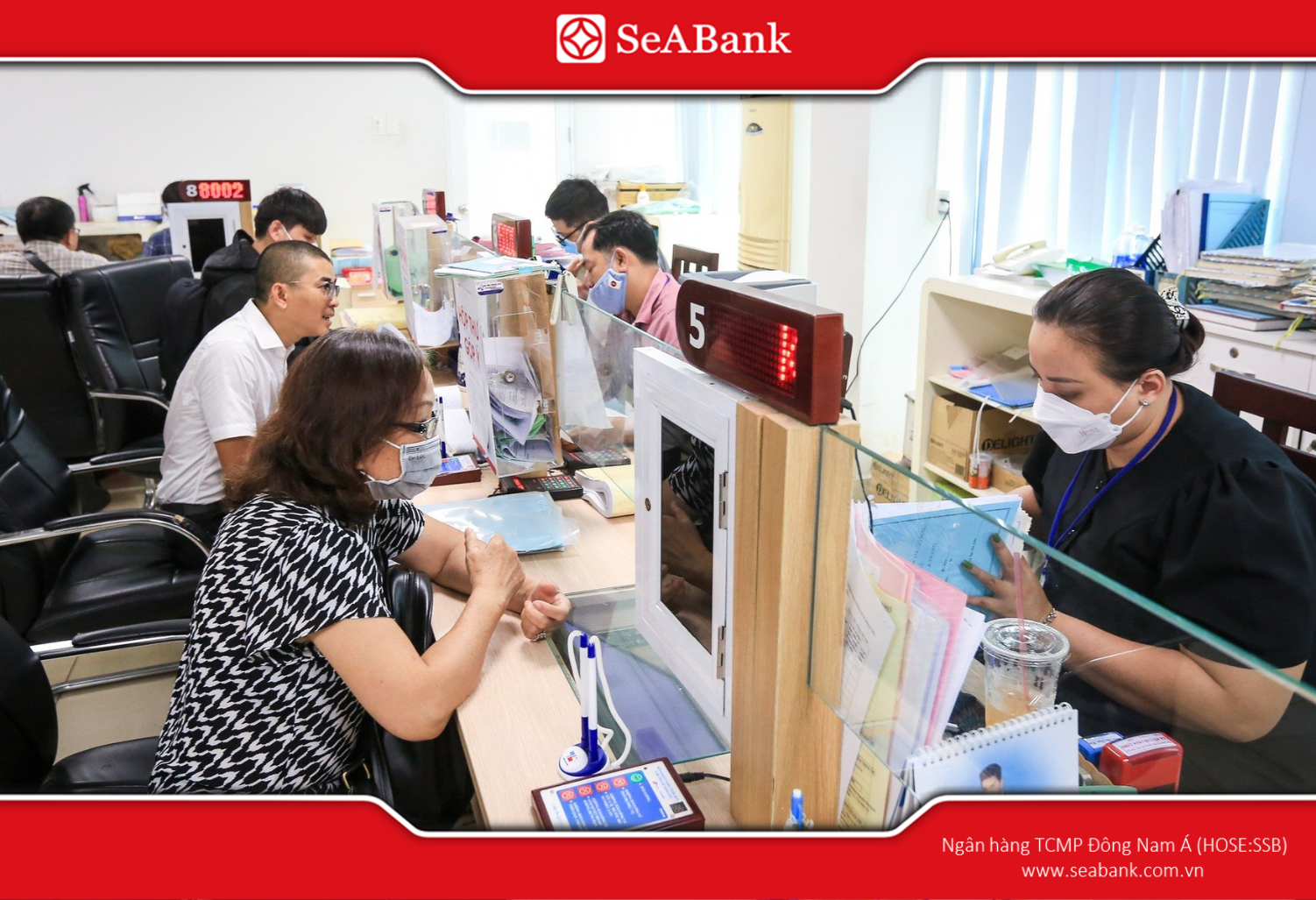
5.1. Expiration at the transaction counter
This is a traditional form, suitable for customers who want direct support, clear information confirmation and specific check of the amount received. Although it takes time to travel, this method is still chosen by many people because of its peace of mind and high accuracy.
Implementation process:
- Bring your savings book and identification (ID card/CCCD or passport).
- Go to the bank branch or transaction office, take a number and wait your turn.
- Staff checks information, confirms terms, guides signing of documents and makes final payment as required.
- Customers can choose to receive cash or transfer to a payment account.

Advantage:
- The amount received can be checked and verified directly.
- Get advice from our consultants about options for renewal, partial withdrawal or term change.
Note:
- Should come during business hours to avoid delays.
- Double check your receipt or transaction confirmation document before leaving the counter.
- It is possible to request automatic renewal for the next deposit period..
5.2. Online maturity
In the digital age, most banks (including SeABank) support online savings maturity, helping customers save time and proactively transact anytime, anywhere. This is the optimal choice for busy people or those who have the habit of managing their finances via phone.
Applicable to:
- Customers open savings books via Internet Banking or Mobile Banking.
How to do:
- Log in to your banking app.
- Select the savings book that needs to mature.
- Select the payment method (transfer to payment account or renew).
- Confirmed with OTP code, the transaction is completed within minutes.
Advantage:
- Do it anytime, anywhere – 24/7.
- Save time, no need to go to the branch.
- Can track transaction history and status on the system.
Note:
- Check the correct account number to receive money.
- Some interbank transactions may be processed the next business day.
- Keep your login information and OTP secure to avoid fraud risks.
For example: SeABank allows customers to pre-select the form of settlement when opening the account, making the maturity process more automatic and convenient.
6. Important notes when online savings expire
Although online deposit and maturity are becoming more and more popular due to their convenience, users still need to understand some important notes to ensure their rights and avoid unnecessary risks. Properly managing savings books not only helps to optimize profits but also maintain long-term financial security.

Some points to note especially include:
- Check expiration dates regularly: Actively monitor the term to promptly pay off or renew, avoiding the case where the system automatically renews with a lower interest rate.
- Select the appropriate term and renewal method: Considering actual financial needs, if you plan to use capital soon, you should choose a short term or renew the principal to maintain flexibility.
- Track renewal rates: The interest rate at the time of renewal may change from the original; therefore, it is necessary to check the updated information to ensure the deposit is still generating optimal returns.
- Absolute security of account information: Do not share OTP codes, passwords or log in via strange links; absolutely avoid unofficial "proxy" maturity services to prevent financial fraud.
- Confirm transaction after settlement: With format the counter, need to carefully count the amount received. With online, you should check your account balance immediately after completing the transaction to ensure that the money is transferred correctly and completely.
7. FAQs
1 - Can I withdraw my savings book before the maturity date?
Yes, customers can withdraw their books before the maturity date. However, in this case, the bank will charge a non-term interest rate, usually only about 0.1%/year, much lower than the initial preferential interest rate. Some banks may also apply a penalty fee for early withdrawal depending on the policy. Therefore, if not really necessary, depositors should limit early withdrawals so as not to affect the accumulated profits.
2 - What should I do after the savings book maturity date?
When the savings book matures, the depositor needs to proactively check the notification from the bank (via SMS, email or application) to decide:
- Final payment: Withdraw both principal and interest if capital is needed.
- Renew: Renew the term if you want to continue saving.
If left too long without action, the amount may be automatically renewed at a new, often lower, interest rate, reducing the investment's effectiveness.
3 - What if I don't withdraw my savings book when it matures?
If the depositor does not withdraw money on the due date, most banks (including SeABank) will automatically renew the savings book. There are two common forms of renewal:
- Original renewal: Only the principal is returned, while the interest is transferred to the payment account.
- Principal and interest renewal: Both principal and interest are accumulated for the new term.
Despite the convenience, depositors should still monitor interest rates and deposit cycles to optimize profits and flexibly plan their finances.
The maturity of your savings book is the key moment for you to decide on your personal financial plan, withdraw the principal and interest to use or renew to continue making profits. To feel secure in choosing the right solution and enjoy many incentives, follow SeABank to always be updated with information and timely support.
Related News
61 Numerous changes to tax regulations for individuals and household businesses. 11/03/2026
46 Cases eligible for exemption/reduction of land use fees 12/02/2026
2 of the MOST STANDARD methods for paying into the state budget in 2026 26/01/2026
Personal documents that will not be accepted by banks for transactions from January 1, 2026 26/01/2026
4 Latest Land Policies - Updated 2026 26/01/2026

61 Numerous changes to tax regulations for individuals and household businesses.
On the morning of January 6th, the Office of the President held a press conference to announce the President's order promulgating 12 laws passed by the 15th National Assembly at its 10th session, including the Personal Income Tax Law and many other laws drafted under the leadership of the Ministry of Finance.
11/03/2026
Read more

46 Cases eligible for exemption/reduction of land use fees
This article will provide information on what people need to know about land use fee exemptions and reductions from 2026.
12/02/2026
Read more
2 of the MOST STANDARD methods for paying into the state budget in 2026
Guide to 2 ways to quickly and accurately pay money into the state budget this year.2026.
26/01/2026
Read more