News
Credit Scores: Definition, How to Check, and Quick, Accurate Online Verification
 19/09/2025
A credit score is among the most important indicators that determine your access to financial services in Vietnam—such as loans, credit card issuance, and installment purchases. Understanding your credit score, how to check it, and how to improve it will help you manage personal finances proactively and strengthen your credibility with financial institutions.

Credit score is an important indicator that determines the ability to access financial services such as loans, opening credit cards, buying on installments...
1. What Is a Credit Score?
A credit score is a numerical indicator reflecting an individual’s or organization’s financial credibility, calculated based on credit history, repayment behavior, and related factors.
Banks and financial institutions use credit scores to assess loan approvals, credit card issuance, installment purchases, and leasing decisions.
In Vietnam, the National Credit Information Center (CIC) under the State Bank of Vietnam is the sole entity authorized to collect, store, analyze, and provide credit information, as well as score individuals and organizations. CIC uses a scale of 300–850 points, where higher scores indicate stronger creditworthiness. Some reports also classify ratings by letters (e.g., A: good, C: high risk).
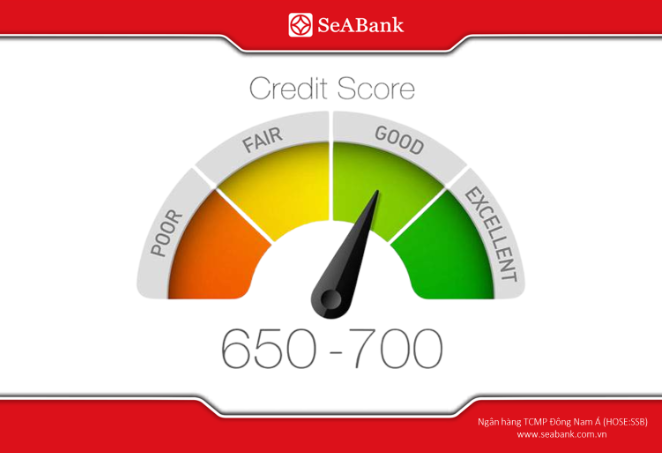
A credit score of 650 is considered good.
2. Key Factors Affecting Credit Scores
- Payment history: On-time payments are critical; late or missed payments reduce your score.
- Number of loans or credit cards in use: Multiple active loans or cards can lower your score.
- Credit utilization ratio: Using more than 50% of your available limit may negatively affect your score.
- Credit history length: A longer, clean credit history boosts your score.
- Hard inquiries: Multiple credit checks within a short time frame can negatively impact your score.
3. Why Credit Scores Matter
- Directly influence loan approvals, credit card issuance, and installment purchases.
- Affect loan interest rates—the higher your score, the lower your interest rate.
- Build financial credibility with banks and improve access to premium financial products.
- Certain employers or financial partners may check credit scores during recruitment or partnership evaluations.
A good credit score will benefit you, playing a key role in many financial decisions.
4. How to Check Your Credit Score
In Vietnam, credit scores can be checked through CIC, which provides free services via its website (www.cic.org.vn) or the CIC Credit Connect mobile app.
Registration steps: Visit the CIC website → Click “Register” → Enter personal details and ID information → Complete biometric verification with a facial photo → Wait for confirmation and account activation.
To check your score: Log in to CIC → Select “Check Credit Score” → View your credit report and score.
Data is updated periodically, usually every 1–2 weeks, based on reports from credit institutions nationwide.
5. Online Credit Score Checks
- Using CIC’s app (Android/iOS): Download “CIC Credit Connect” → Log in → Select “Credit Score Inquiry.”
- Via banking apps: Some banks integrate credit score checks powered by CIC.
- Security reminder: Only use official platforms; avoid sharing personal details with unverified third-party websites or apps.
- Paid services: CIC provides basic reports for free, while advanced reports or risk alerts may incur fees—use these only if needed.
6. What Is a Good Credit Score?
- 300–500 (Low): High risk; loan or credit card approval is unlikely.
- 501–700 (Medium): May be approved but with higher interest rates and lower limits.
- 701–850 (High): Excellent; easy approvals and preferential rates.
Tip: Scores above 650 are considered good for unsecured loans and credit card issuance.
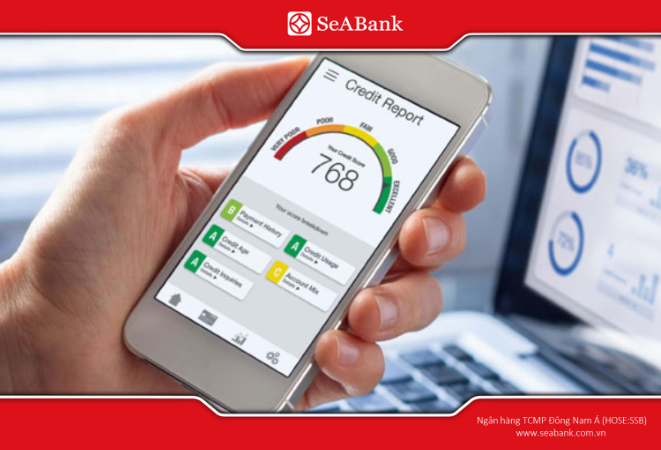
650 or higher is a good score to easily get a loan or open a credit card.
7. Tips to Improve Your Credit Score
Always pay debts and credit card bills on time to avoid bad debt records.
Keep credit utilization under 30–50% of your limit.
Avoid opening multiple new loans or credit cards in a short period.
Regularly review your credit report to detect and correct any errors.
8. FAQs
Q1: Does checking my credit score affect it?
No, checking your score through CIC or banks does not impact your credit score.
Q2: Does CIC update scores in real time?
No, updates occur periodically, typically every 1–2 weeks.
Q3: How long does bad debt remain on record?
Bad debt information is usually retained by CIC for at least five years from the date of settlement.
CIC updates data periodically, usually every 1–2 weeks.
A credit score is a key factor enabling access to modern financial services, enhancing your personal reputation, and helping you manage finances effectively. Regularly checking and improving your score ensures easier loan approvals, credit card issuance, and a solid financial profile with lenders. Always use official channels like CIC for timely monitoring and to safeguard your financial interests.
Related News
5 things that household businesses with revenue under 1 billion VND need to be aware of according to the new regulations. 20/05/2026
What is consumer credit? 5 common types of consumer credit 31/03/2026
What is a demand deposit? Interest rates and how interest is calculated (updated 2026). 31/03/2026
Can overdraft accounts allow cash withdrawals? 31/03/2026
Detailed 5-step process for consumer loansIt is necessary to understand this. 31/03/2026

5 things that household businesses with revenue under 1 billion VND need to be aware of according to the new regulations.
The new regulations officially raise the taxable revenue threshold for household businesses to 1 billion VND per year. However, household businesses with revenue below 1 billion VND should take note of the following points.
20/05/2026
Read more


What is consumer credit? 5 common types of consumer credit
What is consumer credit? Learn about the concept, advantages, disadvantages, and common forms of consumer credit today.
31/03/2026
Read more

What is a demand deposit? Interest rates and how interest is calculated (updated 2026).
What is a demand deposit? Compare it to a time deposit and get updated interest rates according to current regulations.
31/03/2026
Read more