News
Discover what green banking is - Common types of green banking services
 26/01/2026
Understanding what green banking is and popular green financial services. SeABank pioneers the implementation of the Net-Zero strategy, contributing to building a sustainable future.
Green banking is not only a groundbreaking trend but also an essential solution in building a sustainable economy. So what exactly is green banking and what are the common services offered by this model? Let's explore green banking in detail in the article below!
1. What is a green bank?
Green Bank is an operating model in which credit institutions integrate environmental, social, and governance (ESG) elements into their operational processes, risk management, and product delivery. The main goal is to reduce emissions, promote investment in environmentally friendly projects, and create sustainable value for the community.
According to international studies, green banking comprises two main groups of actions: (1) reducing environmental impact in internal operations and (2) prioritizing financing for sustainable projects.
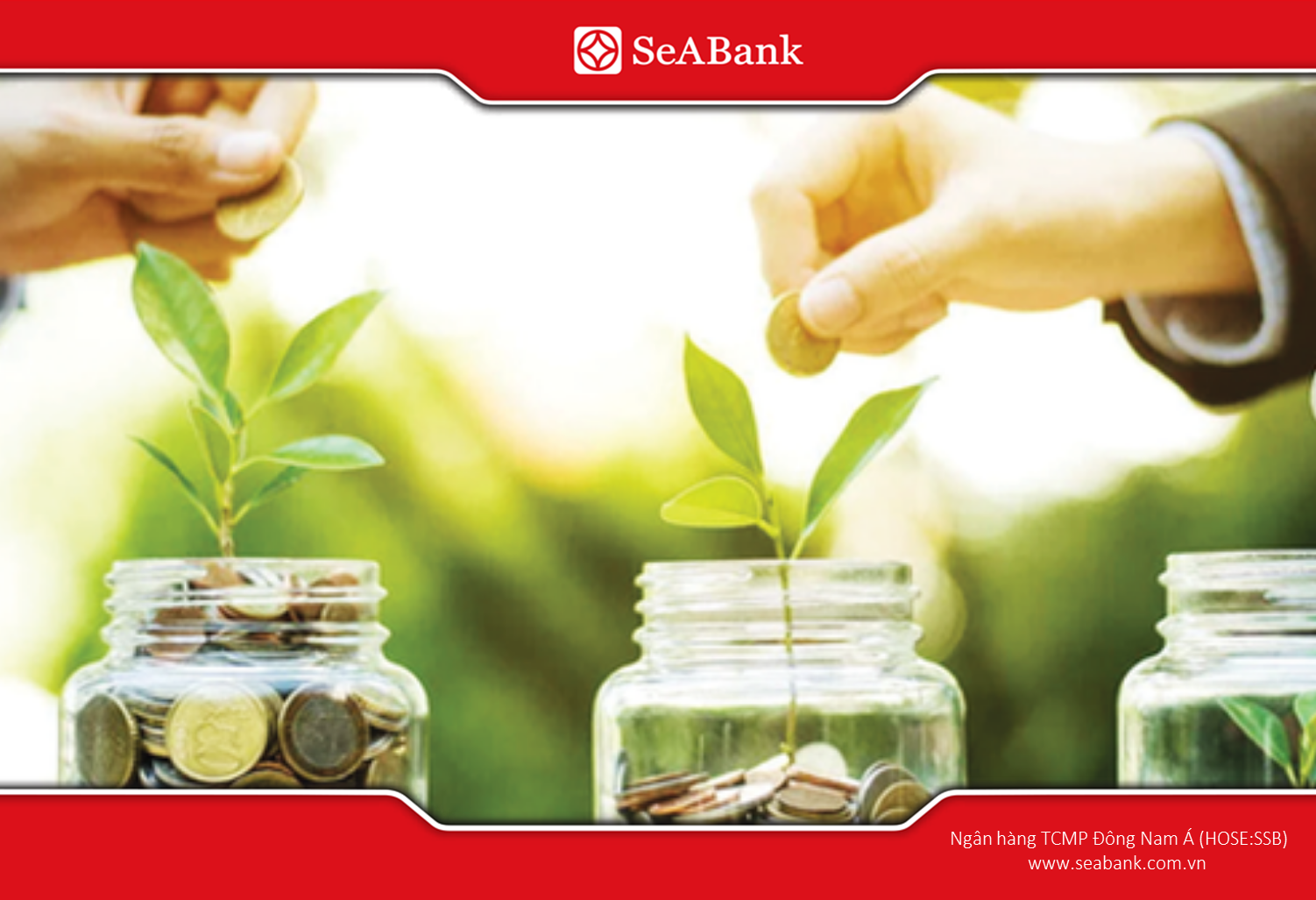
Green banking - Integrating economic, social, and environmental factors into all operations.
Green banking demonstrates a strong commitment to developing products, services, and business strategies that benefit the environment, community, and society. This is how financial institutions create sustainable value, not only protecting resources but also promoting a balanced development between profitability and responsibility.
2. Popular green banking services today
Green banking products not only focus on environmental protection but also support businesses and individuals in optimizing sustainable financial performance. Below are some popular green banking services currently available.
2.1. Green Deposits
Green deposits are sustainable savings products that support customers in contributing to environmental protection projects through their deposits.
- Supporting green projects:The funds are allocated to finance renewable energy projects, sustainable development, and natural resource conservation.
- Flexible terms:Customers can choose a term of 6 months or more, to suit their personal financial needs.
- Attractive interest rates:Offering competitive interest rates, ensuring both financial benefits and contributing to environmental protection.
- Responsible investing:We encourage customers to participate in financial activities that contribute to sustainable development.
2.2. Green Buildings
Green buildings are construction projects designed and operated according to sustainable standards, aiming to minimize negative impacts on the environment and optimize resource utilization. SeABank supports these projects through preferential financial financing packages.
- Financial assistance: In sustainable development orientationSeABank is gradually integrating environmental criteria into its lending and operational activities, while promoting financial solutions geared towards environmentally friendly projects and constructions. The bank focuses on applying and disseminating green building standards through its internal operations, such as implementing and operating headquarters that meet international certifications (EDGE, LEED), thereby creating a foundation for expanding financial support for sustainable construction projects in the future.
- Priority areas:Focus on environmentally friendly projects that utilize renewable energy or reduce carbon emissions.
- Interest rate offers:Applying competitive interest rates to medium and long-term loans encourages businesses to participate in sustainable development.
- Sustainable development:Supporting businesses in developing projects that meet international standards, contributing to improving the quality of life and protecting the environment.
SeABank - Green financial solutions supporting sustainable business development.
2.3. Green Loans
Green loans are a financial solution that supports environmentally friendly projects, aiming for sustainable development and minimizing negative impacts on the ecosystem. SeABank offers green loan packages with many attractive incentives for businesses.
- Purpose of use:Funding projects in renewable energy, low-carbon production and consumption, waste treatment, and natural resource conservation.
- Interest rate offers:Offer low interest rates and flexible loan terms to encourage businesses to invest in green sectors.
- Diverse loan options:Applicable to short-term, medium-term, and long-term loans, tailored to the specific needs of each business.
- Green certification: Priority will be given to projects that meet green criteria according to industry standards or international frameworks such as IFC Performance Standards, EDGE, LEED, or other suitable criteria specified by the bank.
2.4. Green Bonds
Green bonds are a type of debt instrument issued to raise capital for environmental protection and sustainable development projects. SeABank has pioneered the issuance of green bonds in Vietnam, affirming its commitment to supporting businesses in their green development goals.
- Release size:SeABank successfully issued VND 2,500 billion in green bonds, using the raised capital to finance renewable energy, waste treatment, and resource protection projects.
- International standards:The bonds comply with the principles of the International Capital Markets Association (ICMA), ensuring transparency and adherence to sustainable development criteria.
- Double benefits:It offers attractive returns for investors while promoting projects aimed at protecting the environment.
- Developing a green economy:Contributing to the reduction of greenhouse gas emissions and creating momentum for the transformation of the economy towards sustainability.
3. Discover SeABank's unique green banking strategy.
SeABank has implemented a comprehensive and systematic sustainable development strategy, demonstrated through three main pillars:
3.1. First Pillar: Optimizing Resource and Energy Use
With the goal of optimizing energy efficiency, SeABank's headquarters implement a smart building management system to support the monitoring and automatic adjustment of air conditioning, lighting, security, and energy systems in an optimal manner.
- Electricity and water resources at SeABank's headquarters are managed according to established quotas to avoid waste and detect any losses early. In 2024, the average water consumption was 19 liters/person/day, 1.6 times lower than the prescribed quota.
- Regarding energy resources, SeABank establishes consumption quotas based on the specific weather conditions of each region, with over 95% of its branches achieving these targets in 2024.
- Facilities: 100% of the bank's lighting system has been converted to LED lights, and 100% of the air conditioning units have been converted to inverter models using environmentally friendly R32 and R410A refrigerants.
3.2. Second Pillar: Digital Transformation in Parallel to Green Transformation
In the process of green transformation, the comprehensive digitalization strategy "Digital Convergence" is a crucial driving force that helps SeABank optimize performance, reduce reliance on physical resources in transaction and operational activities, and thereby reduce carbon emissions compared to traditional banking operations.
SeABank continuously upgrades its SeAMobile/SeANet digital banking application with over 130 features and utilities such as: eKYC remote account opening; online card issuance; online opening and closing of savings accounts; and online loan application. Along with digitizing transactions, SeABank is transitioning to the use of electronic invoices and documents in over-the-counter transactions.
To reduce the need for manual printing and operations, SeABank focuses on automating processes through various technology systems such as: the SeAPayment payment management system; the SeAOffice electronic office; the SeAPurchase purchasing software; and the SeATeller counter support software. Thanks to comprehensive digital transformation, paper consumption at SeABank headquarters in 2024 decreased by 1.45% compared to 2023.
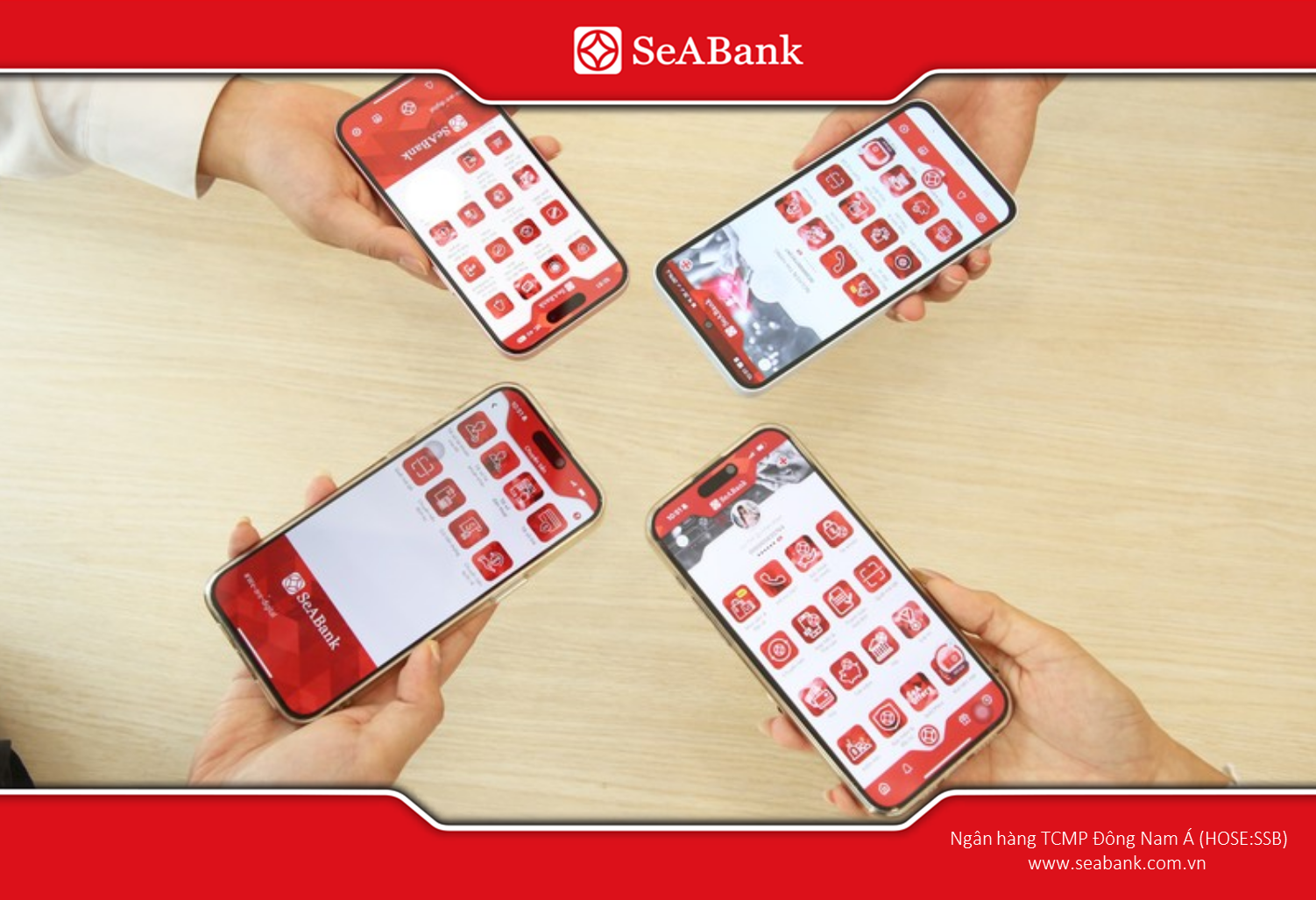
SeABank digitizes services and minimizes environmental impact through digital transformation.
3.3. The third pillar: United "for the environment"
SeABank actively fosters green habits internally and spreads them to stakeholders through various meaningful programs of the SeAGreen Fund – an internal fund established in 2019 to achieve environmental goals.
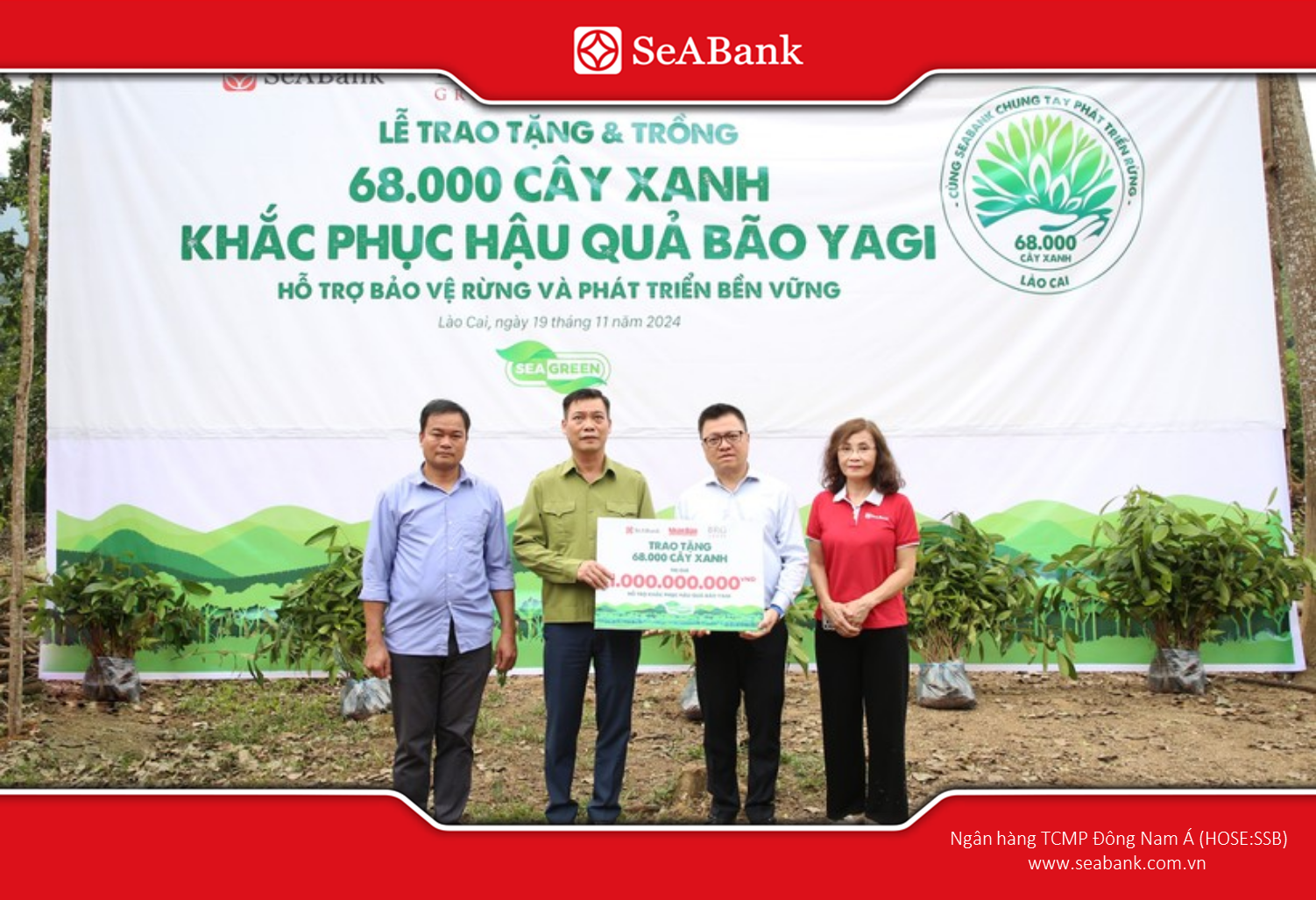
SeABank has donated and planted 1 million trees in many provinces and cities nationwide, including Ha Tinh, Thanh Hoa, Dak Lak, Lao Cai, Long An, etc.Three years ahead of schedule.
In particular, the annual SeABank Run for the Future is organized to raise support for the environmental activities of the SeAGreen Foundation. In 2024, the Foundation collaborated with BRG Group and Nhan Dan Newspaper to plant 68,000 trees, worth a total of 1 billion VND, to green nearly 20 hectares of forest area, contributing to overcoming the consequences of typhoon No. 3 and restoring livelihoods.for the people of Lao Cai province.
In the article above, SeABank answered the question "what is green banking" and also provided information on popular green banking services in Vietnam.From internal operations and the development of green financial products to community programs, SeABank is implementing a comprehensive green banking strategy, contributing to national sustainable development goals. These initiatives deliver long-term value to customers and the community, while also laying the foundation for SeABank's Net-Zero goal.
Related News
5 things that household businesses with revenue under 1 billion VND need to be aware of according to the new regulations. 20/05/2026
What is consumer credit? 5 common types of consumer credit 31/03/2026
What is a demand deposit? Interest rates and how interest is calculated (updated 2026). 31/03/2026
Can overdraft accounts allow cash withdrawals? 31/03/2026
Detailed 5-step process for consumer loansIt is necessary to understand this. 31/03/2026
5 things that household businesses with revenue under 1 billion VND need to be aware of according to the new regulations.
The new regulations officially raise the taxable revenue threshold for household businesses to 1 billion VND per year. However, household businesses with revenue below 1 billion VND should take note of the following points.
20/05/2026
Read more

What is consumer credit? 5 common types of consumer credit
What is consumer credit? Learn about the concept, advantages, disadvantages, and common forms of consumer credit today.
31/03/2026
Read more
What is a demand deposit? Interest rates and how interest is calculated (updated 2026).
What is a demand deposit? Compare it to a time deposit and get updated interest rates according to current regulations.
31/03/2026
Read more