News
What is an ATM card? Functions, card classification and detailed instructions for use 2025
 24/10/2025
What is an ATM card? What are its functions and what types of ATM cards are there and how is it different from a checking account? Refer to this article for details.
What is an ATM card? is the question of many people when first accessing banking services. This is a popular type of card that helps customers perform many financial transactions such as withdrawing money, transferring money, paying or checking balances quickly and safely.
1. Overview of ATM cards
1.1. Concept
ATM (Automated Teller Machine) is a bank's automated teller machine that allows customers to perform basic financial services without having to go directly to the counter. ATM card is a type of card issued by a bank, linked to the customer's account, used for transactions at ATMs or payments at card acceptance points (POS, online).
Basic functions of ATM cards include:
- Cash withdrawal.
- Transfer.
- Account inquiry
- Pay bills, top up phone, top up e-wallet,...
Information usually found on ATM cards:
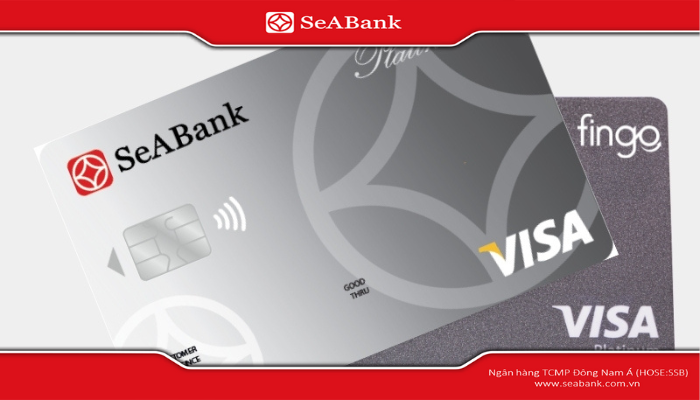
- Front: Bank name, card organization logo (Visa, MasterCard, NAPAS…), card number, cardholder name, issue/expiration date.
- Backside: Magnetic stripe or EMV chip, cardholder signature field, security code (CVV/CVC).
Many people often confuse ATM cards with debit cards, but in reality, ATM cards can be debit cards, credit cards, or prepaid cards. The common point is that both debit cards and credit cards can withdraw money at ATMs and be used for payments.
1.2. The difference between an ATM card and bank account.
Here is a comparison table of the differences between ATM cards and bank accounts.
In general, ATM cards and bank accounts have a close relationship but are not identical. The similarity is that both serve financial transaction needs such as withdrawals, transfers, and payments.
However, ATM cards are just physical tools that help customers operate conveniently at ATMs, POS or online, while bank accounts are the core platform for storing, managing and performing all monetary transactions. In other words, to have an ATM card, you must have a bank account, but having a bank account does not necessarily require issuing an ATM card.
2. Benefits of ATM cards
When owning an ATM card, customers not only have a convenient tool for withdrawing money and making transactions, but also receive many practical benefits in daily life. Below are the outstanding advantages that ATM cards bring:
- Fast and safe withdrawal: Cardholders can withdraw cash at thousands of ATMs nationwide without having to go directly to the bank.
- Transfer and pay conveniently 24/7: ATM cards allow transactions to be made at any time, from transfers, bill payments to online shopping.
- Reduce the risk of carrying a lot of cash: Using an ATM card helps reduce the risk of theft or loss when having to carry large amounts of money.
- Enjoy many incentives: Some banks integrate incentive programs such as cashback, points for gifts, and discounts when shopping at affiliated partners.
3. ATM card classification
3.1. Domestic ATM card
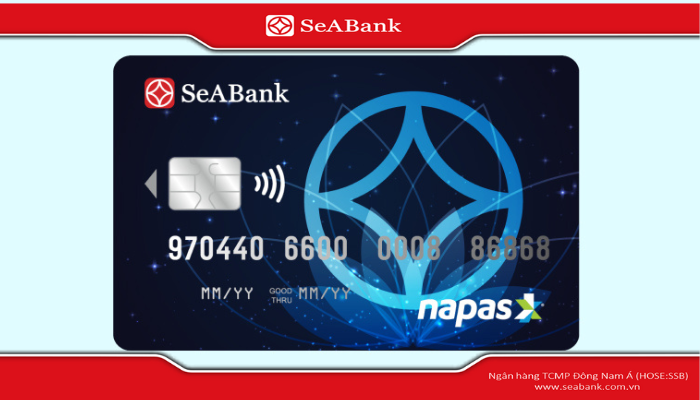
A domestic ATM card is a card issued by a bank and can only be used within Vietnam. Cardholders can withdraw money, transfer money, pay bills, top up phones, etc. at ATMs, POS or online channels in the country.
Opening and maintenance costs:
- Issuance fee: About 30,000 – 100,000 VND But most banks are free.
- Maintenance fee: From 10,000 - 20,000 VND/month or require maintaining a minimum balance in the account.
3.2. International ATM card
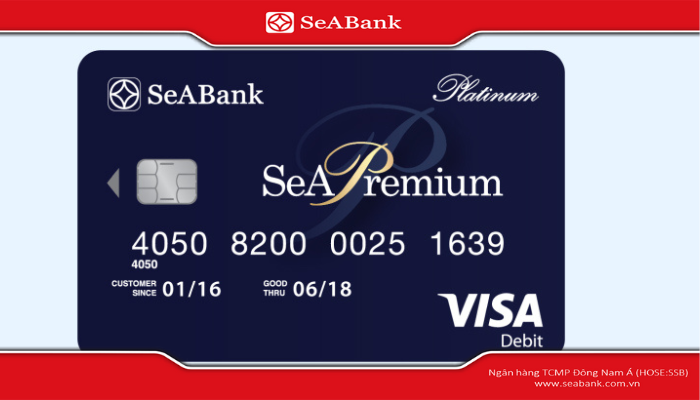
International ATM cards are cards associated with international card organizations such as Visa, MasterCard, JCB, etc., allowing cardholders to withdraw money, transfer money and make payments both domestically and internationally, as well as make global online transactions.
Opening and maintenance costs
- Issuance fee: About 50,000 – 200,000 VND, depending on the bank and card class.
- Maintenance/annual fee: 100,000 – 300,000 VND/year, premium cards have larger fees.
3.3. Linked ATM cards
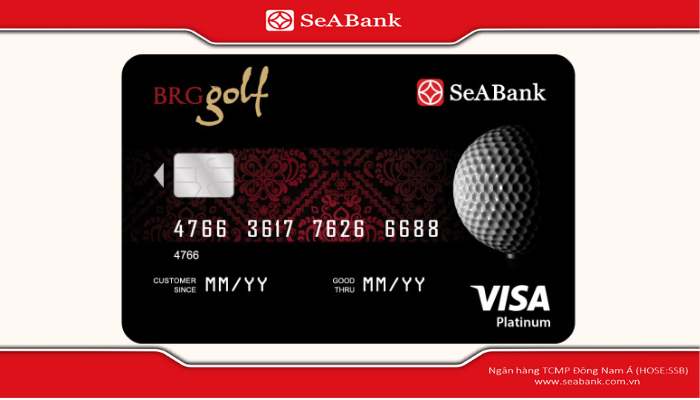
A joint ATM card is a card issued by a bank in cooperation with a partner (school, business, airline, supermarket, etc.). In addition to the basic features of an ATM card, a joint card also offers special incentives such as discounts, points, cashback or specialized utilities such as receiving salary, paying tuition, earning air miles, etc.
Opening and maintenance costs
- Issuance fee: Usually from 50,000 – 100,000 VND, sometimes free when opened under affiliate programs.
- Maintenance fee: Depending on the policy of the bank and affiliated unit, it is usually equivalent to a domestic ATM card.
4. Conditions for opening an ATM card at SeABank
To make an ATM card at SeABank, you need to meet the following general conditions:
- Object: As a Vietnamese or foreigner, foreigners need to legally reside in Vietnam.
- Age: From 15 years of age and older, have full civil capacity according to the law.
- Valid documents: Valid citizen identification card (CCCD), identity card (CMND), or passport is required.
In addition, customers need to meet the specific conditions of each card type.
Credit card
- Have stable income and financial proof (payslip, account statement, employment contract).
- Good credit score and no bad debt history.
- Meet the required limit for each card type.
Debit card
- Have a bank account at SeABank or register to open an account when making a card.
- No financial proof required.
5. Procedure for opening an ATM card at SeABank
5.1. Prepare documents
The following are the required documents that customers need to have when opening an ATM card at SeABank:
- A citizen identification card (CCCD) or passport is still valid and not torn, damaged or has blurred information.
- ATM card application form can be obtained directly at the SeABank branch or downloaded from the bank's official website.
- ID photo (depending on the requirements of each card type)
In addition, you need to provide some additional documents for each specific card type:
Credit card
- Proof of income: Salary statement of the last 3-6 months (applicable to those who receive salary through bank account), labor contract or appointment decision from the work unit.
- Documents proving assets (if any): Savings book, house ownership certificate, or other valuable assets,...
- Credit limit application: Fill in all information according to SeABank form.
Debit card
- SeABank bank account: If you do not have an account, SeABank will support you to register at the same time when opening a card.
- No proof of finances or income required: This is the advantage that makes debit cards the most popular choice.
5.2. Open a card directly or online at SeABank
The process of opening a card at SeABank is very simple, you can do it at the counter or online anywhere:
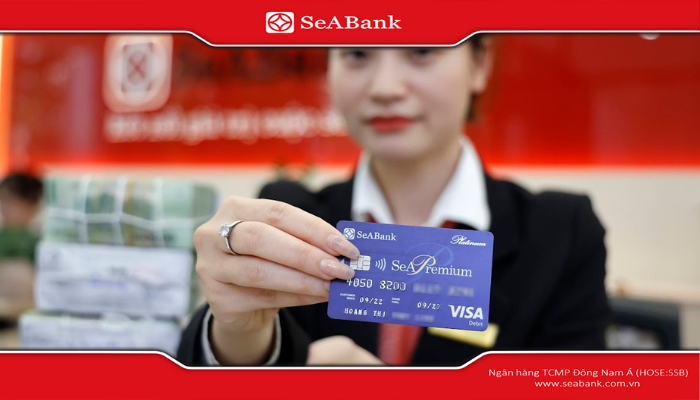
- Open card directly: Customers only need to prepare personal documents and go to the nearest SeABank branch to register for the desired card type. Staff will guide them to fill out the form, check information, verify documents and collect fees (if any). Finally, customers receive an appointment letter and can pick up the card after about 5-7 working days, bringing personal documents for verification.
- Open card online: Opening an ATM card online at SeABank is very convenient, customers just need to access the application SeAMobile or website SeANet, log in/register for an account and then select the card opening service. Then fill in personal information, upload identification documents, confirm with OTP and complete the registration. Finally, customers can choose to receive the card at home or go to the nearest branch.
SeABank offers many card opening programs with various incentives depending on the card type, including free issuance, refunds, bonus points, air miles, and attractive discounts at partners. For detailed and updated information on card opening programs and benefits, please contact SeABank's hotline 1900 555 587 directly for support.
6. Instructions for using ATM card
After registering and receiving the card from the bank, you will be given an ATM card with an envelope containing the default PIN. You need to go to nearest ATM of the card-issuing bank, Insert the card into the reader, select the language and enter the default PIN. Then, select “Change PIN” → enter the default PIN once → enter the new PIN (6 digits) twice to confirm and complete the process. At this point, the card is activated and ready to use for transactions.
6.1. Use at ATMs
Here is the 3-step process for using an ATM card at the machine:
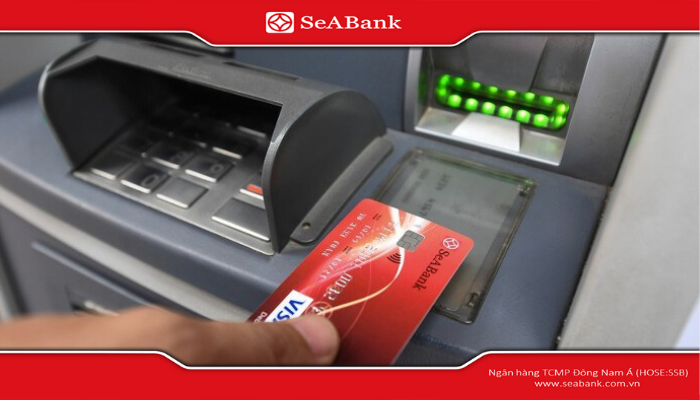
- Step 1:Insert the card into the reader, select the language and enter the PIN.
- Step 2:Perform operations: withdraw money, transfer money, check balance, print mini statements,...
- Step 3:Take back your card and receipt after completing the transaction.
6.2. Payment via POS, online transactions
Using ATM card to pay for online transactions or directly at the store via POS machine is also very simple:
- At POS: Give the card to the staff to swipe/place on the POS machine, enter the PIN (or sign the bill) to confirm payment.
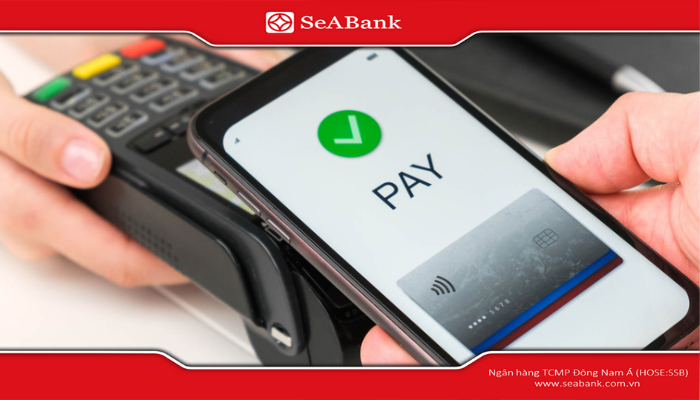
- Online: Enter card information (card number, expiration date, CVV/CVC if it is an international card) on a reputable website/application, then authenticate using OTP or the security method provided by the bank. In addition, many ATM cards today are equipped with technology. Contactless transactions and can be used to pay by tapping the card on a POS machine with the contactless symbol.
7. 5+ Notes when using ATM cards
When using ATM cards, in addition to understanding how to make transactions, customers also need to pay attention to some important principles to ensure safety and avoid risks during use.
- Change your PIN periodically to increase security, avoid being guessed by bad guys.
- Keep card information confidential: Do not share your card number, PIN, CVV/CVC with anyone.
- Prioritize using reputable ATMs: choose a bank ATM or a safe place with surveillance cameras.
- Always check transaction information before confirming withdrawal/transfer.
- Track transaction notifications via SMS/Mobile Banking to promptly detect unusual activities.
8. Frequently asked questions about ATM cards
1. Is an ATM card a credit card or a debit card?
ATM cards can be debit cards, credit cards or prepaid cards, depending on the type the customer applies for.
2. How are ATM cards and bank cards different?
An ATM card is a transaction tool, while a bank account is a place to store and manage money.
3. Is it always necessary to open a bank account to get an ATM card?
Debit cards require an account, but prepaid cards can be used without an account.
4. Can I withdraw money from another bank with my ATM card?
Yes, as long as the ATM is in a card alliance (NAPAS, Visa, MasterCard…).
5. What to do if you lose your ATM card?
Cardholders need to call the bank hotline immediately to lock the card, then go to the branch to reissue it.
Through the above information, you must have clearly understood the definition of an ATM card as well as the benefits and conveniences it brings. Owning an ATM card will help you manage your finances more conveniently and enjoy many attractive incentives from the bank.
If you want to learn more about SeABank's card products, you can contact the nearest transaction point or call Hotline 1900 555 587 or visit the website www.seabank.com.vn for more details.
Related News
Alert regarding scams and asset misappropriation 26/06/2026
Guidelines for increasing pensions, social insurance benefits, and monthly allowances by 8% from July 1, 2026. 15/06/2026
Official announcement on the launch of SeABank's outbound telesales channel 02/06/2026
5 things that household businesses with revenue under 1 billion VND need to be aware of according to the new regulations. 20/05/2026
What is consumer credit? 5 common types of consumer credit 31/03/2026
Alert regarding scams and asset misappropriation
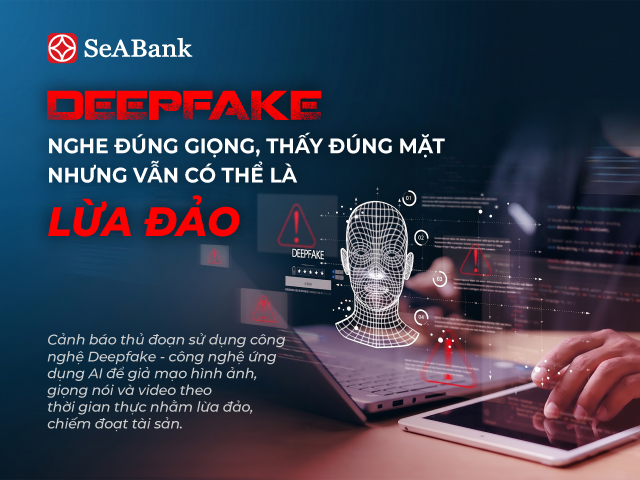
In the era of digital transformation and rapid advancement of Artificial Intelligence (AI), technology-enabled fraud schemes have become increasingly sophisticated and difficult to detect. One of the most concerning threats being widely reported currently is the misuse of Deepfake technology—an AI-powered technology capable of replicating images, voices, and videos in real time—to deceive individuals and steal their assets, particularly users of banking and financial services.
26/06/2026
Read more

Guidelines for increasing pensions, social insurance benefits, and monthly allowances by 8% from July 1, 2026.
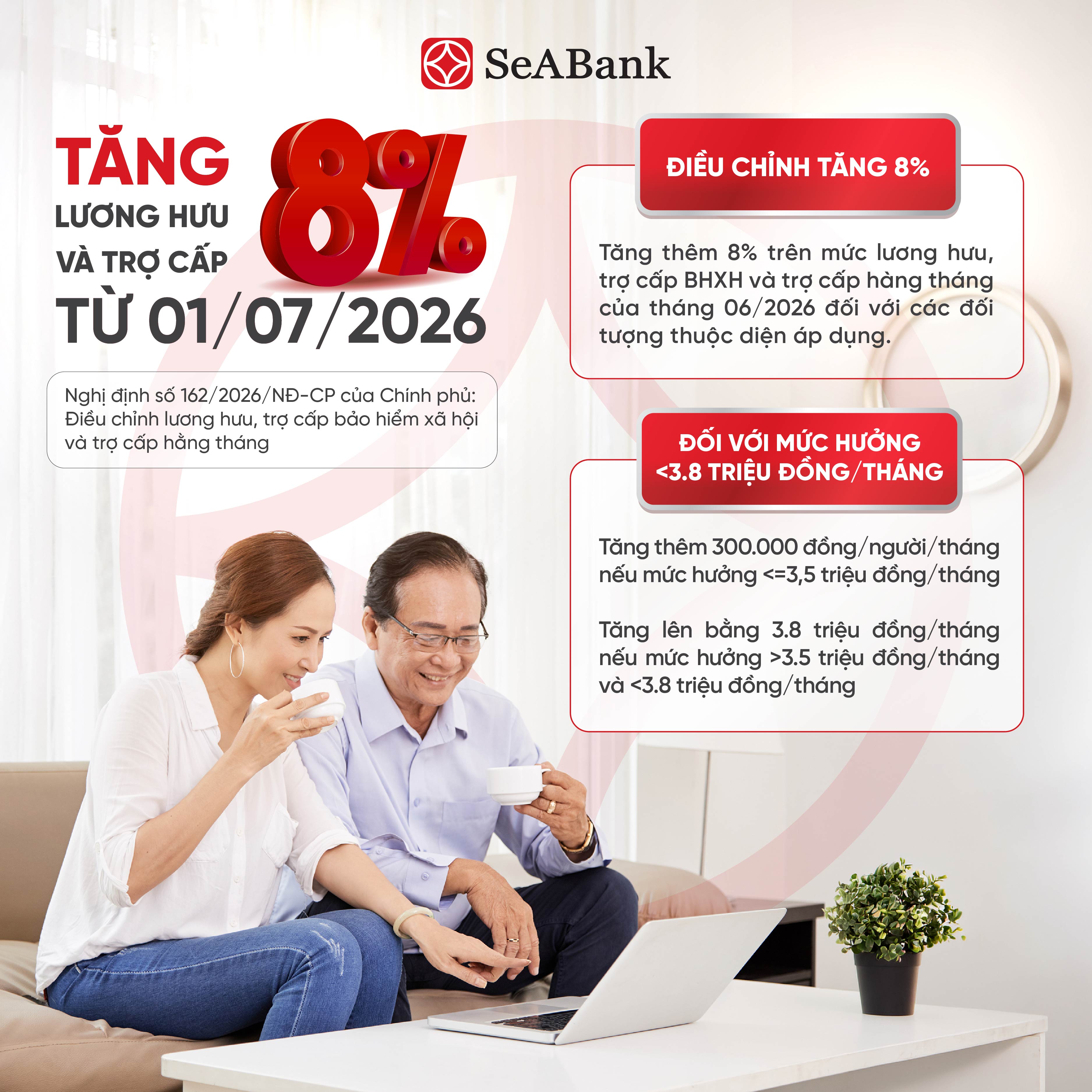
The Minister of Home Affairs issued Circular No. 14/2026/TT-BNV detailing the adjustment of pensions, social insurance benefits, and monthly allowances. Accordingly, from July 1, 2026, pensions, social insurance benefits, and monthly allowances will increase by 8%.
15/06/2026
Read more

Official announcement on the launch of SeABank's outbound telesales channel
With the goal of continuously enhancing service quality, optimizing customer support, and improving customer experience, Southeast Asia Commercial Joint Stock Bank (SeABank) officially announces the launch of its Outbound Telesales Channel.
02/06/2026
Read more