News

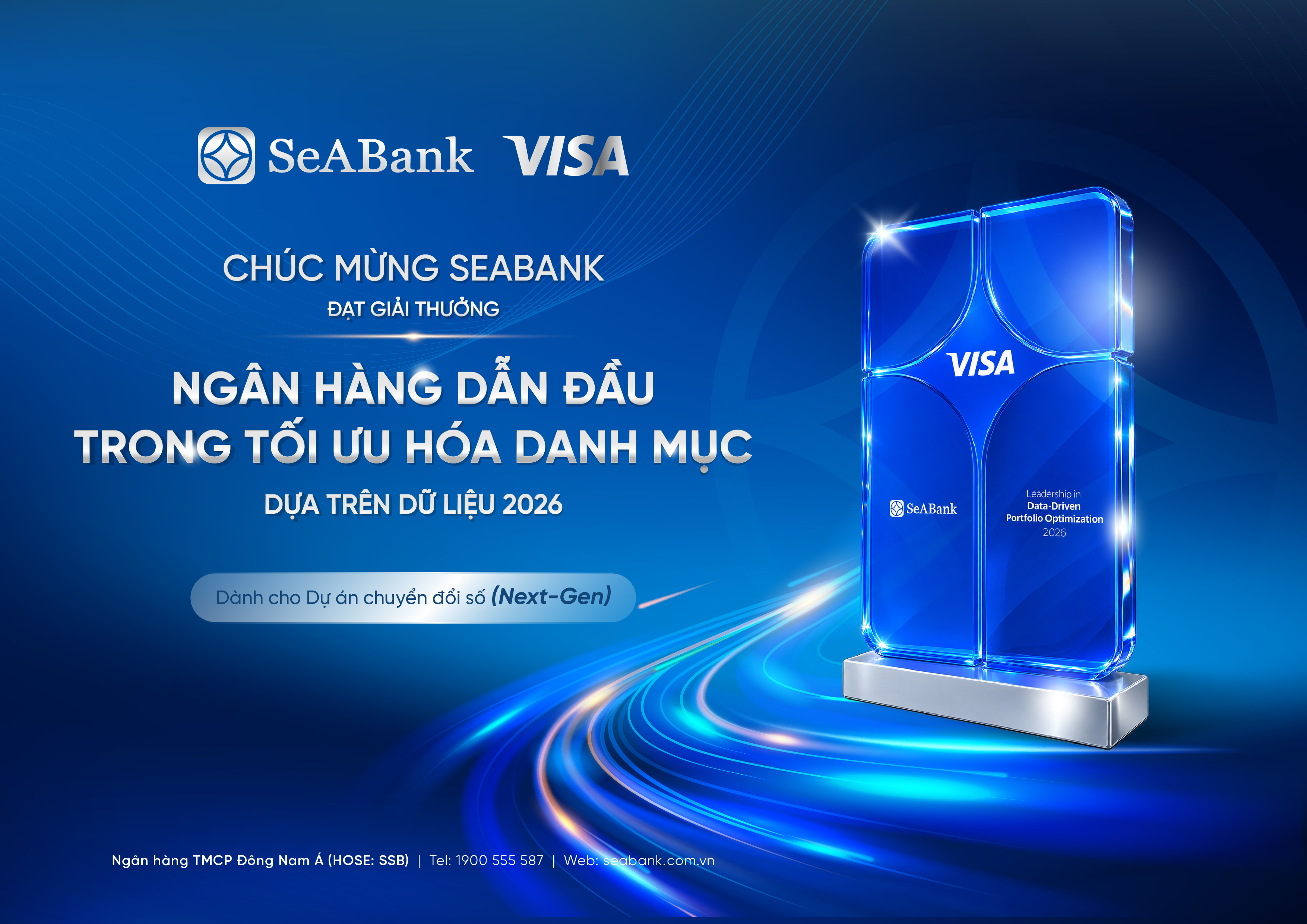
SeABank was honored by VISA for applying advanced data to improve card portfolio management efficiency
Southeast Asia Commercial Joint Stock Bank (SeABank, HOSE: SSB) was recently awarded "Leadership in Data-driven Portfolio Optimization 2026" by the international card organization VISA at the VISA Annual Client Conference 2026 held in Hue. The award recognizes the effectiveness of SeABank's deployment of data analytics solutions in card portfolio management, promoting payment growth and service development towards personalization.
12/11/2026
Read more
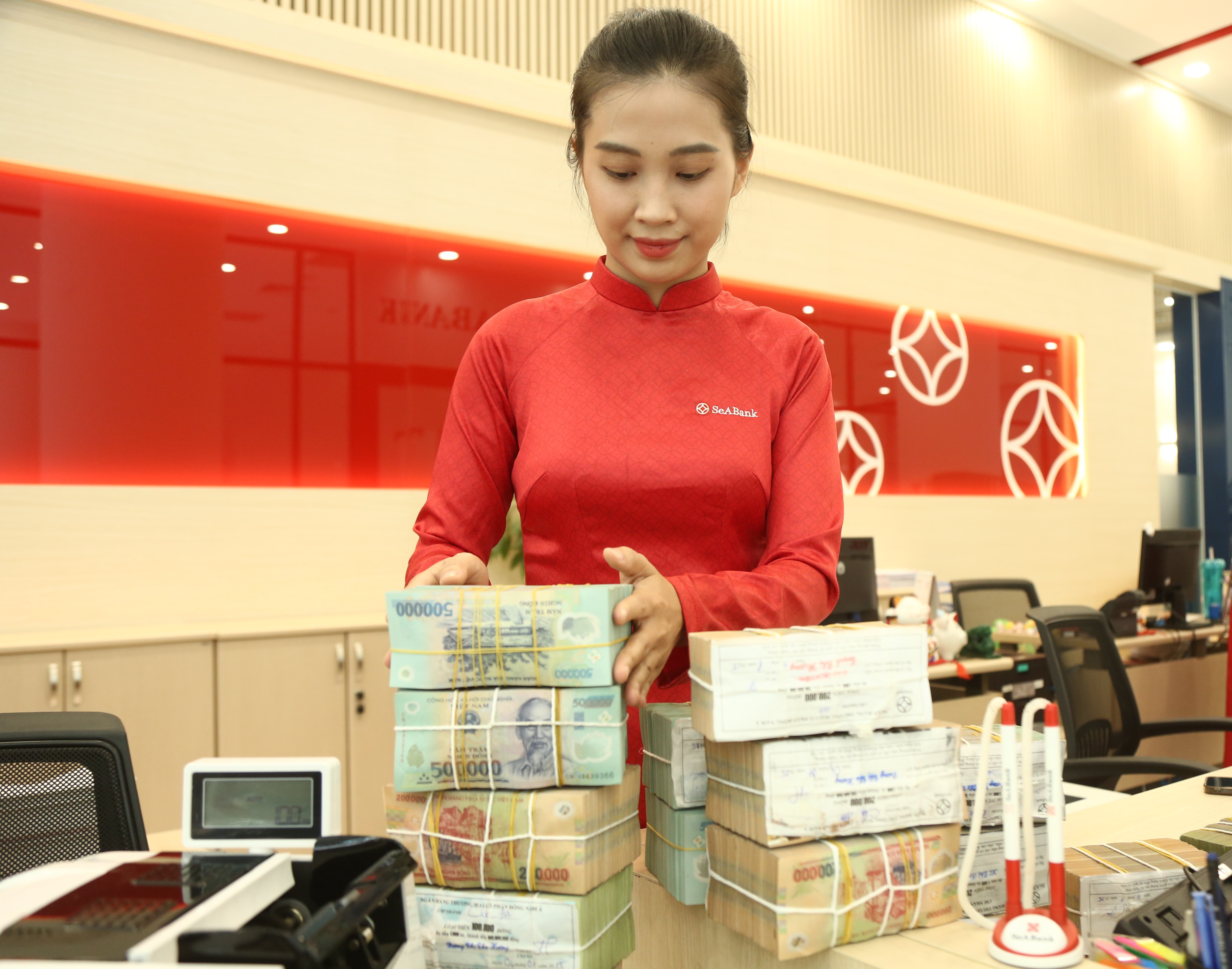
SeABank records VND1,315 billion profit in Q3/2026, up 37.5% YoY, total assets exceed VND429,376 billion
Profit-before-tax (PBT) of Southeast Asia Commercial Joint Stock Bank (SeABank, HOSE: SSB) reached nearly VND1,315 billion in Q3/2026, up 37.5% YoY. For the first 9 months, the Bank recorded VND 3,940 billion in PBT. Total assets reached VND429,376 billion, up 8.31% from the beginning of the year. Outstanding credit grew 11.3%, and the non-performing loan (NPL) ratio was controlled at 2.28%.
04/11/2026
Read more
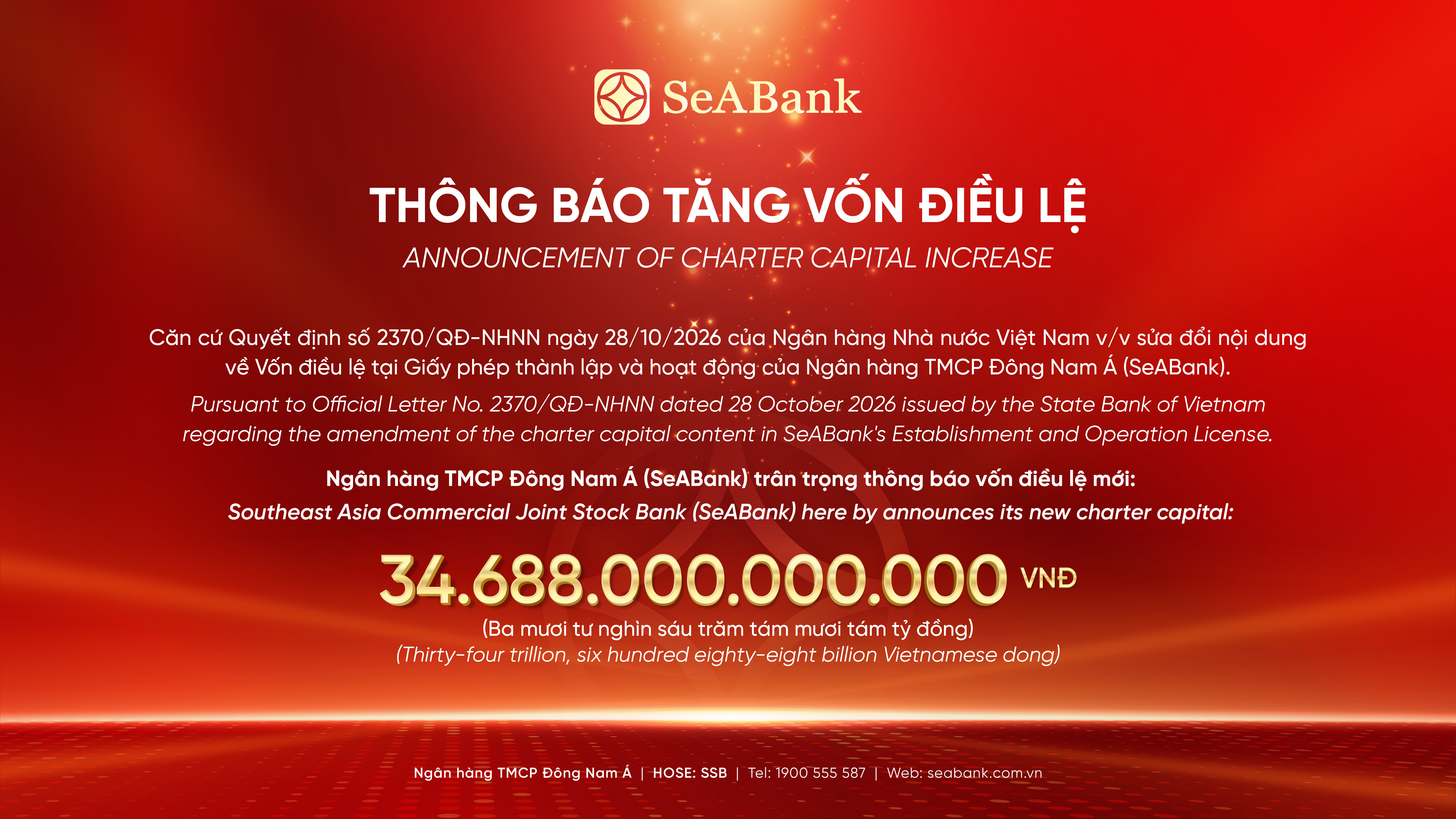
SeABank completes charter capital increase to VND34,688 billion
Southeast Asia Commercial Joint Stock Bank (SeABank, stock code: SSB) has officially received approval to increase its charter capital to VND34,688 billion (approx. US$1.33 billion). The additional capital will strengthen the Bank’s financial capacity and improve its capital adequacy ratios, while reflecting a balanced approach to developing both financial resources and high-quality human capital, laying the foundation for sustainable growth.
02/11/2026
Read more

27/05/2026
A single click on a fraudulent link or a malware-laden app can drain a bank account within minutes. As sophisticated scams continue to evolve, with AI even being leveraged to bypass biometric authentication, SeABank has launched its Security Lock Code for Online Deposits. This feature serves as a secure vault for savings accounts, while adding an independent layer of protection for customers' assets.
Online fraud has grown increasingly sophisticated in recent years, with schemes ranging from counterfeit banking websites and malicious links to malware-embedded applications designed to seize control of users' devices. Once a device is compromised, perpetrators can steal login credentials, intercept OTP codes, even exploit emerging technologies to bypass biometric authentication, ultimately draining funds from victims' accounts.
Many users find their accounts compromised after just a few taps on a fraudulent link or a malicious app. These risks underscore a critical reality: a single authentication layer may no longer be sufficient in an era of increasingly complex digital financial attacks.
However, even when accounts are accessed without authorization, fund withdrawals can still be blocked thanks to additional protective mechanisms such as SeABank's Security Lock Code for Online Deposits.
Additional security layer for online deposits
According to SeABank, the "Security Lock Code for Online Deposits" feature was developed to provide an independent layer of protection for customers' assets in the digital environment. Once activated, each online deposit is assigned a unique security code, which is a mandatory credential required to complete any withdrawal or early termination of the deposit.
"Even in the event of account compromise, deposits remain inaccessible without the security lock code. This is an independent barrier that limits risk even if login credentials or OTPs are compromised" - a SeABank representative stated.

The approach is likened to placing a personal safe within a bank account, securing assets at a deeper level rather than relying solely on conventional authentication layers.
Beyond the security lock code, SeABank also applies biometric authentication during withdrawal and deposit termination processes. The combination of biometric verification and the security lock code forms a "dual-security" mechanism, significantly reinforcing defenses against unauthorized account access.
Industry experts note that the shift from single-layer to multi-layer independent authentication is becoming an established standard in the banking and financial sector, particularly as high-tech attacks grow harder to predict and counter.
A flexible mechanism aligned with the deposit lifecycle
The "Security Lock Code for Online Deposits" feature is integrated directly into the SeAMobile application, allowing customers to activate it during the online savings deposit process. The security mechanism is also designed flexibly to adapt to different deposit types. For automatically renewed deposits, the lock code remains active without requiring re-configuration. For non-renewable deposits, the feature terminates automatically upon maturity.
SeABank has also established an in-branch support process for customers who forget their security lock code, ensuring continuity of service experience.

In the context of accelerating digital transformation, strengthening authentication layers has become not only a technical imperative but also a key to building user trust in digital banking services. The deployment of the "Security Lock Code for Online Deposits" reflects a broader industry shift, from security models that depend entirely on system-level controls toward frameworks that empower customers to take an active role in safeguarding their own assets.
A SeABank representative has affirmed the Bank's commitment to continued investment in information security solutions, aiming to build a digital financial ecosystem that is both convenient and secure.