SeABank advances towards net-zero: Driving green transformation and environmental awareness
14/11/2025
On its journey towards sustainable development and contributing to the collective goal of carbon reduction, SeABank is driving the green transformation of its operations and optimizing processes, while implementing green initiatives to promote environmental responsibility.
Sustainability, green operations, and Environmental, Social, and Governance (ESG) practices are currently top priorities for leading global and Vietnamese businesses. Committed to Vietnam’s national goal of net-zero emissions by 2050, SeABank proactively implements environmental protection and emission reduction measures, closely aligned with ESG criteria and Green Banking strategy.
Accordingly, the Bank has identified 3 scopes of carbon emissions for monitoring, measurement, and control/reduction, with particular focus on direct emissions (Scope 1) and indirect emissions from energy consumption (Scope 2). A series of initiatives targeting Scope 1 and 2 carbon reduction have been implemented by SeABank, focusing on energy optimization, pollution control, digitalization and operational efficiency, and fostering a culture of environmental responsibility.
Optimizing resource use and energy efficiency
With the goal of optimizing energy efficiency, SeABank’s offices are equipped with smart building management systems to monitor and automatically adjust air conditioning, lighting, security, and energy systems for optimal performance. SeABank headoffice at BRG Tower (198 Tran Quang Khai, Hoan Kiem, Hanoi) has received the international EDGE Green Building certification, which requires at least a 20% reduction in energy, water, and sustainable material use. SeABank’s office at 16 Lang Ha, Giang Vo, Hanoi, has been certified LEED Silver—a widely recognized international green building standard that sets requirements for carbon reduction, resource reuse, and efficiency optimization. The Bank is currently implementing more solutions to enhance efficiency and reduce carbon emissions, with the aim of obtaining Green Building certification for 4 major projects with strategic partners.
SeABank optimizes resource use and energy efficiency at its offices.
Electricity and water resources at SeABank offices are monitored according to set limits to prevent waste and detect leaks early. In 2024, average water consumption was 19 liters per person per day, 1.6 times lower than the regulated limit. Energy consumption benchmarks are tailored to regional weather conditions, with more than 95% of SeABank offices meeting their targets in 2024.
SeABank enforces pollution control across all wastewater and waste. At its authorized discharge sites, wastewater is monitored quarterly in accordance with QCVN 14:2008/BTNMT standards, with all 2024 discharge parameters remaining within permitted limits. The Bank also ensures compliance with standards for waste containers; collection and treatment processes are carried out properly by licensed service providers.
SeABank prioritizes the use of eco-friendly materials and equipment, internally procuring devices with 4–5 star energy labels certified by the Ministry of Industry and Trade, and ensuring regular maintenance to optimize performance. In all renovations and new branch constructions, 100% of the lighting systems have been converted to LED, 100% of air conditioning systems upgraded to inverter models using eco-friendly R32 and R410A gases. Additionally, SeABank emphasizes the procurement and use of recyclable and reusable items, replacing single-use plastics and paper cups with glassware and water filtration systems.
Driving the Digital - Green ‘Dual Transformation’
In its green transformation journey, SeABank’s comprehensive 'Digital Convergence' strategy plays a key role in optimizing efficiency and reducing banking operations’ reliance on physical resources, thereby lowering carbon emissions compared to traditional banking activities.
SeABank consistently innovates the SeAMobile app, digitalizing its banking products and services.
SeABank continuously upgrades its digital banking platforms, SeAMobile and SeANet, offering over 130 features and services, including: remote account opening via eKYC, online card issuance, online savings opening/closure, loan applications; online purchases of lottery tickets, airline tickets, event tickets, insurance, etc. In addition to digitalization, SeABank has implemented electronic invoicing and documentation at its transaction counters. These initiatives help the Bank reduce paper consumption and waste, while also lowering carbon emissions from printing, cash handling and transportation, as well as customer travel to branches.
In November 2024, SeABank successfully upgraded its T24 core banking software to the latest R22 version in Vietnam, enabling more flexible and secure business operations. This major advancement optimizes performance, conserves resources and lowers carbon emissions.
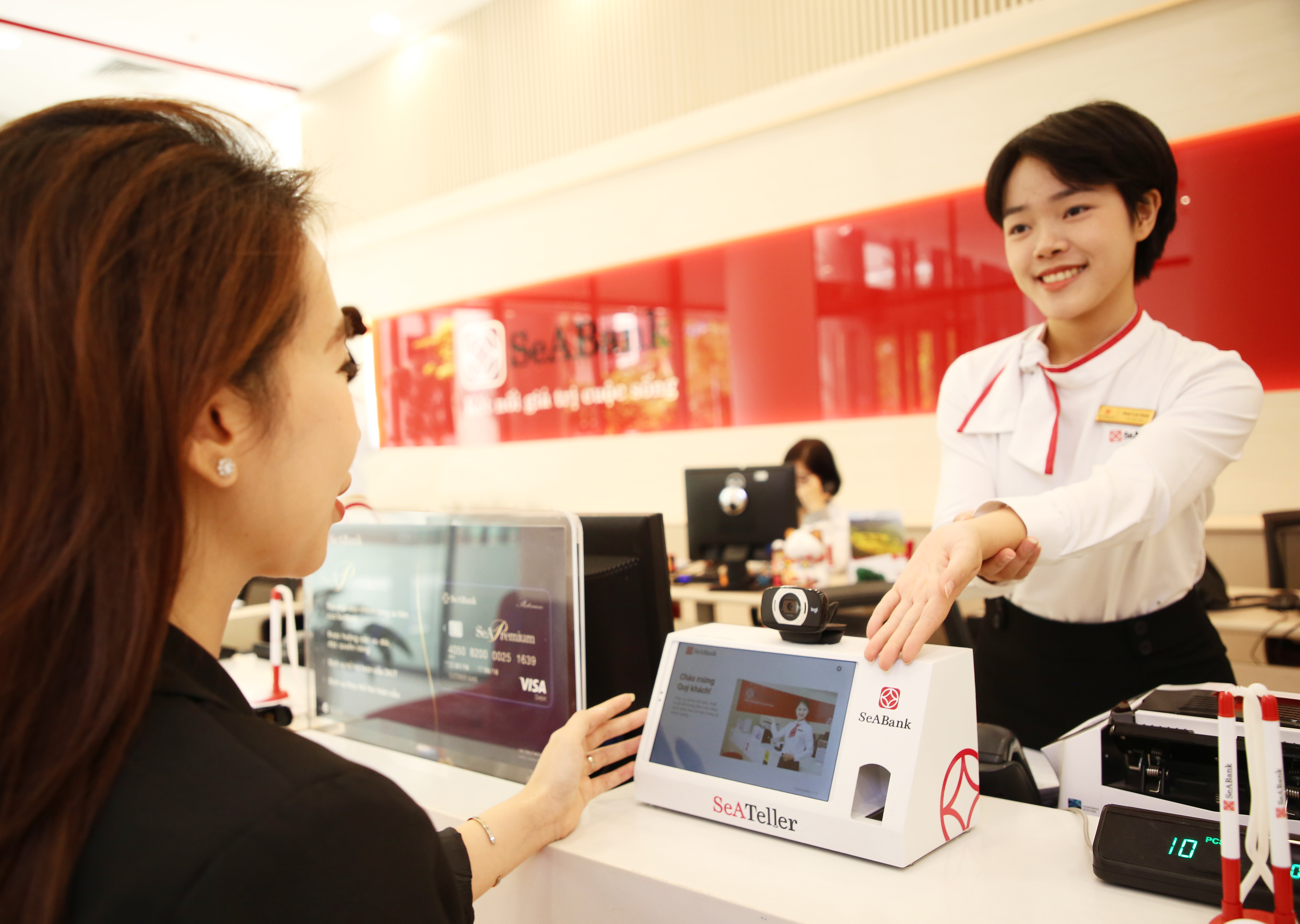
SeATeller software supports SeABank in automating transaction processes at its branches.
To reduce printing and manual operations, SeABank is accelerating process automation through a range of technology systems, including the payment management system (SeAPayment), e-office platform (SeAOffice), procurement software (SeAPurchase), and counter-supporting software (SeATeller), etc. Thanks to this comprehensive digital transformation, paper consumption at SeABank headoffice in 2024 decreased by 1.45% compared to 2023, while energy use and carbon emissions remained stable despite continued growth in both scale and workforce.
Joining hands for the environment
In pursuit of its sustainable development strategy as well as the goals of environmental protection and carbon reduction, SeABank implements various initiatives to raise individual awareness and inspire environmentally responsible actions, aiming to drive meaningful change through small, everyday habits.
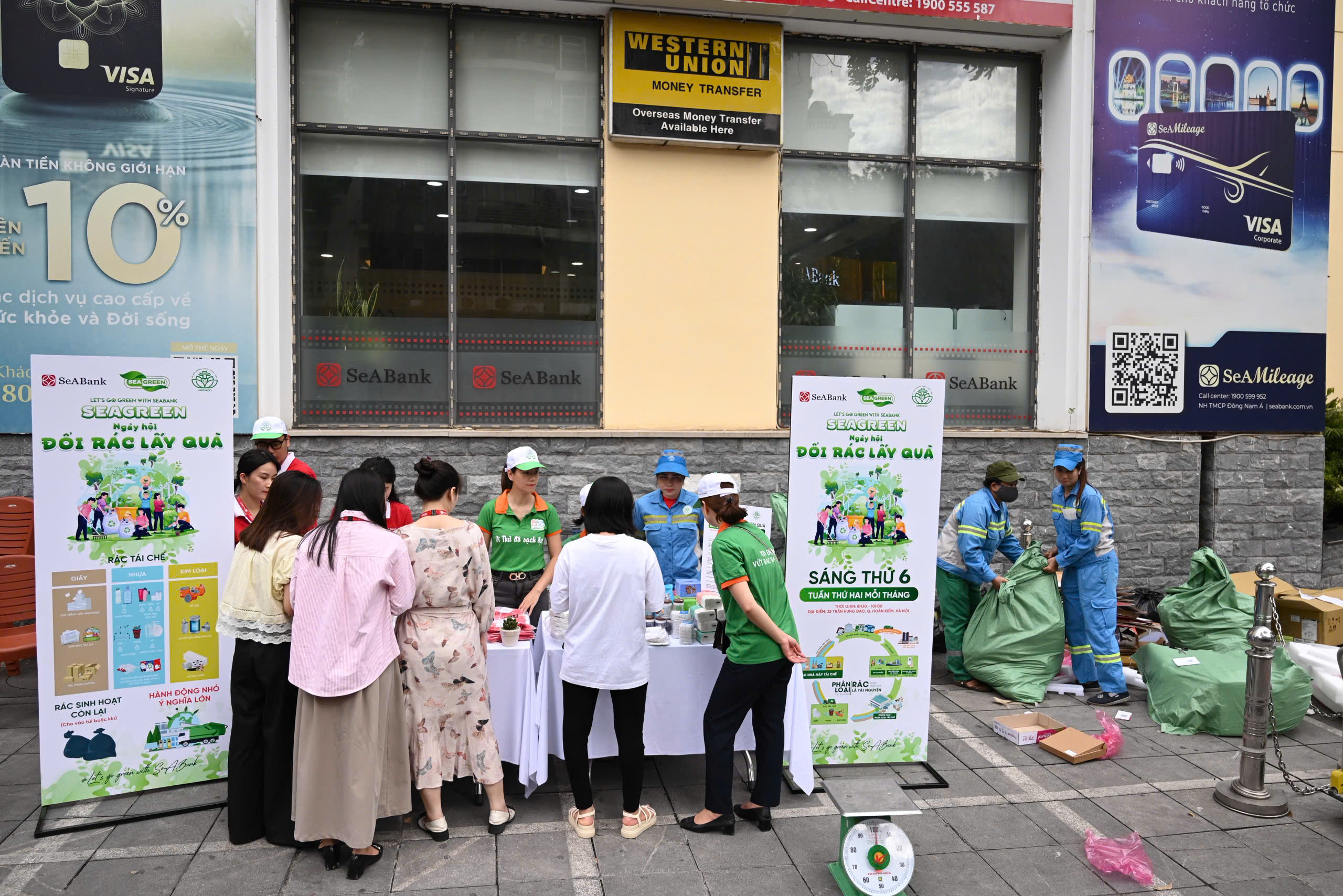
“Waste-for-gifts” exchange days organized by SeABank to encourage green habits.
Accordingly, SeABank actively fosters green habits internally and inspire relevant stakeholders through meaningful initiatives hosted by SeAGreen Fund — an internal fund established in 2019 to advance the Bank’s environmental goals. SeAGreen’s annual programs have raised environmental awareness, notably: “Green the Road to SeABank” campaign - promoting the use of public transport and eco-friendly commuting; “Ocean Cleanup” - coastal cleaning program; “Citizens’ Week” featuring series of SeAHero activities such as waste-for-gifts exchanges, trash bin donations, tree-planting, etc. These initiatives have received strong support from employees across the Bank and inspired the wider community, contributing to environmental protection and the development of a greener society.
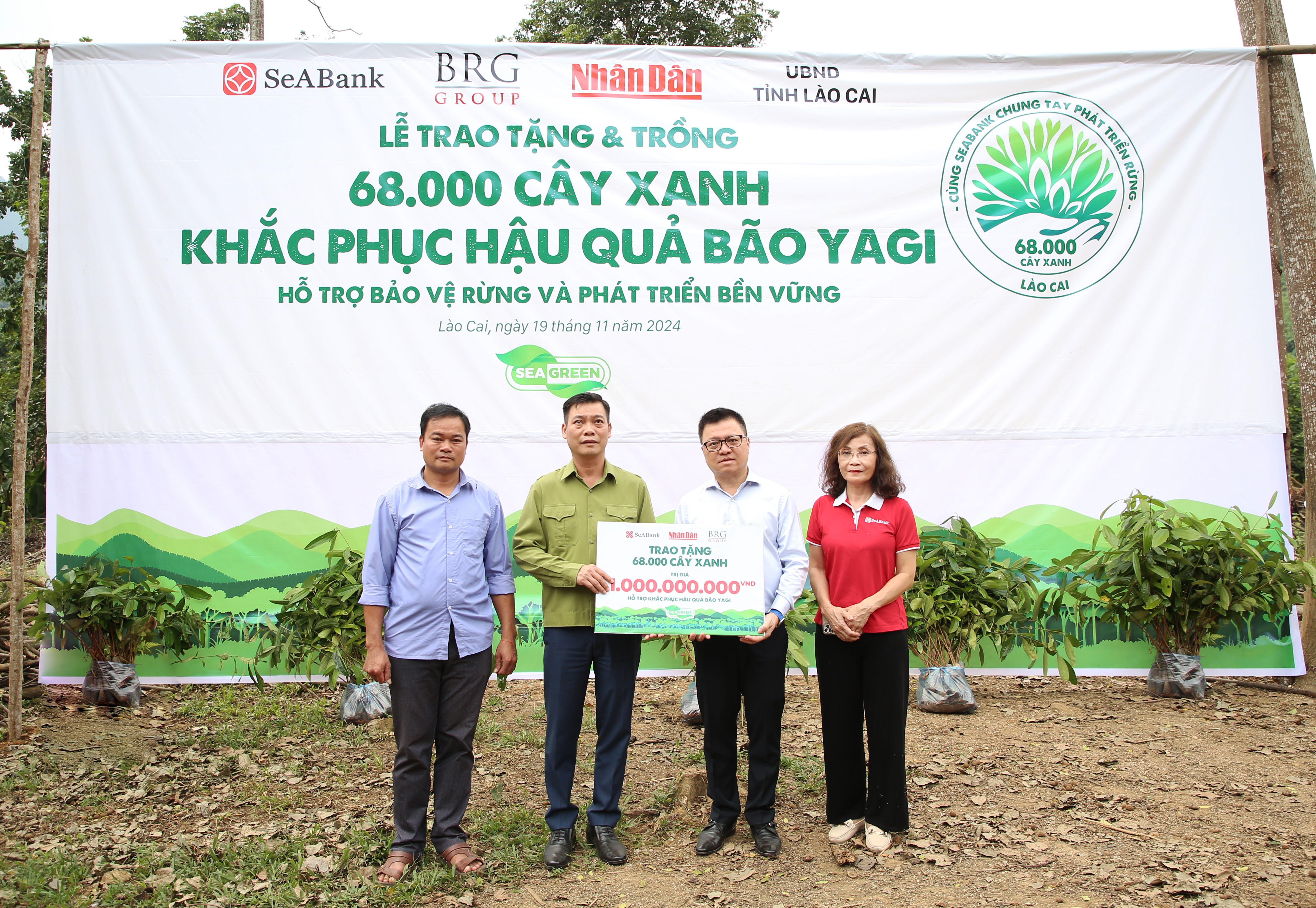
Notably, the annual race “SeABank Run for the Future” is organized to raise funds for SeAGreen’s environmental initiatives. In 2024, the Fund has collaborated with BRG Group and Nhan Dan (People) Newspaper to plant 68,000 trees worth VND1 billion (equivalent to nearly 20-hectare forest) to restore livelihoods and support recovery efforts for the localities in Lao Cai Province following Storm No. 3. Since 2010, SeABank has donated and planted nearly 360,000 trees across various provinces, including Ha Tinh, Thanh Hoa, Dak Lak, Lao Cai, and Long An, etc. to green barren land, restore and preserve local ecosystems, and contribute to the development of sustainable forestry economies.
Reforestation is a key focus of SeABank’s net-zero journey.
SeABank’s efforts in green transformation and environmental initiatives have gained observable achievements, as the Bank’s 2024 Scope 1 emissions remained stable at 624 tCO₂, while its 2024 Scope 2 emissions decreased by 11.4% YoY, reaching 4,853 tCO₂. These outcomes demonstrate SeABank’s strong commitment to carbon reduction and reaffirm its pioneering role as a green-oriented bank, contributing meaningfully to a greener community and a sustainable future.