Types of bank cards: Classification and instructions for choosing the right one
17/10/2025
Refer to the article to learn about the popular types of bank cards today, their features and how to choose the right card for your spending.
In the digital age, types of bank cards have become a familiar and essential payment tool in daily life. Not only does it help transactions quickly and safely, bank cards also bring many other benefits. Depending on the needs and financial conditions, each customer can choose the appropriate card type to maximize the benefits that the bank brings.
Readers note: The data and information in the article are compiled from general market sources and do not apply specifically to SeABank's products or services.
Quick Summary: Popular types of bank cards in Vietnam
Depending on the division, popular bank cards in Vietnam can be classified as follows:
Card sorting
Card type
Characteristic
By function
Debit card
Direct link to bank account.
Spend within your bank account balance.
Credit card
Spend now, pay later within the bank's approved limit.
Can be used in installments.
Interest free for 45 - 55 days.
Prepaid card
Deposit money before using, no need to open a bank account.
Safe, easy to manage spending
No debt or interest like credit cards.
Identity or anonymous cards can be issued as needed.
According to the scope of use
Domestic bank card
Transactions within the territory of the country.
International payment card
Can transact directly or pay online in every country and territory in the world.
According to card issuance technology
Magnetic card
The card surface has a magnetic strip that stores information.
Chip card
Use electronic chips to store information.
Contactless chip card
Fast payment, just tap or hold the card near the POS machine with the wave symbol, no need to swipe the card or enter PIN for small transactions.
High security and convenience. Debit, credit or prepaid features can be integrated.
By card form
Physical card
Users can hold it in their hands/
Use in direct transactions or ATM withdrawals.
Virtual card
Exists as electronic information in banking applications.
1. Types of bank cards by function
1.1. Debit Card
According to Clause 2, Article 3 Circular 19/2016/TT-NHNN A debit card is a card that allows the cardholder to make card transactions within the amount and overdraft limit (if any) on the cardholder's payment account opened at the card issuing organization.
Simply put, a debit card is a card that is directly linked to a bank account. Customers can only spend within the current balance of their account. When paying via POS, ATM or online, the amount will be deducted directly from the account linked to the card. Debit cards usually have the word “DEBIT” on the front.
Advantage:
Easy to open, the most popular form of card today
Spending within your available funds makes it easier to manage finances and avoid debt.
Can withdraw money, transfer money, pay online
No financial proof required to open a card
Disadvantages:
Limit spending if there is no money in the account
Fewer perks than credit cards
Conditions for opening a debit card at SeABank
Be a Vietnamese citizen or a foreigner legally residing in Vietnam from 15 years of age or older
Have full civil capacity according to the provisions of law
Valid ID card/CCCD or passport
Have a payment account at the issuing bank
Debit card service fees and charges:
Issuance fee: Free or about 50,000 - 100,000 VND depending on each bank's regulations.
Annual fee: Free or charge 3,000 - 20,000 VND/month depending on each bank's regulations.
Withdrawal fee: Free within the banking system, 3,000 - 11,000 VND when withdrawing from ATMs of other banks. Fees are determined by each bank.
Debit cards allow customers to spend within the amount of money available in the account linked to the card.
1.2. Credit Card
According to Clause 3, Article 3 Circular 19/2016/TT-NHNN A credit card is a card that allows the cardholder to make card transactions within the credit limit granted under the agreement with the card issuer.
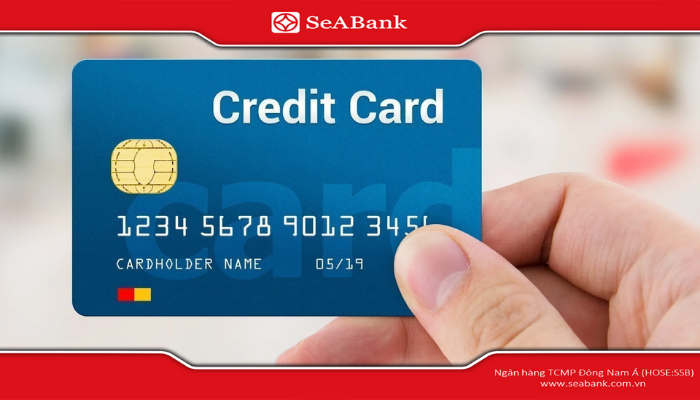
Simply put, a credit card allows customers to spend now, pay later within the bank limit. Users can pay for goods, services or withdraw cash. At the end of the statement period, customers need to pay part or all of the outstanding balance to avoid credit card interest and penalty fees. Physical credit cards usually have the word “CREDIT” on the front.
Advantage:
Buy now, pay later, with 30 – 55 days interest-free period
Many incentives: cashback, points, installments, discounts
Increase financial credibility, support when traveling or shopping internationally
Disadvantages:
If spending is not controlled, customers can easily incur bad debt.
High interest rate (20 – 30%/year) if not paid on time
Has a higher annual fee than debit cards and some other fees
Conditions for opening a card
Be a Vietnamese citizen or a foreigner legally residing in Vietnam, 18 years of age or older
Valid ID card/passport and confirmation of residence
Meet financial requirements:
Have a stable income, able to pay off credit card debt - Proof by salary statement of the last 3-6 months
Can use collateral such as savings book to get card approval
Have good credit history, no bad debt at CIC
Credit card service fees and charges
Issuance fee: Usually free for eligible cardholders
Annual fee: 300,000 - 1,200,000 VND/year depending on card class
Interest rate: ~ 20 - 30%/year if not paid on time
In addition to regular credit cards, banks also issue “Black Cards” which are the most premium credit cards, usually reserved for VIP customers with large assets, high incomes and outstanding transaction histories. This is a symbol of class and financial prestige. Black Cards have a number of outstanding privileges as follows:
High limits - sometimes unlimited
Enjoy exclusive services such as: business class lounge, travel insurance, investment consulting, airline ticket booking support, luxury hotel discounts, 24/7 support,...
High-end card design, made from materials such as gold-plated plastic, metal, with a distinctive black color - showing luxury and power
Opening conditions are very strict, usually only issued at the invitation of the bank.
Credit cards come with premium, premium perks
1.3. Thẻ prepaid (Prepaid Card)
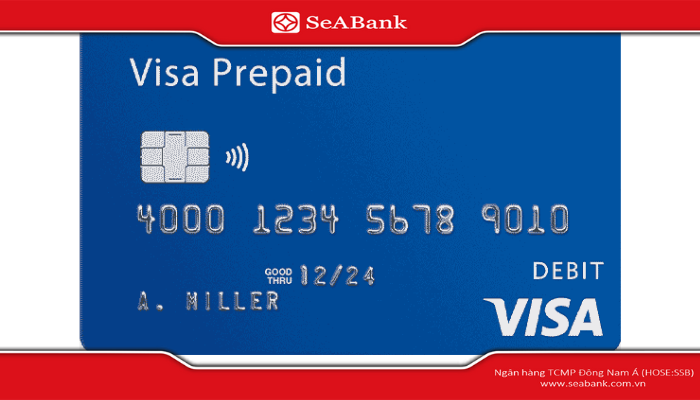
Prepaid Card is a type of bank card that customers pre-pay before use. The card is not directly linked to a payment account, so customers can only spend within the amount of money loaded on the card. Cards are often used for online shopping, as gifts or as a safe way to spend instead of cash.
Advantage:
No need to open a bank account
Safe, no worries about exceeding the limit because you only spend within the amount you have deposited
Suitable for managing personal expenses or for children and relatives
Can be used as a convenient gift
Disadvantages:
Cannot withdraw more than the deposited amount
Few incentives, no spending loan support like credit cards
Some international transactions may be restricted.
Conditions for opening a card
Be a Vietnamese citizen or a foreigner legally residing in Vietnam, 15 years of age or older
Valid ID card/CCCD or passport (with identification card)
With anonymous cards, customers can quickly register at the bank, the procedure is very simple - just need to prove that the cardholder is 15 years of age or older.
Each bank has its own fee schedule. Prepaid card services vary, so customers should contact them directly for exact fees. Service fees may vary for each card type (domestic/international and anonymous/identified).
Customers do not need a bank account to open a prepaid card.
2. Types of bank cards according to scope of use
2.1. Domestic card
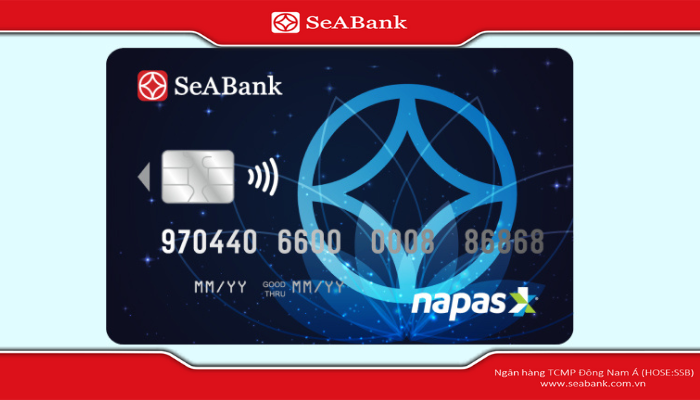
Domestic cards are cards issued by banks, using the network of the National Payment Corporation of Vietnam (NAPAS) to process transactions. The card allows customers to use it to make transactions within the territory of Vietnam.
Cardholders can withdraw money at ATMs, transfer money, pay bills or shop at card acceptance points in Vietnam. Domestic cards cannot be used for international transactions, such as online transactions on foreign online shopping/service websites and cannot be used for international travel.
Advantage:
Low issuance and service fees
Fast and convenient transactions at ATM/POS systems nationwide
Easy to open card with simple conditions
Disadvantages:
For domestic use only
Few international shopping offers, no foreign currency trading support
Conditions for opening a card
Be a Vietnamese citizen or a foreigner legally residing in Vietnam, 18 years of age or older
Valid ID card/CCCD
Have a payment account at the issuing bank
Domestic card service fees and costs
Issuance fee: Free or about 30,000 - 100,000 VND/card
Annual fee: 50,000 - 100,000 VND/month depending on the bank
ATM withdrawal fees: Free within the banking system, transaction fees depend on each bank's fee schedule
Domestic cards used for domestic spending purposes
2.2. International cards
International cards are accepted global payments, allowing cardholders to withdraw money, spend, and pay online at millions of card acceptance points abroad as well as domestically. International cards are issued by organizations such asVisa (USA), MasterCard (USA), JCB (Japan), UnionPay (China), American Express – Amex (USA),...
Advantages and disadvantages
Advantage:
Global use, convenient for business travelers, tourists, and students.
Many discounts, cashback, points, international travel insurance.
Support international online transactions (online shopping, booking airline tickets, hotels, etc.).
Disadvantages:
Annual fees and service fees are higher than domestic cards.
The process of opening an international credit card requires proof of income or collateral.
Conditions for opening a card
Valid ID card/CCCD.
Have a stable income (for international credit cards).
Or have a bank account/assets as collateral.
International payment card service fees and costs
Issuance fee: Free or from 100,000 - 500,000 VND.
Annual fee: 200,000 - 1,200,000 VND/year depending on card class (Classic, Gold, Platinum).
Withdrawal fee: Free or 3% - 5% of transaction value at ATMs outside the banking system.
International card with high convenience
3. Card types according to issuance technology
3.1. Magnetic card
A magnetic stripe card is a traditional bank card, easily recognizable by the black magnetic stripe on the back, used to store the cardholder's identification information. When making a transaction, the ATM or POS machine will read data from this magnetic stripe to authenticate and process the payment.
Unlike chip cards, magnetic cards do not have a microchip mounted on the surface, so the security level is lower, they are easily copied or counterfeited, and are now gradually being replaced by more secure EMV technology chip cards.
Advantage:
Low issuance fee, easy to use
Once the most popular card
Disadvantages:
Poor security, vulnerable to data copying (skimming)
Gradually being replaced by international standard chip cards
Banks have now stopped using magnetic cards.
3.2. Chip card
A bank chip card is a type of payment card with a microchip (EMV Chip) attached to the front, capable of storing and encrypting transaction information in real time, significantly enhancing security compared to magnetic cards.
The EMV chip generates a unique transaction code for each use, making it extremely difficult to copy or forge the information, ensuring secure ATM withdrawals and in-store payments.
Advantage
Much more secure than magnetic cards thanks to the ability to dynamically encrypt data, effectively preventing card information copying.
Meets EMV international standards, widely used globally.
Safe and convenient due to multi-step authentication requirements
Some EMV chip cards also have contactless payment capabilities, making transactions faster.
Disadvantages:
Issuance fees are higher than magnetic cards due to more complex production costs and technology.
Requires a card reader, compatible with RFID technology to process transactions. However, most ATM card readers and POS machines are now integrated with this technology.
Chip cards are widely used cards.
3.3. Contactless chip card
Contactless chip cards are modern bank cards that integrate near-field communication (NFC) technology, allowing payment by simply touching or bringing the card close to the POS machine without scanning or inserting the card.
Contactless chip cards have a symbol of 3 radio waves and a chip printed on the card surface. Thanks to the use of EMV chips combined with contactless technology, each transaction is securely encrypted and authenticated, while providing convenience and high processing speed for customers.
Advantage
Fast and convenient: Pay with just a light touch, no need to swipe or enter PIN for small value transactions
High security: Using EMV chip and NFC technology, each transaction generates a unique authentication code, limiting the risk of duplication
Disadvantages:
Transaction value limit: For large transactions, customers still have to enter their PIN for added security.
Payment acceptance infrastructure dependent :Only available at POS that support NFC technology.
Contactless chip cards are convenient and highly secure.
4. Card types by form
4.1. Physical card
Physical cards are traditional cards, issued in the form of plastic cards (PVC) with basic information such as card number, cardholder name, issue date and expiry date embossed or engraved on the surface. The card is used directly at ATMs, POS or for online payment transactions.
Although there may be a risk of loss or misplacement, physical cards remain a popular and convenient means of payment, especially for face-to-face transactions and ATM cash withdrawals.
4.2. Virtual card
Virtual Card is a type of card issued online, not in the form of a plastic card. Customers receive card information via email/app including: card number, cardholder name, expiration date and CVV/CVC code for online payment.
Users can create and use virtual cards immediately without having to go to the bank to receive a physical card. However, virtual cards are currently limited to online transactions and cannot withdraw money (except for some banks that allow cardless withdrawals at ATMs).
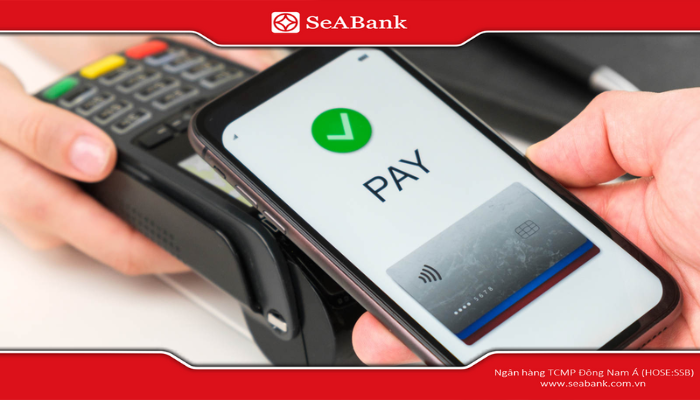
You can integrate virtual cards into your phone for contactless payments.
5. How to choose the right type of bank card
5.1. Based on the purpose of use
To make it easier to make a decision, you can rely on the purpose of use to choose the right type of card, both convenient and cost-effective.
Daily expenses: You should choose a domestic debit card to withdraw money, transfer money and make convenient payments with low fees.
Online shopping: You should use an international credit card or prepaid card to pay quickly, enjoy discounts and refunds.
Tourism: Prioritize international cards (Visa/MasterCard/JCB) with contactless features for quick payment at airports, hotels, and restaurants. Choose a credit card with travel insurance, cashback for international spending, and a high limit to cover unexpected expenses.
Business: You should choose Platinum or Black Card international credit card to have large limits, special offers, and effective cash flow management. You can combine international debit cards to make online transactions with foreign partners.
5.2. Based on financial resources
Income and payment ability are also factors to consider when opening a card:
Debit Card: Suitable for people with a stable source of income, spending within the account balance. This helps to manage finances closely, avoiding debt.
Credit Card: Suitable for people with high income or large spending needs, who want to take advantage of incentives and interest-free periods (up to 45 days).
Prepaid Card: Suitable for young customers, people who often shop online and want to spend only within the amount deposited, ensuring safety when making online transactions.
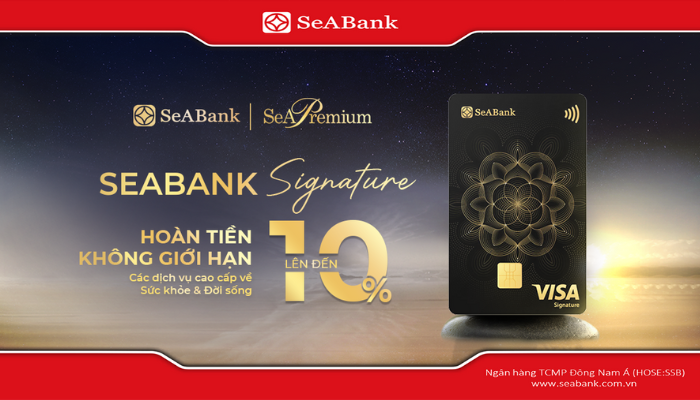
SeABank is currently providing high-end credit cards such as SeABank Visa Signature, SeABank Visa Platinum, considered as representatives of "black cards" in Vietnam, converging all the VIP benefits that international black cards possess:
Credit limit up to 1 billion VND
Interest-free up to 55 days
Global travel insurance up to 10.5 billion VND
Attractive cashback up to 10%
First year annual fee free
VIP airport lounge access
24/7 concierge service
SeABank offers a variety of card products with many attractive incentives.
5.3. Based on area of use
Depending on the scope of domestic or international use, you will consider choosing the corresponding card type:
Domestic payment cards: Suitable for customers who mainly conduct domestic transactions such as withdrawals, transfers, and bill payments.
International payment cards: For people who frequently travel for work, travel, study abroad or shop on international websites.
5.4. Based on convenience
Using a physical or virtual card will be considered based on the user's shopping habits and access to technology.
Physical card: Traditional, easy to use at ATM/POS. However, it is easy to lose or damage, so it must be kept carefully.
Virtual Card: Issue, authenticate, and activate online right on the banking app, no need to go to the counter, extremely convenient.
6. 5+ Notes when opening and using the card
6.1. Notes on card storage
To keep your card in good working condition, you need to note the following points:
Keep the card straight, avoid bending or folding the card to avoid damaging the chip and magnetic strip.
Do not place the card near electronic devices with strong magnetic fields (speakers, magnets, phones, etc.) as this may affect the data on the card.
Avoid impact and scratches on the black magnetic strip on the back of the card.
6.2 Note on card security
1 - General Security
As soon as you receive the card from the bank, you need to check whether the information printed on the card matches the registered data.
Change the PIN to activate the card, do not set easy-to-guess passwords such as date of birth or phone number.
Do not give your card to anyone other than a designated bank employee or cashier.
Never disclose your PIN or the information printed on your card to anyone.
Register for SMS Banking/Mobile Banking to receive instant transaction notifications, proactively lock/unlock cards when needed, manage limits and other utilities.
2 - Security when transacting at ATMs and online
Check the ATM carefully before use; if you see any unusual signs (hidden camera, unusual card reader), stop immediately and report to the bank.
Cover the keypad when entering your PIN to avoid being peeked.
Only make online payments on reputable websites, do not use public computers for financial transactions.
Read terms and policies carefully before confirming payment.
Always log out/exit the system after completing the transaction.
7. Open a bank card at SeABank - Enjoy the latest exclusive offers
Southeast Asia Commercial Joint Stock Bank (SeABank) is one of the largest joint stock commercial banks in Vietnam, established in 1994. With more than 30 years of development, SeABank has built a network of branches and transaction offices across the country, providing a variety of modern, safe and convenient financial and banking products and services.
SeABank aims to become a leading retail bank, always focusing on customers, applying advanced technology to bring superior experiences. At SeABank, customers can find a variety of cards:
Credit card
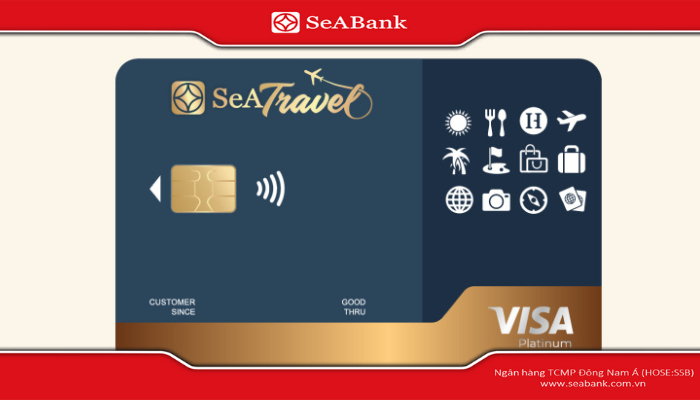
SeA-Easy, SeATravel, SeALady Cashback, BRG Elite, SeABank Visa Platinum, Signature, BRG Golf SeABank credit cards. Some basic incentives:
Annual fee refund
Cashback on transactions up to 8%
Attractive foreign exchange transaction fees
Discounts up to 70% on dining, shopping, hotels,...
Customers will enjoy many privileges when opening a card at SeABank
Debit card
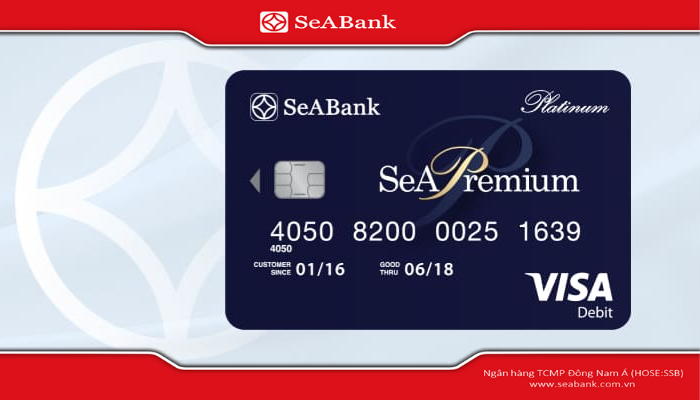
Card Visa BRG Elite, Visa SeAPremium, Visa Gold, Mastercard Gold, S24++ domestic chip. Some basic benefits of owning a card include:
Cashback Offer
Online discounts
Fast, convenient and secure payment transactions with Contactless & Samsungpay technology.
Safer with EMV Chip Security Technology
Multi-purpose card
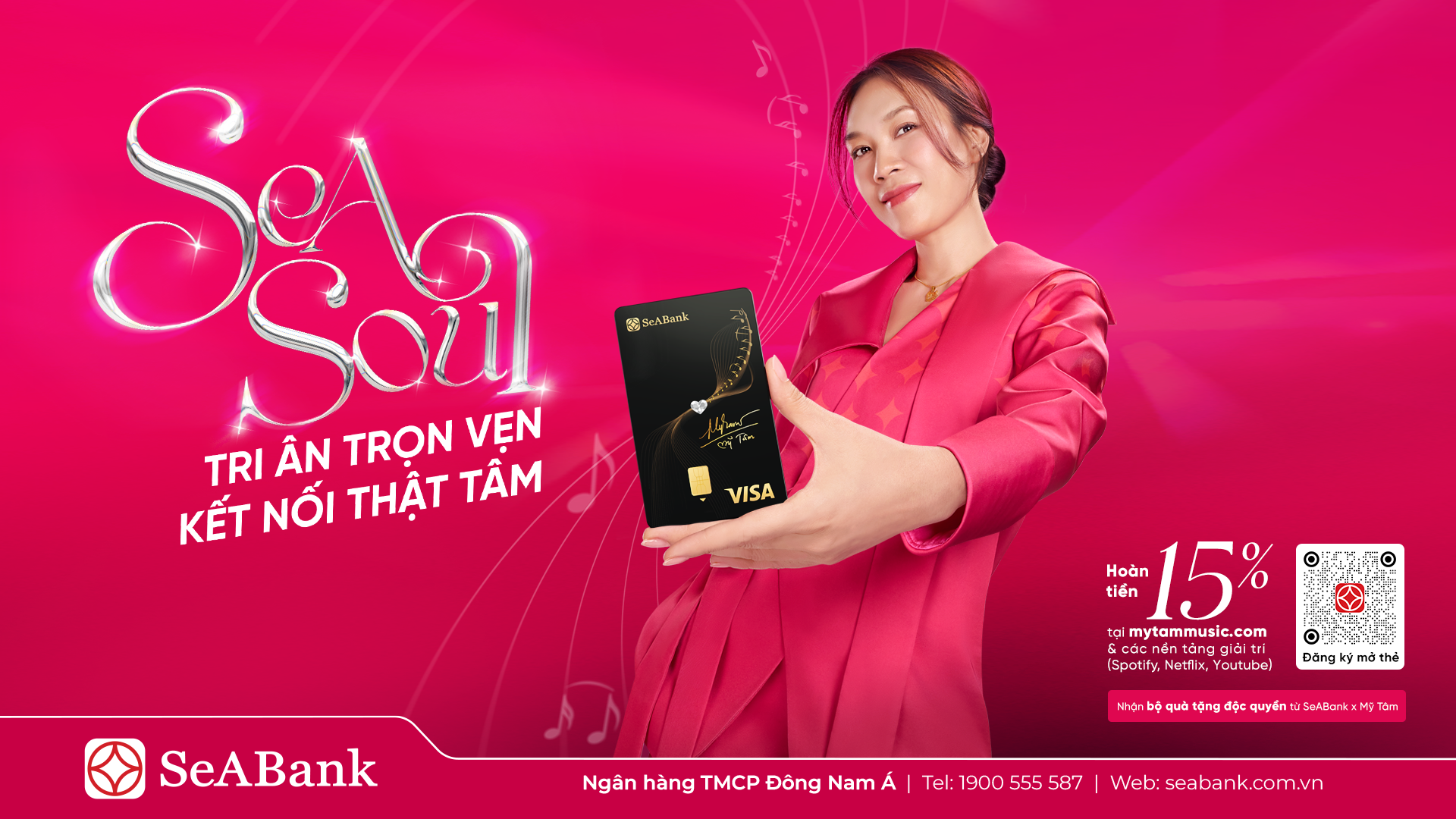
SeABank is pleased to introduce the Visa SEASOUL 2IN1 card,Flexible use of payment account and credit limit with just one card. Customers can issue cards in both virtual and physical forms.
When owning a SeASoul card, customers will experience many privileges:
Tap the card to play My Tam's music on Spotify via NFC communication.
Welcome gift “Made by My Tam & SeABank” bearing the mark and style of singer My Tam is designed exclusively for SeASoul cashback cardholders (detailed terms and conditions here)
15% cashback when transacting at website mytammusic.com and platforms: Spotify, Netflix, Youtube
1% cashback in the fields of Cuisine, Travel, Culture, Arts and Entertainment
0.2% cashback on all other payments.
Opportunity to participate in exclusive events with My Tam.
SeABank collaborates with singer My Tam to launch SeASoul 2in1 Visa card - An emotional financial experience
In addition, with each newly opened and successfully activated SeASoul Card, SeABank will contribute 3,000 VND to accompany SeABank's Charity Fund & My Tam's MT Foundation to support charitable activities.
Not only is there a variety of card types, the conditions and process for opening a card at SeABank are very quick and convenient. Customers can completely operate online with a safe process and high security.
It can be seen that the types of bank cards are increasingly diverse, meeting the needs of many different customer groups, from students, office workers to successful businessmen. Choosing the right type of card not only helps to optimize costs but also opens up many incentives and utilities during use.
To learn more about SeABank's card products, please contact the nearest transaction point or call Hotline 1900 555 587 or visit the website www.seabank.com.vn for more details.
Southeast Asia Commercial Joint Stock Bank SeABank