News
What Is a SWIFT Code? Latest SWIFT Codes for 30+ Banks in Vietnam
 30/10/2026
Join SeABank to learn what SWIFT Code is, its meaning and how to use it in international transactions. Watch now to not miss important information!
SWIFT Code is a bank identification code used in international money transfer and receipt transactions. Each bank has its own SWIFT Code to identify the receiving institution and help transactions be processed accurately. The article below explains what a SWIFT Code is, how to look it up, and provides the latest list of SWIFT Codes for more than 30 banks in Vietnam.
1. What Is a SWIFT Code?
SWIFT Code, also known as a BIC (Business Identifier Code), is an international identification code that helps identify a bank or financial institution in international transactions. This code is structured according to the ISO 9362 standard. A SWIFT Code can be considered the bank's "identity card" within the global payment network, helping ensure that payment information is sent to the correct receiving bank.
SWIFT stands for Society for Worldwide Interbank Financial Telecommunication. The organization was established in Brussels, Belgium, in 1973 to create a standardized financial messaging system for banks.
Today, the SWIFT network is used in more than 200 countries by tens of thousands of member banks and financial institutions, serving as the "backbone" of global transactions. SWIFT Codes are not limited to money transfer instructions but are also used in many other financial messages such as payment notifications, debit notices, credit notices, letters of credit, securities, and various financial derivatives.
Note: SWIFT is a financial messaging network. The network itself does not hold accounts or directly transfer funds; debits and credits are carried out by the banks involved.
2. Structure and Conventions of a SWIFT Code
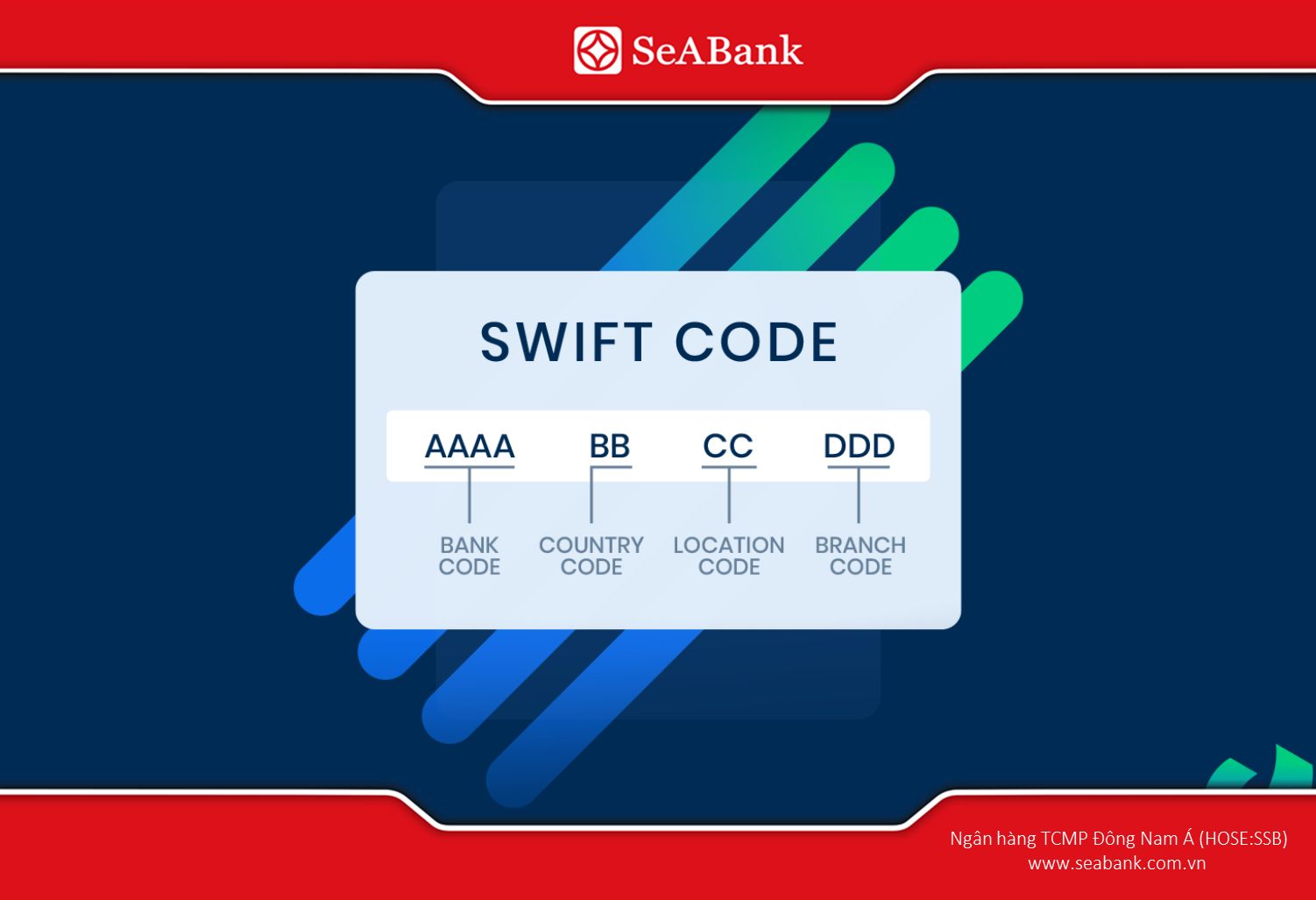
A SWIFT Code may consist of 8 or 11 characters. Specifically:
- First 4 characters: Identify the bank.
- Next 2 characters: Identify the country.
- Next 2 characters: Identify the location.
- Last 3 characters (if any): Identify the branch.
For example, SeABank's SWIFT Code is SEAVVNVX (8 characters). In this code, SEAV is the bank code, VN is the country code (Vietnam), and VX is the location code. In the 11-character format, the code is SEAVVNVXXXX. If a specific branch needs to be identified, the last 3 characters will vary according to that branch.
Thanks to this standardized structure, the SWIFT system helps ensure that international financial transactions are processed quickly, accurately, and without confusion.
3. List of SWIFT Codes for Banks in Vietnam
Below is a list of SWIFT/BIC codes for banks in Vietnam:
Note: SWIFT/BIC codes may vary depending on the bank and the receiving unit/branch. The list above is for reference only. You should verify the SWIFT Code on the official website or contact the beneficiary bank before making a transaction to ensure the information is accurate.
4. Differences Between SWIFT Code and Bank Code
When learning about banking transactions, many people often confuse SWIFT Codes with Bank Codes. In practice, although both are bank identification codes, they differ in terms of scope of use, structure, and purpose. Understanding these differences helps you use the correct code in each situation and avoid errors when making domestic or international transactions.
Similarities
- Both are bank identification codes used for transaction purposes.
- Both help the financial system accurately identify the transaction party.
Differences
SWIFT Code and Bank Code are both bank identification codes, but they are used in different contexts. Understanding the differences helps you select the correct code for each transaction and avoid unnecessary confusion and risks.
5. Services SWIFT Codes Provide to Customers
In the era of global integration, a SWIFT Code is not only a bank identification tool but also a "key" to accessing the global financial services system. Thanks to SWIFT, individuals and businesses can conduct various international transactions safely, quickly, and transparently, from money transfers and payments to risk management. Specifically, SWIFT Codes provide the following key benefits:
- International money transfers: The sender needs to provide the SWIFT Code of the beneficiary bank to ensure the funds reach the correct receiving bank.
- International payments for goods and services: Import-export businesses use SWIFT Codes to ensure payments to overseas partners are accurate and supported by documentation that meets international standards.
- Receiving money from overseas: A beneficiary in Vietnam needs to provide their bank's SWIFT Code to the sender abroad to receive the money into their account.
- Various financial transactions: SWIFT supports many types of messages, including payments, guarantees, securities transactions, credit notices, debit notices, etc., helping financial institutions provide a wide range of cross-border services.
- Support for eKYC, AML, and compliance management: Information transmitted through SWIFT may be used together with electronic Know Your Customer (eKYC) procedures and Anti-Money Laundering (AML) processes to enhance the security of the financial system.
6. How to Look Up a SWIFT Code Accurately
Identifying the correct SWIFT Code is an important step in every international transaction because entering just one incorrect character may cause the transaction to be delayed or even fail. To ensure safety and save time, customers can refer to the following common and effective lookup methods:
6.1. Look Up the Code on the Bank's Official Website
This is the most accurate and reliable method because the information is provided directly by the bank. You only need to access the official website and look for sections such as "Contact Information," "Customer Support," or FAQ.
All SWIFT Codes published there are the latest available versions and are consistent with the international money receipt procedures currently applied by the bank.
6.2. Look Up the Code Through Reputable SWIFT/BIC Directories
Many websites compile SWIFT Codes by country and bank, allowing you to search quickly. However, to avoid discrepancies, you should cross-check the information against the official website of the beneficiary bank. This approach helps save time while ensuring accuracy when conducting international transactions.
6.3. Check Account Statements or Transaction Agreements
Some banks print SWIFT Codes directly on account statements, card opening agreements, or international money transfer forms. These are direct sources of information with legal validity and are regularly updated together with other customer-related documents.
6.4. Contact the Bank's Call Center/Hotline
If you are still unsure, calling the customer service hotline directly is one of the safest and fastest ways to confirm the information. Bank staff can provide the correct SWIFT Code and answer questions related to international money receipt procedures.
7. Frequently Asked Questions (FAQ)
1. Are SWIFT Code and BIC the Same?
In practice, these two terms are often used interchangeably. BIC (Business Identifier Code) is the term used under the ISO 9362 standard, while "SWIFT Code" is the commonly used name for the code.
2. Should You Use an 8-Character or 11-Character SWIFT Code?
An 8-character code usually corresponds to the head office or main branch, while an 11-character code is used when a specific branch needs to be identified. In many cases, the 8-character code may be used, but you should confirm with the beneficiary bank before transferring money.
3. What Is SeABank's SWIFT Code?
SeABank's SWIFT Code is SEAVVNVX (8 characters), or SEAVVNVXXXX when the full 11-character format is required. You can verify the information on SeABank's official website before making a transaction.
4. Is a SWIFT Code Required for Domestic Transfers?
Usually not. Domestic transactions mainly use the account number, bank name, or bank code (BIN). SWIFT Codes are primarily used for international money transfer and receipt transactions.
5. What Happens If You Enter the Wrong SWIFT Code?
The transaction may be delayed, rejected, or require investigation, depending on the specific case. If you discover that you entered the wrong code, you should immediately contact the bank that processed the transfer for guidance.
SWIFT Code is basic but extremely important information in all cross-border financial transactions. Understanding its structure, function, and how to look it up helps you transfer and receive international funds more quickly and safely while reducing the risk of errors caused by an incorrect code. Before making a transaction, always verify the SWIFT Code through an official bank source to ensure accuracy.
If you are looking for a bank with an extensive international network and fast, secure money transfer services, SeABank is a reliable option. With an internationally standardized SWIFT Code system, SeABank supports customers in conducting global transactions safely, conveniently, and cost-effectively.
Related News
What Is a Savings Account? Types and a Quick Guide to Opening One 13/11/2026
What Is Online Savings? How to Save and 6 Important Notes 13/11/2026
How to Make an Online Savings Deposit Easily and Earn Attractive Returns 05/11/2026
What Is Flexible Savings? Comparison with Traditional Savings 05/11/2026
Online Land Tax Payment: 2 Quick and Compliant Methods 05/11/2026

What Is a Savings Account? Types and a Quick Guide to Opening One
What is a savings account and how is it different from a payment account? Learn about common types of savings deposits, their benefits, and how to open an account online or at a branch.
13/11/2026
Read more


What Is Online Savings? How to Save and 6 Important Notes
What is online savings? Learn about its advantages, how to open a savings account on a banking app, and important notes on interest rates, security, and deposit insurance for online savings in this article.
13/11/2026
Read more
How to Make an Online Savings Deposit Easily and Earn Attractive Returns
Learn how to make an online savings deposit on SeAMobile in 4 steps, including requirements, interest rates, early withdrawal, and deposit insurance.
05/11/2026
Read more